


← Back to South Florida Fish ID
Lesser Amberjack
Seriola fasciata · Carangidae
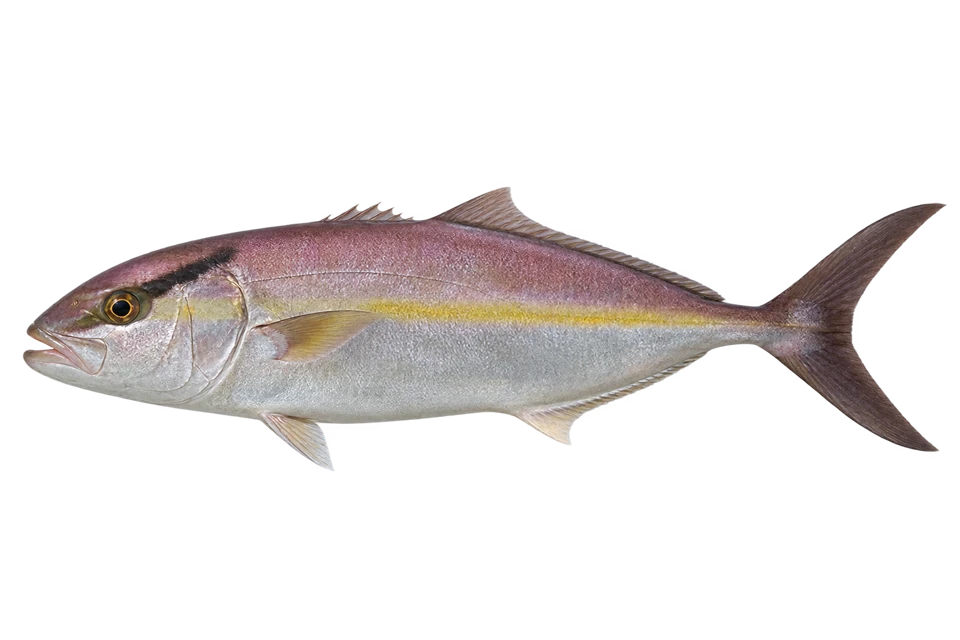
On a close pass, look for the eye band that stops at the nape.
One fun thing to know
Juveniles may display seven irregular side bars, a very different pattern from adults.
How to identify it
- Silvery below with a violet-brown or pinkish back; sides may show a soft yellow stripe
- If present, oblique dark bar from eye only to nape, not the dorsal-fin base
- Low dorsal and anal lobes, and a deep forked tail
Where to look
Open water, often near the bottom over offshore reef habitat. REEF survey records include occasional observations at Blue Heron Bridge.
Size
31.1 in (79 cm). reported maximum; measurement convention not specified.
What it eats
Adults eat fish and squid.
Behavior
Watch the eye band when the fish turns; it may be faint or absent.
Reproduction
Eggs and larvae occur in the water column.
Look-alikes
Greater Amberjack is similar, but Lesser Amberjack has a proportionately larger eye and the head band, when visible, does not reach the first dorsal base.
Can you collect or eat it?
Enjoy watching it and leave it in the water. This guide does not verify species-specific harvest or food-safety rules. Check the current rules for the exact location, species and method before taking anything, and never collect where prohibited.
Check Florida’s current saltwater rules
Field references
- Smithsonian Shorefishes reference 1
- REEF field survey reference 2
- Florida Fish and Wildlife Conservation Commission reference 3
- South Atlantic Fishery Management Council reference 4
I saw this and want to share
Make your next dive happen
Dive with Stuart Scuba · Train with us · Travel with us · Shop with us



