


White Sea Whip Coral
Leptogorgia alba · Gorgoniidae · Sea whip · Galápagos Islands Fish ID
How to identify it
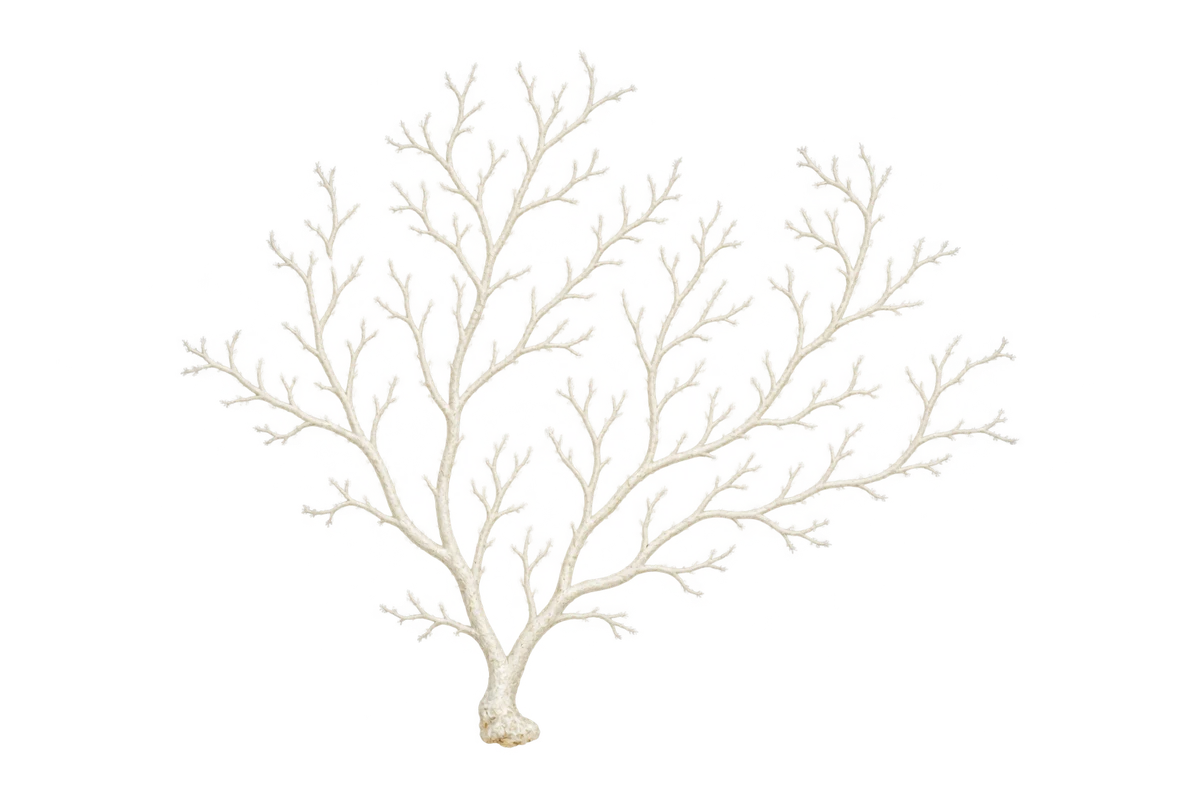
Watch the fine ivory branches against darker rock. The branchlets stay open and separate instead of joining into a mesh like Darwin’s sea fan. Take a wide shot that shows the pattern from base to tips.
Other pale gorgonians exist. White alone is not an ID; notice how the main branches divide and whether their tips remain free.
Learn to observe reefs without touching
SDI Coral Conservation is the place to start if you want to learn about coral habitats and how to observe them responsibly.
Look at the way the colony branches and how it moves in the current. Choose a viewing angle that lets you stay clear of its branches.
- Keep your fins and camera clear: Advanced Buoyancy Control focuses on trim, weighting and hovering.
- Build a broader skill set: Advanced Adventure introduces several specialties, including deep diving and navigation, with opportunities to refine buoyancy.
- For deeper recreational dives already in your plans: Deep Diver focuses on planning depth and managing breathing gas. It’s not needed to identify coral on a shallow dive.
- Record the details: Underwater Photography covers lighting and still-image composition. Underwater Video covers framing and steady footage. Use either without resting gear on the reef.
Galápagos Islands records
Documented Galápagos record: Darwin’s Arch, Darwin Island. This does not guarantee a present-day sighting. A record does not guarantee a sighting.
Fun facts
- A published photograph identifies the living colony form at Darwin’s Arch.
- A later regional survey recorded it among eastern Pacific octocorals.
- The white appearance is useful for spotting it but does not identify it on its own.
- The branch tips stay separate rather than forming a closed net.
- Each visible spray is a colony of many small coral polyps.
- Its branch shape is easier to compare in a full-colony photo than in a single twig close-up.




