


Leopard Wrasse
Macropharyngodon meleagris
Two details worth remembering
- The familiar leopard pattern is not retained unchanged throughout life.
- A published study documents juvenile use of soft corals as microhabitat, illustrating how a fish can depend on a very specific small-scale setting.
How to identify it
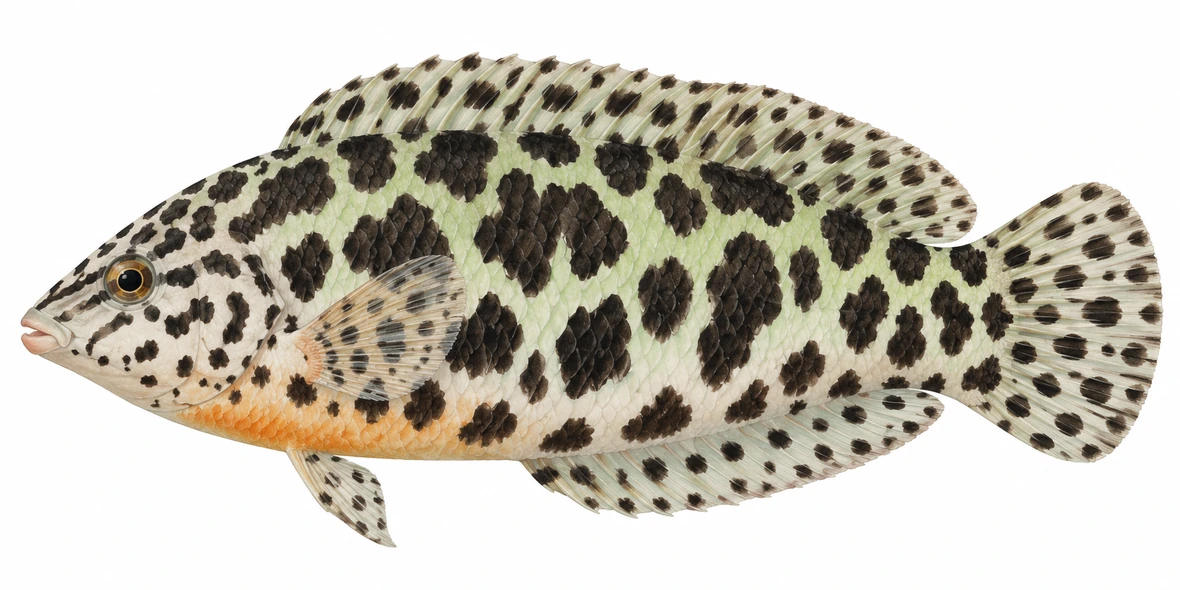
Females and juveniles have a pale whitish or greenish ground covered with large irregular dark spots. Terminal males have a very different orange-red and green pattern, patterned scales, green head bands and a dark shoulder marking.
Where to look
Coral-reef habitats within a published 0–30 m range.
Natural history
Juveniles can use soft corals as microhabitat. Look carefully at the coral surface without touching it, and distinguish the fish from the moving background.
A sex-changing wrasse; the female or juvenile leopard pattern and terminal-male pattern should be labeled separately.
Look-alikes
Spotted juvenile wrasses are easily confused. Use the arrangement of body spots and head markings; do not apply the adult male description to a juvenile.
What to watch for underwater
Note whether the fish is beside or within soft coral, maintaining enough distance to avoid contact.
Recorded in Raja Ampat
This species has a published Raja Ampat record. A regional record does not guarantee a sighting on a particular dive.
Sources: birdsheadseascape.com species reference · fishesofaustralia.net.au species reference · doi.org species reference · Regional survey record
I saw this and want to share
Back to Raja Ampat Fish ID · Dive Raja Ampat with Stuart Scuba




