


King Angelfish
Holacanthus passer · Pomacanthidae · Angelfish · Galápagos Islands Fish ID
How to identify it
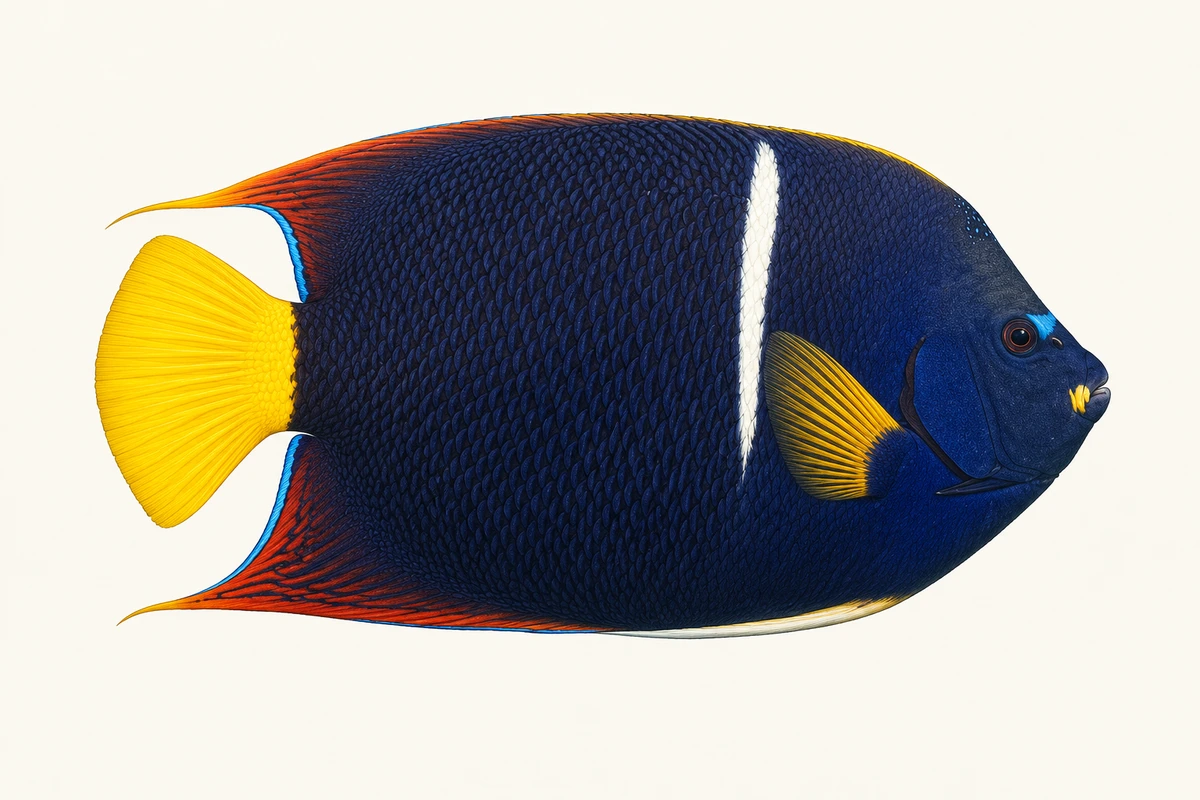
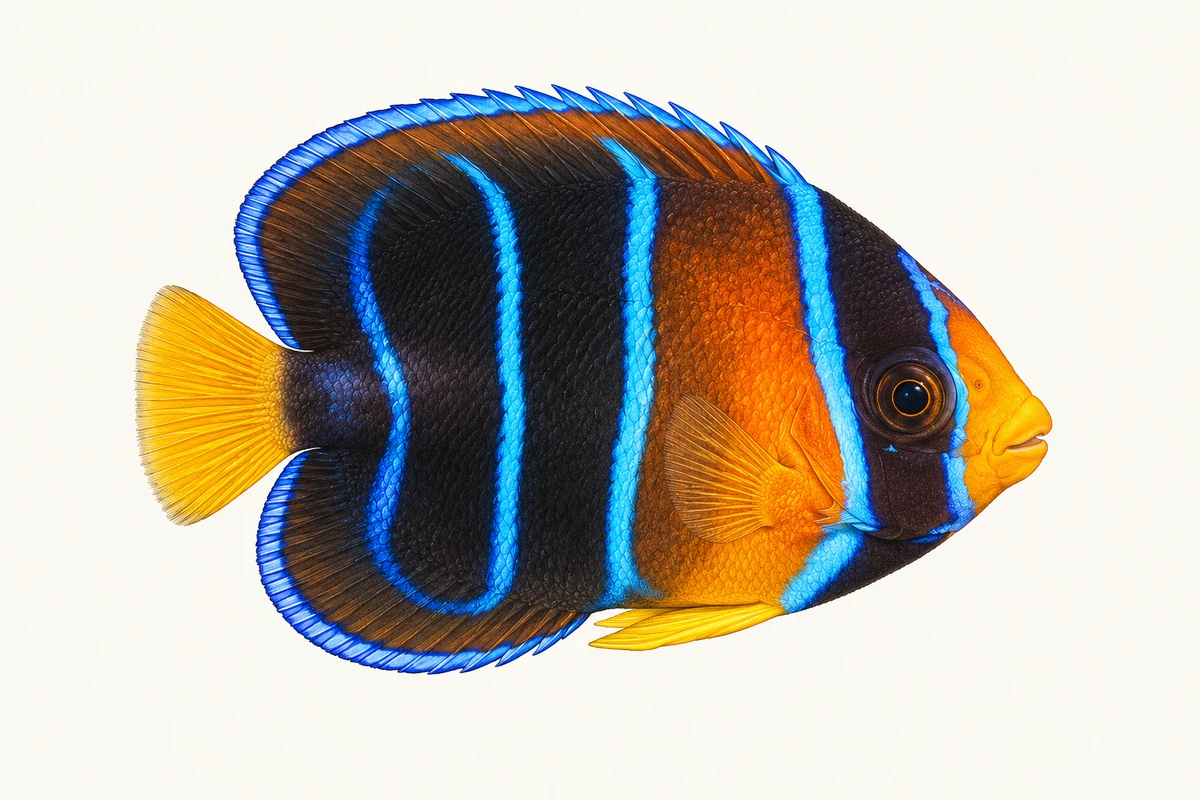
A narrow white bar on a dark blue-gray body is a good start, and the yellow tail makes the adult king angelfish easier to follow. If you see a little orange-and-brown angelfish with several blue bars, you may be looking at the same species as a juvenile.
Color changes a lot with age. The juvenile’s blue bars aren’t a reason to rule this species out. It’s an eastern Pacific angelfish, not the Atlantic queen angelfish.
Galápagos Islands records
An underwater survey recorded this species at Kicker Rock, San Cristóbal in the Galápagos Islands. That’s a documented observation, not a guaranteed sighting.
Fun facts
- The adult white stripe is narrow and runs just behind the pectoral-fin area.
- Adults have a yellow tail and blue-centered scales that give the body a velvety look.
- Long tips on the dorsal and anal fins frame the back of the adult fish.
- Young fish have an orange front, a browner rear and several narrow blue bands.
- Some juveniles turn up in tide pools; rocky reefs and coralline areas are typical habitat for the species.
- Its recorded foods include sponges, other tiny reef animals and material that drifts in the water.
Explore and learn
Look at the entire fish instead of identifying it from the tail. Note whether you saw the single white adult bar or the juvenile’s many fine blue bands.
Practice separating juvenile and adult reef-fish patterns · Explore Stuart Scuba’s worldwide group dive trips




