


← Back to South Florida Fish ID
Ivory Cerith
Cerithium eburneum · Cerithiidae
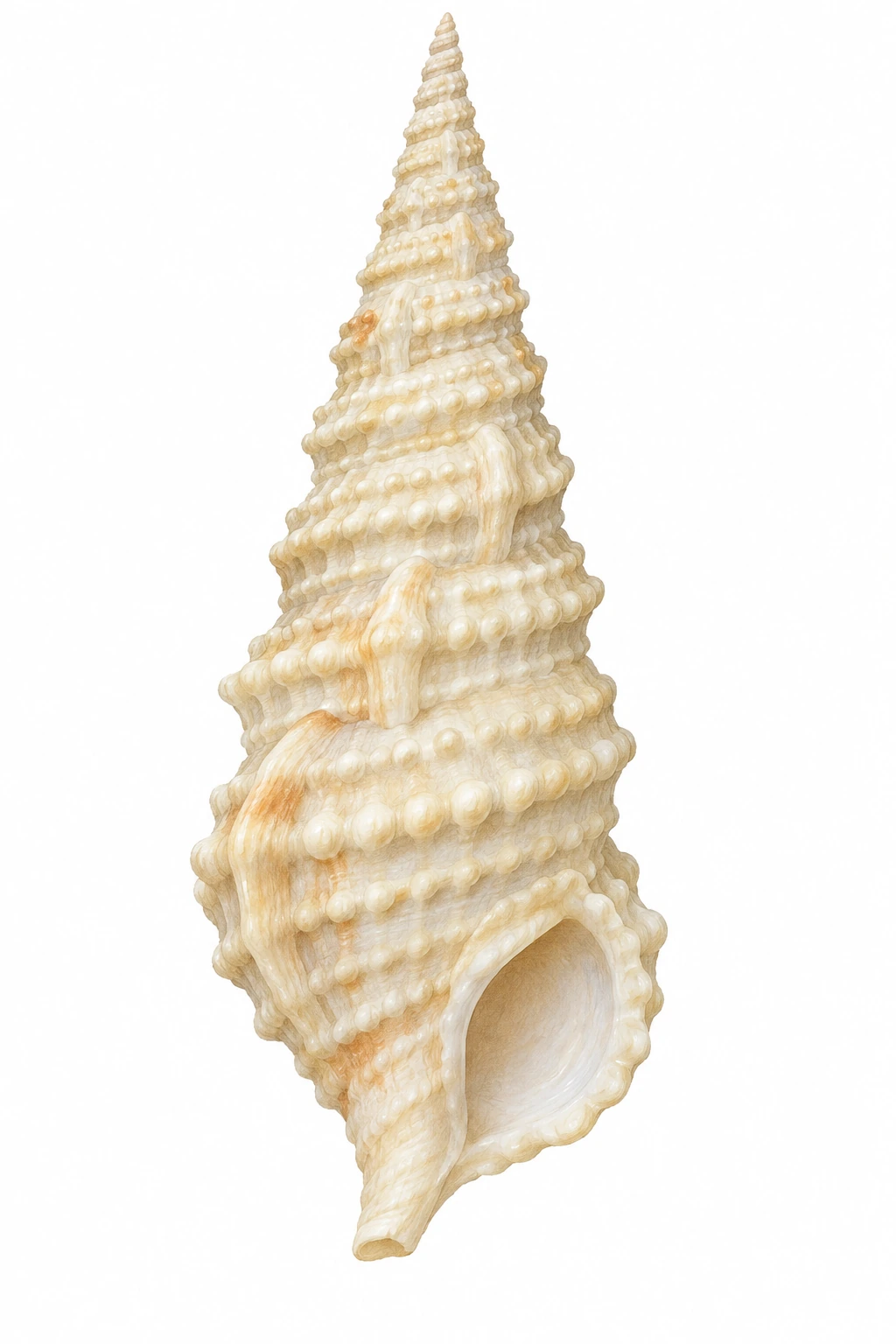
Pale, beadlike cords and occasional thickened ribs break up the outline of this little turret shell. Some individuals carry brown flecks despite the name.
One fun thing to know
A thickened growth mark on the shell is called a varix; the beadlike spiral cords can cross it.
I saw this and want to share
To share this guide with a dive buddy, copy the page link.
How to identify it
- Tapering cream-to-ivory turret, sometimes mottled
- Multiple spiral rows of raised beads or knobs
- Some whorls show raised, thickened growth ridges
Where to look
Recorded in the Biscayne Bay survey and photographed in Broward County and the Florida Keys.
Size
Up to about 4.3 cm (1.7 in).
What it eats
Browses algal and organic films as other ceriths do.
Behavior
As it crawls over bottom cover, sediment and encrustation may hide some of the diagnostic beads.
Reproduction
Egg masses are documented in the regional gastropod literature; no local breeding months are asserted.
Look-alikes
Stocky cerith often has more distinct rows of regularly spaced dark dots and is less uniformly ivory. Use sculpture as well as color.
Can you collect or eat it?
Observation profile, not a harvest or edibility recommendation. Leave living animals and occupied shells in place; follow site rules.
Check current species and site rules before collecting. This guide does not establish permission to collect.
Make your next dive happen
Dive with Stuart Scuba · Train with us · Travel with us · Shop with us



