


Sinuous Cactus Coral
Isophyllia sinuosa · Mussidae · Brain coral · Cayman Islands Fish ID
How to identify it
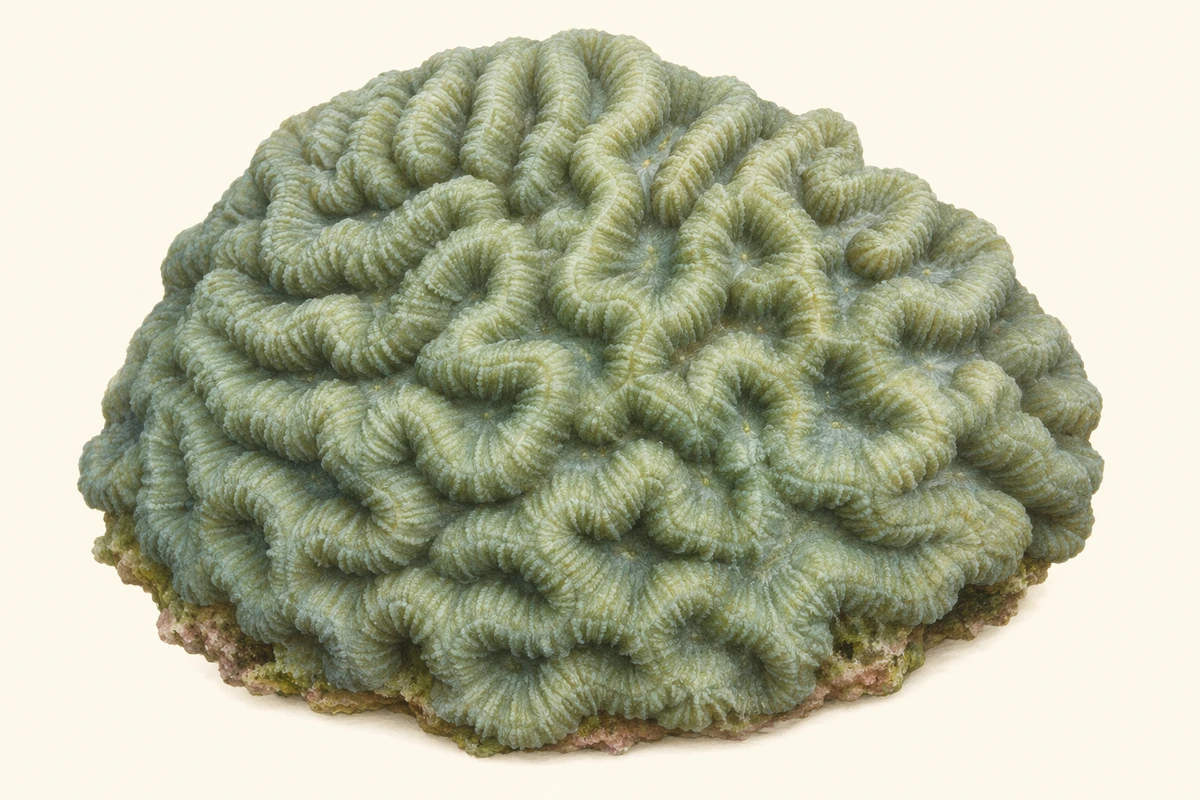
Look for a low, fleshy dome with short grooves that bend like miniature river channels. The colony can look brainlike, but it’s the short connected valleys and soft-looking ridges, not the color, that make this cactus coral worth a closer look.
Rough star coral more often shows separate deep cups or very short valleys. This coral more often shows connected short runs with multiple centers. Nearby brainlike corals can overlap in appearance. Keep an uncertain underwater ID tentative, even with a good photo.
Learn to observe reefs without touching
SDI Coral Conservation is the place to start if you want to learn about coral habitats and how to observe them responsibly.
Start with the colony’s outline and the pattern of its coral cups. Look from a position where you can keep your fins and camera clear of the colony.
- Keep your fins and camera clear: Advanced Buoyancy Control focuses on trim, weighting and hovering.
- Build a broader skill set: Advanced Adventure introduces several specialties, including deep diving and navigation, with opportunities to refine buoyancy.
- For deeper recreational dives already in your plans: Deep Diver focuses on planning depth and managing breathing gas. It’s not needed to identify coral on a shallow dive.
- Record the details: Underwater Photography covers lighting and still-image composition. Underwater Video covers framing and steady footage. Use either without resting gear on the reef.
Cayman Islands records
Little Cayman, 2023–2024 reef transects (exact species in Table 1). No single dive site assigned.
A documented record does not guarantee an encounter on your dive.
Fun facts
- One chunky dome is a colony, not one oversized coral polyp.
- The valleys are short, but one winding valley can hold more than one polyp center.
- Under magnification, thin skeletal ridges carry little pointed teeth. They’re details for photographs and specimens, not a reason to touch living coral.
- The colony can be light green, lavender or yellow, and its walls and valleys can differ in color. Color alone won’t settle the ID.
- Researchers working in Little Cayman recorded this exact coral in their 2023–2024 reef surveys, which tracked the effects of a marine heatwave.
- The reference skeleton selected to anchor the modern species description came from Key Largo, Florida, not the Cayman Islands.
See more on your next dive
Get one photo of the whole dome and one of several valleys from above. No touching, flipping or collecting.




