


← Back to South Florida Fish ID
Island Frillfin
Bathygobius mystacium · Gobiidae
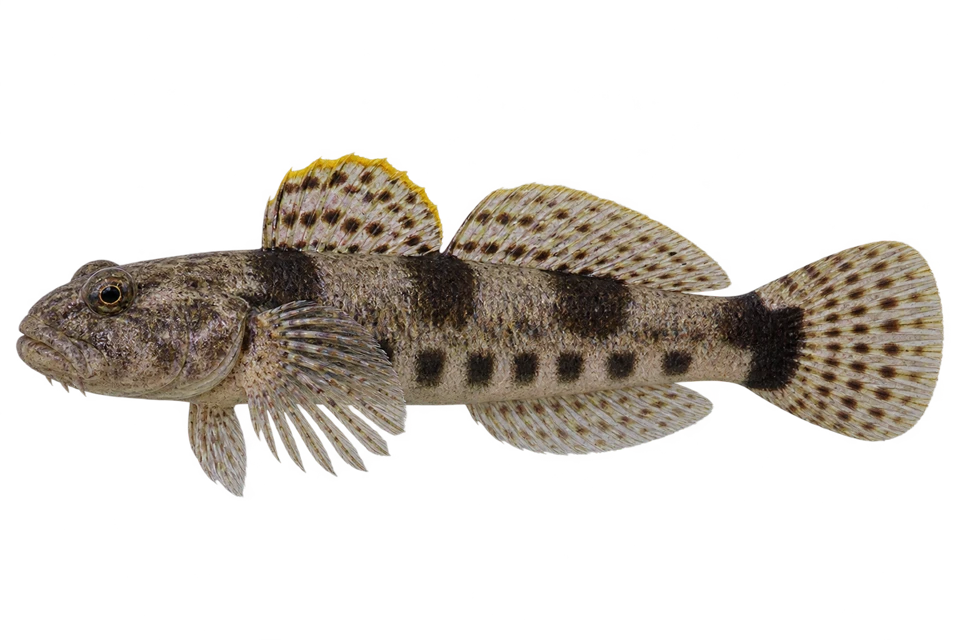
Three saddles over the back and a row of dark squares along the lower flank set off this broad-headed goby.
One fun thing to know
The fringe of free rays at the upper edge of the pectoral fin is what gives frillfin gobies their name.
How to identify it
- Broad flattened head, blunt snout and large close-set eyes.
- Three dark saddles above and six or seven irregular dark lower-flank blotches.
- First dorsal often has a yellow outer edge; linked blotches at base of tail and fine dark tail bars.
Where to look
Very shallow sand-and-rock areas on the seaward shore.
Size
2.8 in (7 cm). Published upper size; measurement type not specified.
What it eats
The species account does not establish its local prey or feeding pattern.
Behavior
Study the side-on outline where rock gives way to sand. Getting low enough to see the entire tail helps confirm the patterned tail base.
Reproduction
Local spawning timing at Blue Heron Bridge is not established in the sources used here.
Look-alikes
Frillfin Goby and other close relatives share the prominent top pectoral rays. Use the three saddles, lower flank blotches and connected tail-base marks together.
Can you collect or eat it?
Enjoy watching it and leave it in the water. This guide does not verify species-specific harvest or food-safety rules. Check the current rules for the exact location, species and method before taking anything, and never collect where prohibited.
Check Florida’s current saltwater rules
Field references
- Smithsonian Shorefishes reference 1
- REEF field survey reference 2
- Florida Museum of Natural History reference 3
I saw this and want to share
Make your next dive happen
Dive with Stuart Scuba · Train with us · Travel with us · Shop with us



