


Fish identification archive / Raja Ampat
Humpback Grouper
Chromileptes altivelis
Raja Ampat field guide
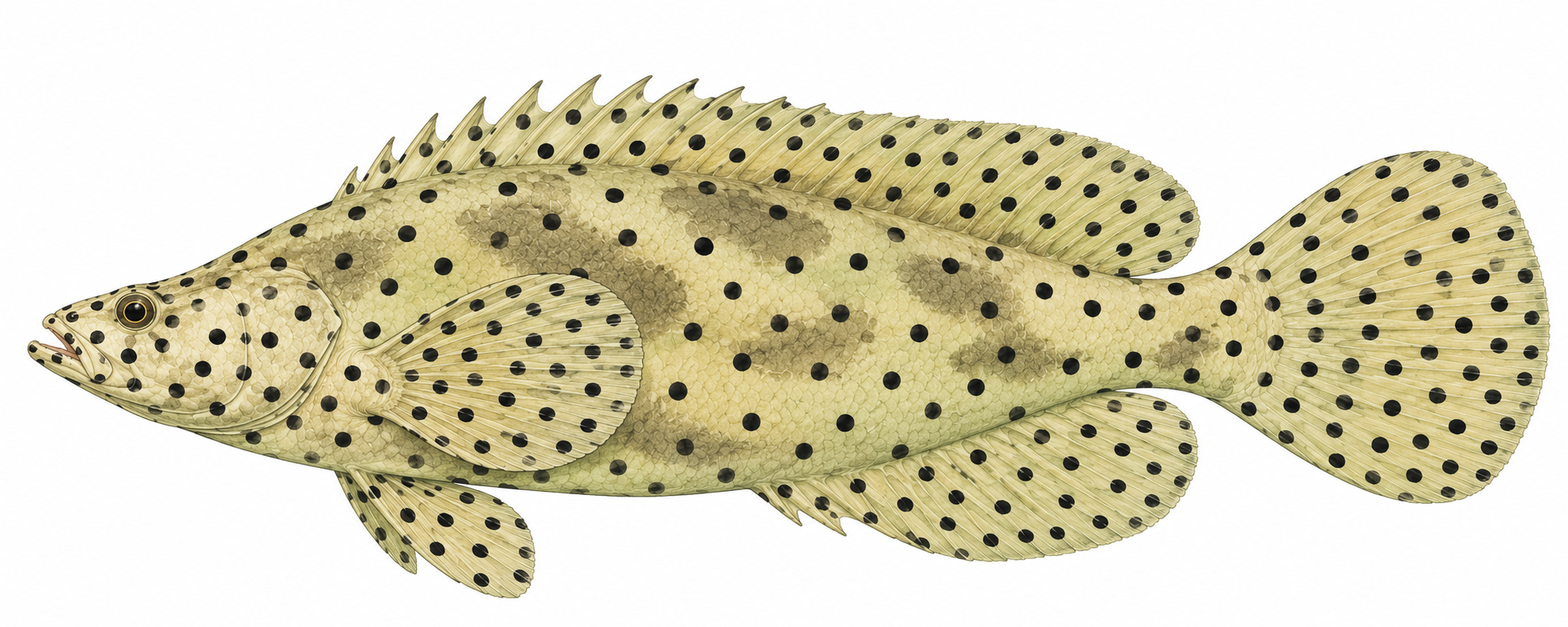
Two things to tell your dive buddy
- Some females change sex to become males during their life cycle.
- Juveniles use very shallow habitats, while larger fish also occupy sheltered, sometimes silty reefs.
How to identify it
Very concave forehead, high back and round black spots on a pale body.
Habitat and where to look
Sheltered inner reefs and lagoons, including silty habitat.
Daily habits and behavior
Juveniles occupy shallow water, sometimes tide pools.
What is on the menu?
Fishes and crustaceans.
Mating and the next generation
Some females become males during their life cycle.
Look-alikes and identification traps
Its deeply concave forehead and high back distinguish it from more conventionally shaped spotted groupers.
Try this observation
Trace the forehead profile visually: its shape is more reliable than colour alone.
Raja Ampat occurrence
Recorded in Raja Ampat; regional occurrence does not guarantee a sighting. This guide does not imply that every site, itinerary or season offers the same chance of an encounter.
Observe, do not disturb
Keep a respectful distance, leave the animal an unobstructed route and follow your dive guide. Do not touch, feed, chase or collect wildlife. Identification does not establish permission to harvest or food safety; Florida harvest labels do not apply to this Indonesian guide.
Sources and review
Reviewed November 18, 2026.
Make your next dive happen
Dive With UsTrain With UsExplore the Raja Ampat tripShop With Us
Questions? (772) 600-8288 or info@stuartscuba.com.




