


← Back to South Florida Fish ID
Hooked Mussel
Ischadium recurvum · Mytilidae
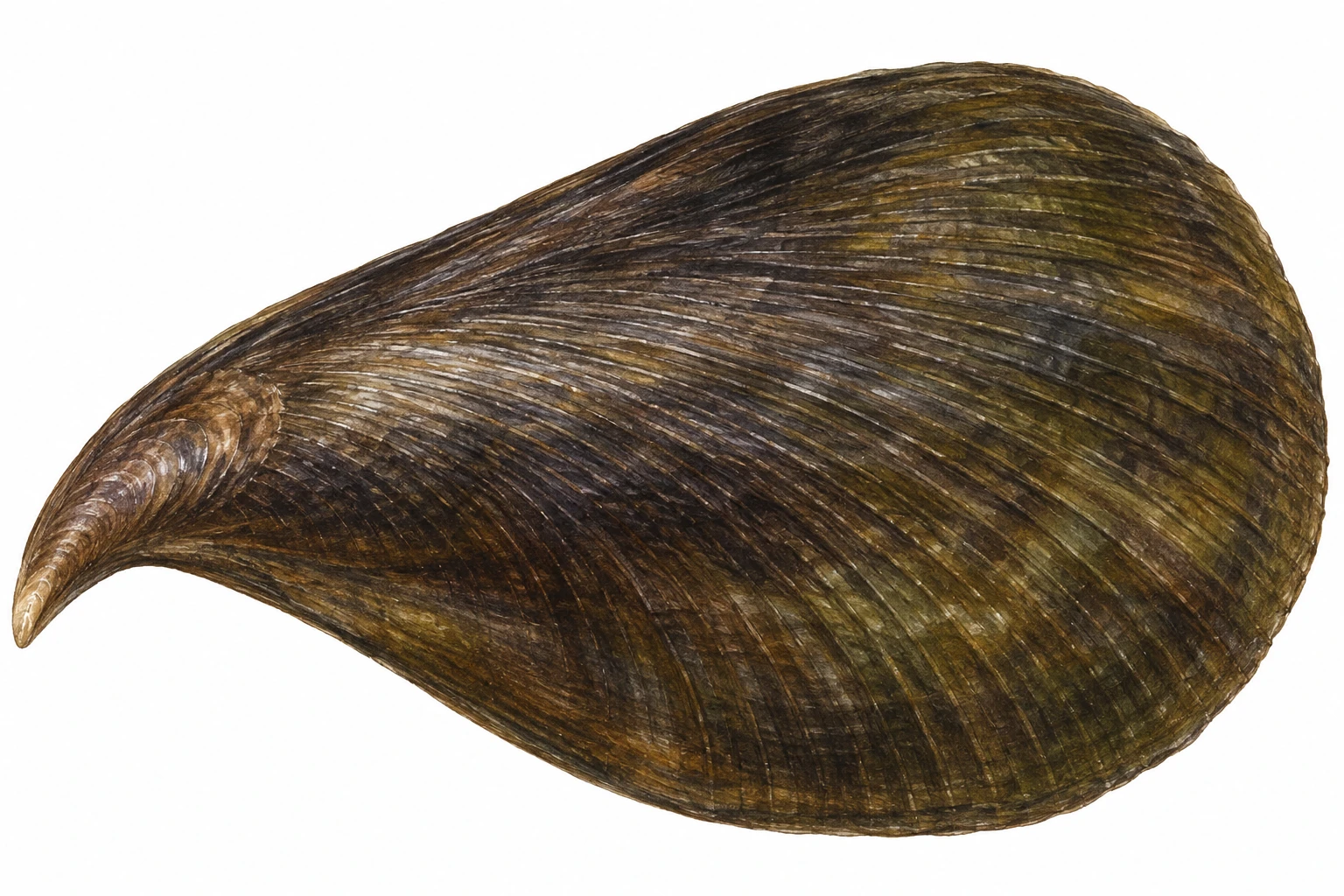
Check oyster clusters and pilings for a dark ribbed mussel with a small hook at its narrow end. Its hooked contour and fine radial sculpture are the strongest clues.
One fun thing to know
An oyster reef gives the hooked mussel hard surfaces to anchor to. A mussel on a live oyster is not part of the oyster itself.
I saw this and want to share
To share this guide with a dive buddy, copy the page link.
How to identify it
- Elongated dark shell with a sharply curved, hooked beak
- Fine ridges radiate from the narrow end and may branch toward the margin
- Inside is purple to rose-brown on empty shells
Where to look
Documented in Florida estuarine and Gulf coast material. Look in protected bay habitat rather than exposed coral-reef walls.
Size
Shell to about 2 in (50 mm).
What it eats
Filters suspended microalgae and organic matter from the water.
Behavior
Anchors by threads to firm surfaces, including live and dead oysters, rocks and pilings.
Reproduction
Its larvae drift in open water. A Florida spawning season is not well established.
Look-alikes
A ribbed mussel may share the general texture, but the sharply curved beak is the better clue. Smooth-shelled mussels lack the combination of both hook and radiating ribs.
Can you collect or eat it?
Observe and leave in place. Check the Florida Fish and Wildlife Conservation Commission’s shell-collecting rules and local protected-area restrictions before removing a live shell.
Check current species and site rules before collecting. This guide does not establish permission to collect.
Make your next dive happen
Dive with Stuart Scuba · Train with us · Travel with us · Shop with us



