


Sandfish Sea Cucumber
Holothuria scabra · Holothuriidae · Sea cucumber · Palau Fish ID
There’s no fin on this sandfish. Look down beside a seagrass bed and you might notice what seems to be a wrinkled lump in the sand. Give it a moment. A lump that slowly goes somewhere is often worth a second look.
How to recognize it
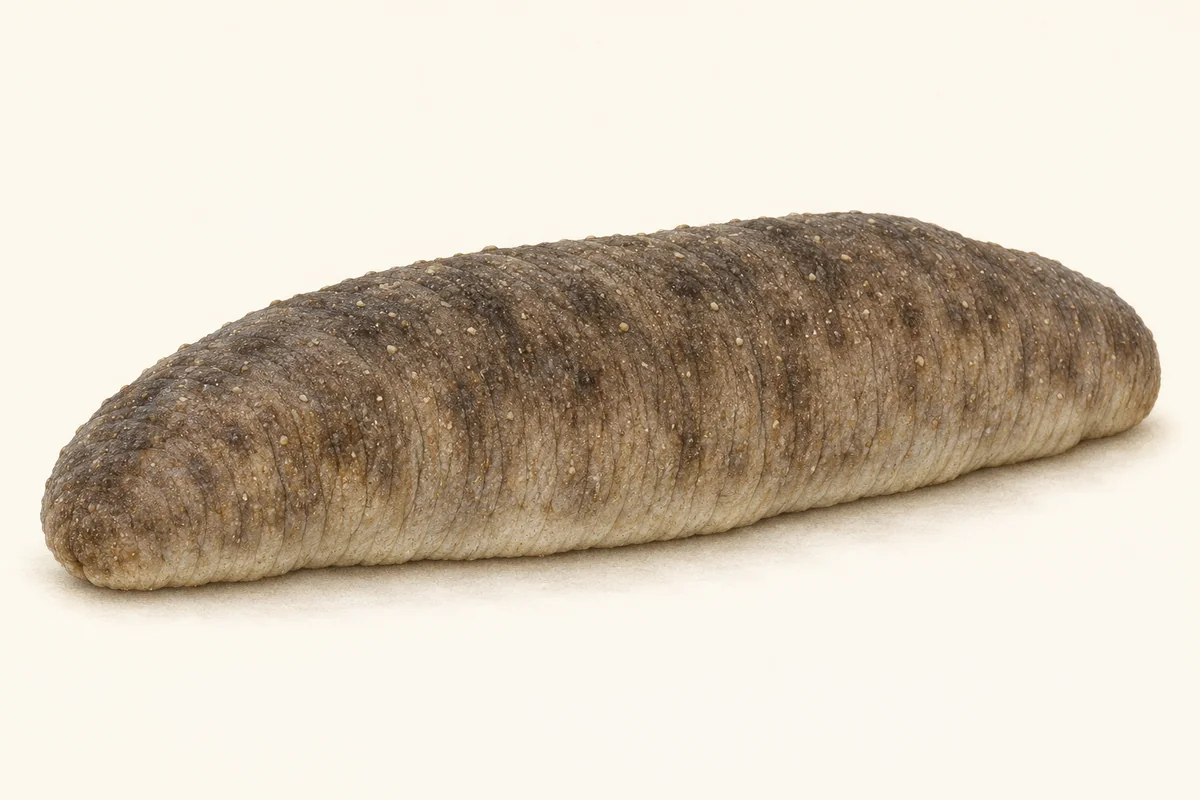
Look for a broad, slightly flattened body with deep crosswise creases, short bumps and a paler underside. The back varies from grayish or mottled brown to darker shades. Judge the wrinkles and the silhouette together; a dark stripe alone is not enough.
Where to look in Palau
Palau surveyors recorded sandfish in Airai, Ngarchelong and Ngatpang. Think sheltered sandy or muddy ground and seagrass edges rather than an exposed reef wall. Ask your guide about suitable habitat; a survey site is not a promise of access or sightings.
Size and life stages
The largest reported examples reach roughly 16 inches (40 cm), though many are closer to 9 inches (24 cm). Small juveniles can be much harder to spot because their first hiding place may be right on the seagrass.
What it does all day
An adult uses short feeding tentacles to gather sediment and take in the organic material mixed through it. It can also bury itself, so a partly visible back may be all the introduction you get.
The next generation
After larvae settle, tiny juveniles can live on seagrass blades. They feed on material growing on the leaves before moving down to the sediment. In other words, the youngsters and adults can use the same meadow in very different ways.
Look-alikes
Gold sandfish can be similar in color, but living sandfish tend to show much deeper crosswise wrinkles and much shorter bumps. A partly buried animal is not always identifiable from a single photo; no need to uncover it to settle the question.
Try this on your next dive
Stop finning before you get close, and take a wide photo showing the wrinkles and its sandy surroundings. Stay off the seagrass and let any buried part stay buried. If you want practice bringing home the details in a photo, try the SDI Underwater Photographer.
Six things to notice
- Sandfish is a sea cucumber, not a fish. It belongs to the same broad animal group as sea stars.
- Palau’s field survey records the local name molech.
- The deep folds run across the body, not the long way down it.
- Newly settled youngsters have been found right on seagrass leaves.
- A juvenile’s early food can come from the thin layer of life that grows on those leaves.
- As it grows, it changes feeding surfaces: from seagrass to the sediment below.
Keep looking through Palau Fish ID or explore our international group dive trips.




