


Pink-and-Black Sea Cucumber
Holothuria edulis · Holothuriidae · Sea cucumber · Palau Fish ID
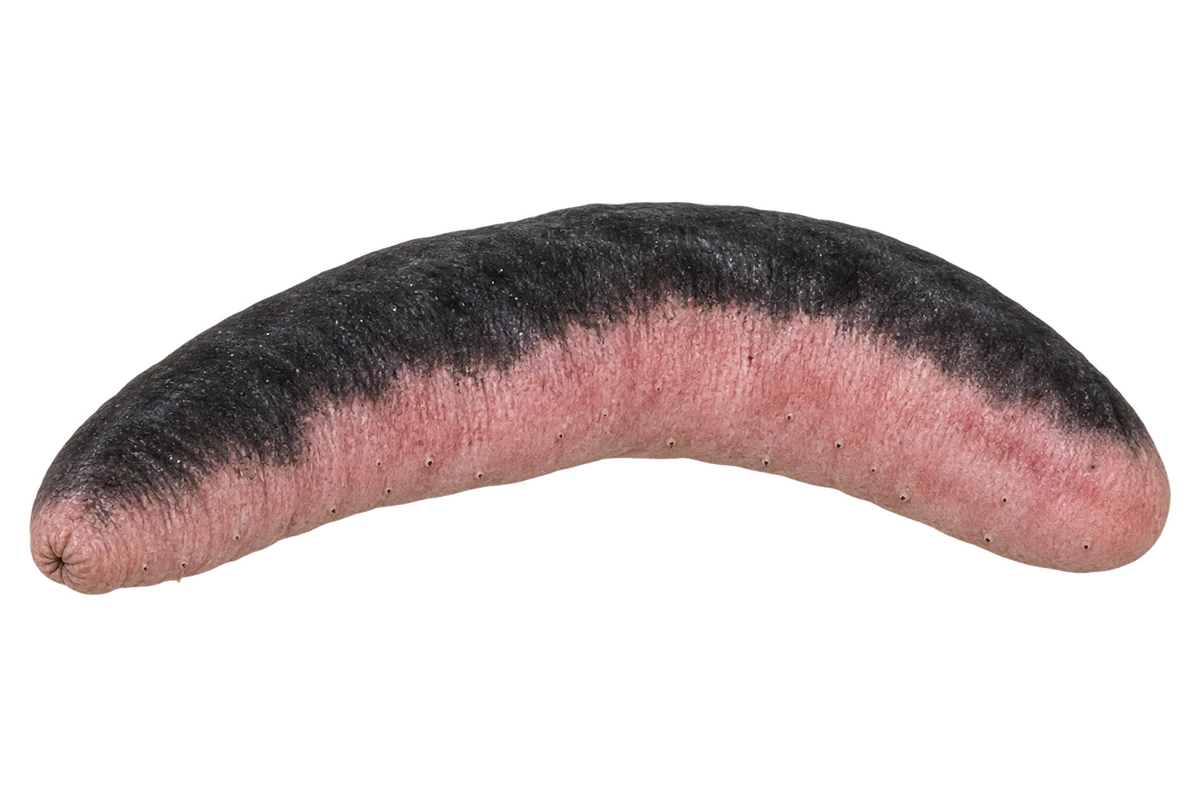
You might notice a very dark cucumber first, then see a stripe of dusty pink where its body bends. That contrast is the useful clue. Think of this animal as part of the crew working over the sand, not as a patch of reef you need to turn over to identify.
How to recognize it
Look for a soft, elongated cylinder with a darker back and a paler, rosy underside or lower sides. The mouth is at one end, ringed with small feeding tentacles that may be pulled in. Shape and the way the colors meet matter more than matching a perfect shade of pink underwater.
Where to look in Palau
Palau surveys recorded the species at Airai, Koror, Ngarchelong and Ngatpang. It also appears in a field photo from the local shallow-lagoon sand habitat. Elsewhere, silty sand mixed with pieces of coral rubble and sheltered reef flats are documented habitats. Let the dive location and conditions guide what you look for.
Size and life stages
An identification manual reports a common length around 9 inches (24 cm) and a maximum around 15 inches (38 cm). A sea cucumber bends and contracts, so judge approximate length and use body pattern as the better clue.
What it does all day
It feeds on material in bottom sediment. The tentacles around the mouth gather material from the surface; the animal ingests it and returns sediment to the bottom. A trail in the sand may hint that an animal passed, but it does not identify which species left it.
The next generation
This species can reproduce sexually and can also divide across its body, with the separated portions regenerating missing parts. Researchers have documented the timing of division in some regions. Do not use that regional timing to forecast the life cycle of an individual at your Palau dive site.
Look-alikes
Palau’s black sea cucumber, Holothuria atra, is a separate species and can also look dark from above. Check for the paler pink lower body on the pink-and-black sea cucumber, but don’t flip one or brush its cover away for a better look.
Try this on your next dive
From the side you may see the pink without shifting the animal. A good photograph includes some undisturbed sand or rubble alongside it so you can remember its habitat and scale. Use natural light or a carefully angled light to compare its upper and lower colors. That’s a useful skill to practice in the SDI Underwater Photographer course.
Six things to notice
- Pink usually shows best where the side curves into the underside.
- The tiny feeding tentacles work more like gathering hands than like teeth.
- Sediment goes in and returns to the seafloor after passing through the animal.
- One Palau survey found the exact species in all four study areas.
- It occurs in several sheltered bottom habitats, not just one.
- This species can reproduce by splitting across its body as well as sexually.
Keep looking through the Palau Fish ID guide, or explore our international group dive trips.




