


Horse’s Hoof Clam
Hippopus hippopus · Cardiidae · Giant clam · Palau Fish ID
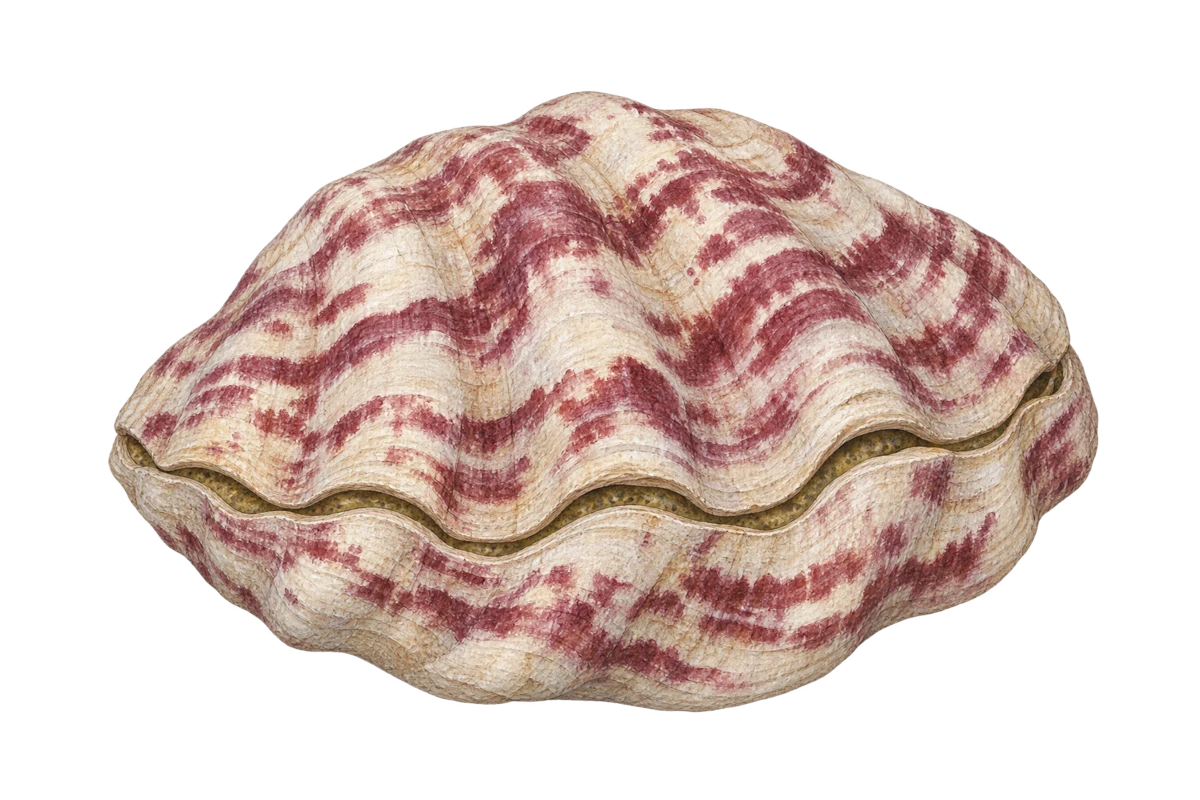
This giant clam puts the shell first. It’s squat, heavy-looking and often rusty-blotched, and its soft mantle stays tucked inside the rim. Think hoof rather than frilly dinner plate.
How to recognize it
Look for a thick, squat shell, often with reddish blotches that form irregular bands. The dull olive, tan or gray mottled mantle remains inside the shell edge instead of spilling over.
Where to look in Palau
The Palau reef census recorded this exact species. An older survey also documented it at Helen Reef in the remote southwest. Sand, rubble and seagrass near reef are different places to look, not reasons to leave a planned route.
Size and life stages
Reported shell length reaches about 20 inches (51 cm). Shell wear and growth change what you see, so combine shape and mantle position rather than using size alone.
What it does all day
Its opening faces the light and water above the seafloor. It filters food from passing water and houses photosynthetic algae in its tissues.
The next generation
It begins life as drifting larvae before settling. Without a good view of a small shell, note the broader giant-clam group rather than guessing.
Look-alikes
Many Tridacna clams drape the mantle over the shell edge. A recessed mantle suggests Hippopus, but its relative the China clam also keeps the mantle inside. Look for the heavy shell with irregular reddish markings as a second clue.
Try this on your next dive
Make a photo with the near shell margin and the recessed soft tissue both in focus. Resist the urge to rotate or move the animal for a better angle. If you want practice bringing home the details in a photo, try the SDI Underwater Photographer.
Six things to notice
- The hoof-inspired nickname refers to the shell’s bulky outline.
- It belongs to Hippopus, a different genus from Tridacna.
- Unlike many Tridacna, its mantle stays inside the shell margin.
- The shell often carries irregular reddish bands or blotches.
- It can live on sand or in seagrass as well as around reef.
- Palau researchers counted it separately from the other giant clams in their survey.
Keep looking through Palau Fish ID or explore our international group dive trips.




