


Sunray Lettuce Coral
Helioseris cucullata · Agariciidae · Stony coral · Cayman Islands Fish ID
How to identify it
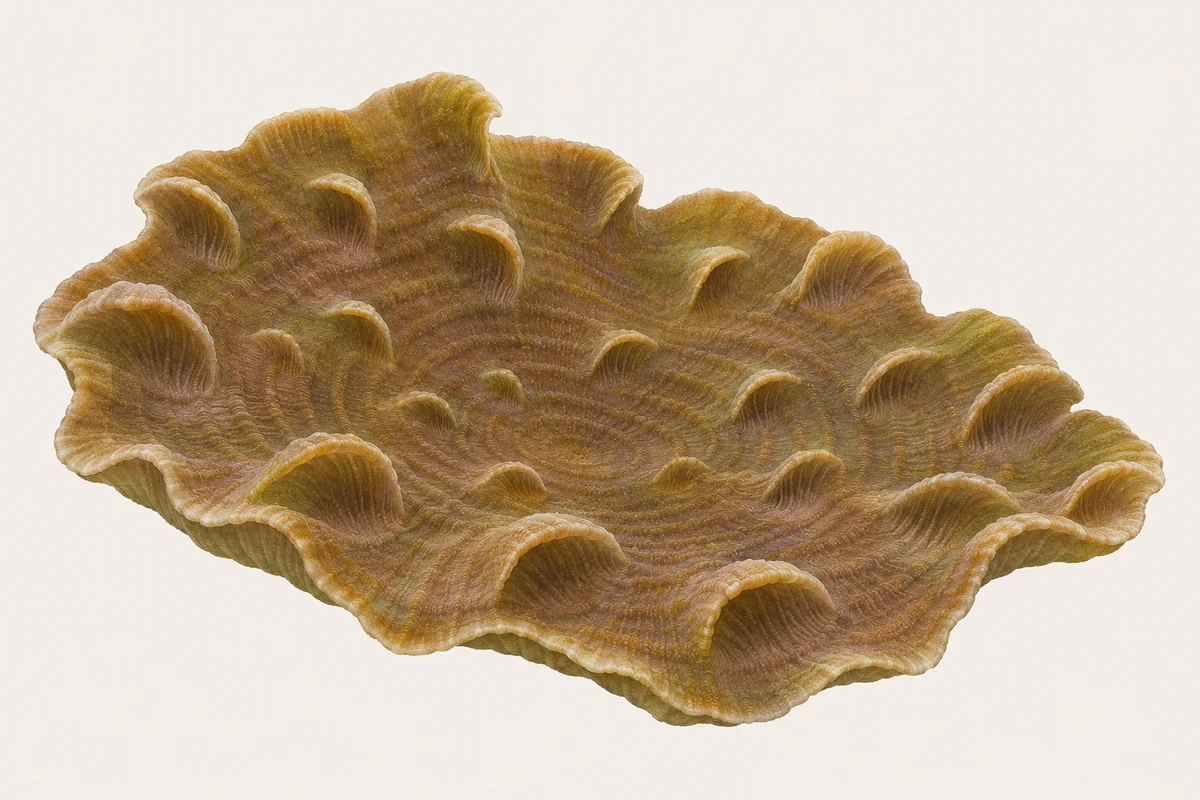
Sunray lettuce coral builds thin plates with surface cups that angle outward toward the rim. The cups are larger and more conspicuous than those of typical lettuce coral. A good side-lit photo can show the difference.
Typical lettuce coral often shows finer angular cups and pointed ridges; the sunray coral’s larger cups tilt toward the outside edge.
Learn to observe reefs without touching
SDI Coral Conservation is the place to start if you want to learn about coral habitats and how to observe them responsibly.
Start with the colony’s outline and the pattern of its coral cups. Look from a position where you can keep your fins and camera clear of the colony.
- Keep your fins and camera clear: Advanced Buoyancy Control focuses on trim, weighting and hovering.
- Build a broader skill set: Advanced Adventure introduces several specialties, including deep diving and navigation, with opportunities to refine buoyancy.
- For deeper recreational dives already in your plans: Deep Diver focuses on planning depth and managing breathing gas. It’s not needed to identify coral on a shallow dive.
- Record the details: Underwater Photography covers lighting and still-image composition. Underwater Video covers framing and steady footage. Use either without resting gear on the reef.
Cayman Islands records
Cayman reef surveys documented it under the previous name Leptoseris cucullata. The record used here is pooled across the Cayman Islands.
Fun facts
- Sunray lettuce coral was once placed in Leptoseris and Agaricia.
- A thin plate is built by many polyps, not a single sheetlike animal.
- Its surface cups tilt toward the edge of the plate.
- The cups are noticeably larger than those of many Agaricia lettuce corals.
- Research has documented small gall crabs living in this coral elsewhere in the Caribbean.
See more on your next dive
Take a diagonal photo that shows the plate rim and which way the cups point, without shining your light in another diver’s eyes.




