


Harlequin Wrasse
Bodianus eclancheri · Labridae · Wrasse · Galápagos Islands Fish ID
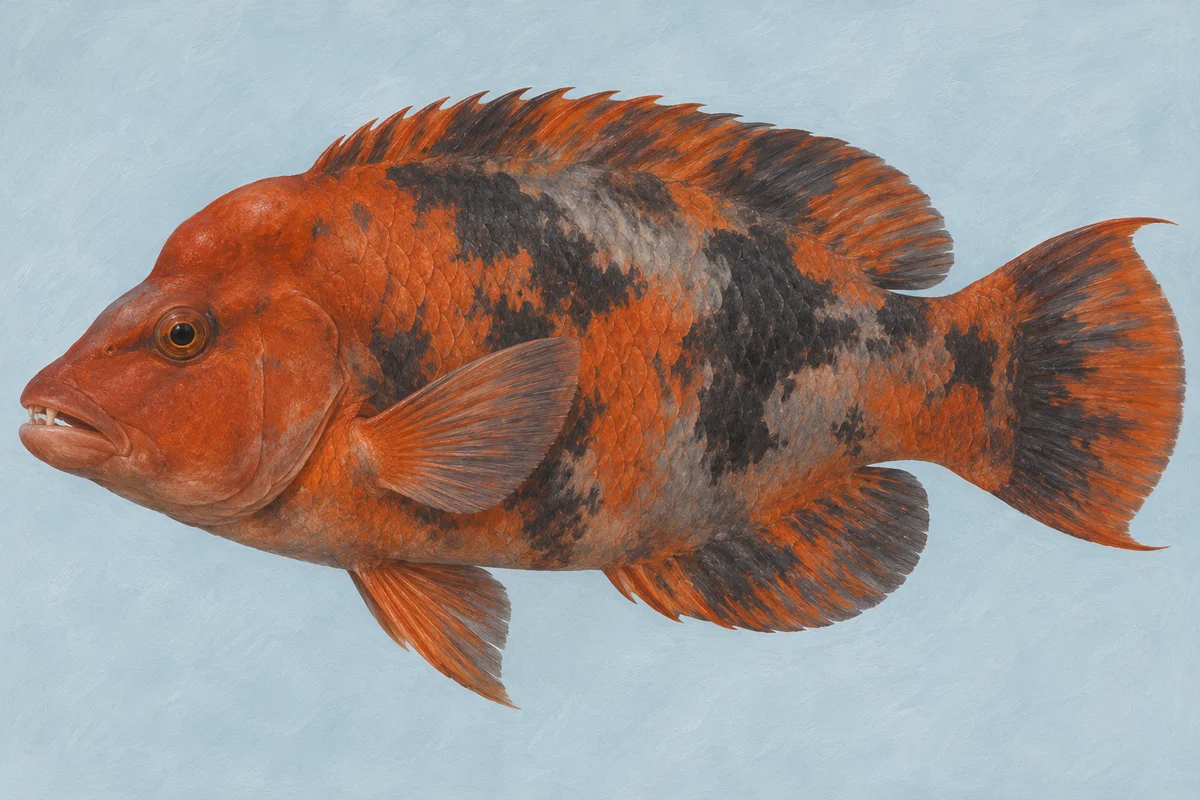
How to identify it
This stocky Galápagos wrasse can be rusty orange and charcoal, pale with dark blotches or almost plain brown. Look first at the pointed snout, tall shoulders and large scales rather than expecting the same colors on every fish.
Other hogfish have pointed snouts, too. Look for the deeper body and, on a large male, the raised forehead and fine extensions at the tail tips. The name can also be confused with an unrelated Indo-Pacific wrasse sold as a harlequin tuskfish.
Galápagos Islands records
A museum specimen documents the harlequin wrasse from Isabela, and underwater surveys have recorded it at Floreana. These are verified records, not a promise of what you’ll see on a dive. A record does not guarantee a sighting.
Fun facts
- Adults don’t all look alike. Some are dark gray or brown; others are orange or pale with irregular black blotches.
- Big males can have a noticeable bump right between the eyes.
- On a mature male, the top and bottom tips of the tail can trail into slender filaments.
- The snout comes to a point, and strong canine teeth help it handle hard-bodied prey.
- Look around rock rather than open water. In the Galápagos, this fish is especially associated with the cooler western reefs.
- A big adult can be about as long as a short swim fin.
Explore and learn
Watch the rocky reef without following the fish down the slope. If one passes within a comfortable distance, a side view will capture those irregular color patches better than a shot from above.
Get better at reading fish shapes and patterns with Reef Fish Identification · Explore Stuart Scuba’s group dive trips




