


Harlequin Grouper
Cephalopholis polleni
Two details worth remembering
- It may swim upside down beneath an overhang or cave roof. Orientation can be a useful behavioural clue, not evidence that a fish is unwell.
- Its name honours François Pollen, one of the collectors of the type specimen: a small reminder that fish names often preserve the history of exploration.
How to identify it
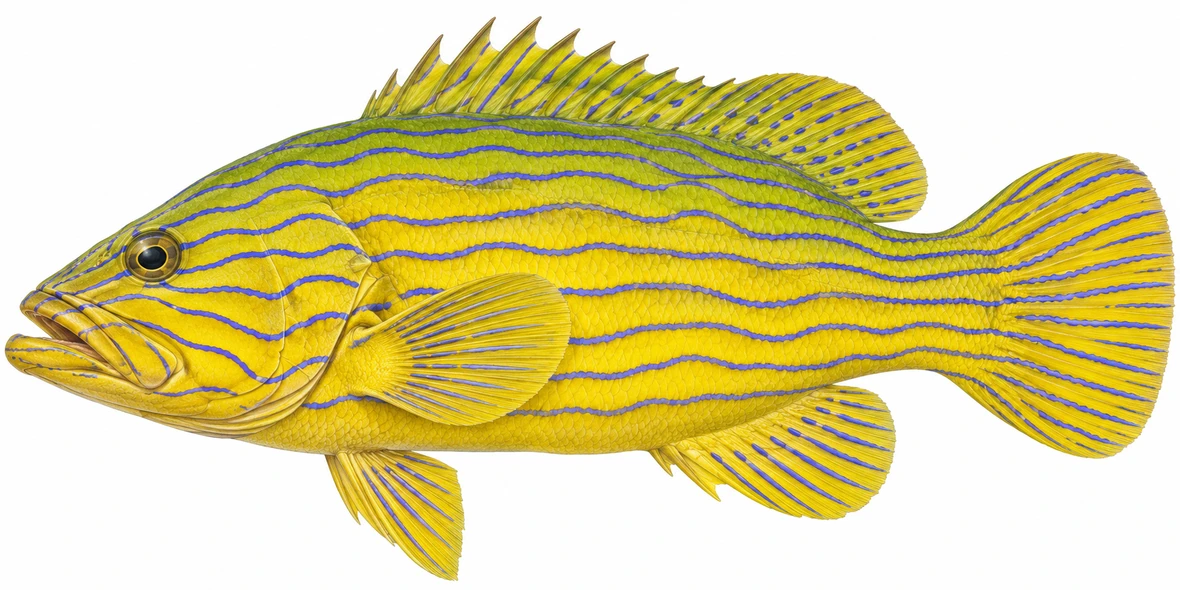
A yellow to greenish-yellow grouper covered in brilliant blue lines. Unlike the many blue-spotted groupers, the markings read as stripes rather than isolated dots.
Where to look
A solitary oceanic-island fish associated with clear, steep drop-offs, cracks and overhangs, usually deeper than 30 m. It is a specialist encounter, not a common shallow-reef expectation; stay within the planned depth and do not enter a cave to look for one.
Look-alikes
Blue-spotted hinds have separate dots. Confirm the yellow ground colour and fine blue striping rather than relying on a flash of blue.
What to watch for underwater
When a sheltered fish is naturally visible from open water, note whether its blue markings are continuous lines and whether it is inverted.
Recorded in Raja Ampat
This species has a published Raja Ampat record. A regional record does not guarantee a sighting on a particular dive.
Sources: fishesofaustralia.net.au species reference · Regional survey record
I saw this and want to share
Back to Raja Ampat Fish ID · Dive Raja Ampat with Stuart Scuba




