


Fish identification archive / Raja Ampat
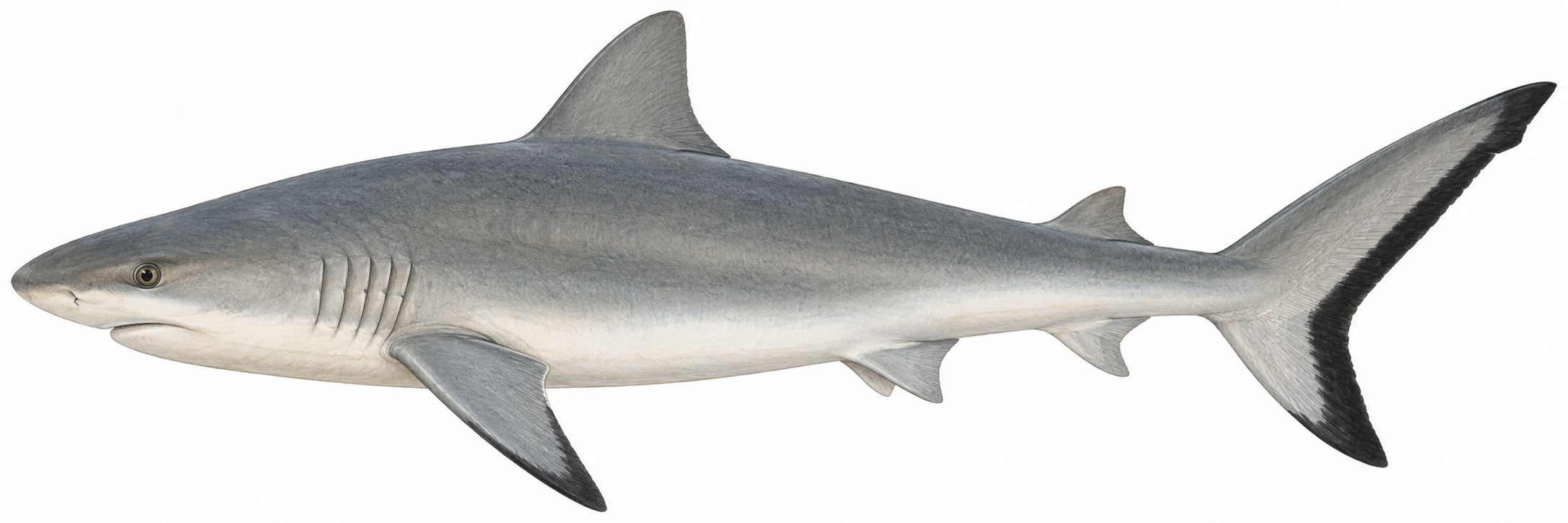
Grey Reef Shark
Carcharhinus amblyrhynchos
Raja Ampat field guide
Six things worth knowing
- A reef-edge regular. On the outer slopes studied in Palau, groups often used reef crests and slopes exposed to strong currents.
- A reef can be a home base. Tracking on Australia’s Great Barrier Reef found that some individuals stayed associated with particular reef platforms, though others moved between them.
- A moving depth line. The tagged sharks in Palau shifted their depths over the course of the day and across seasons.
- An eye for a feeding opportunity. Researchers watched grey reef sharks move in when marbled groupers gathered to spawn.
- More than fish on the menu. Reef fishes are important prey, but squid and octopuses are also on the menu.
- Live-born pups. Grey reef sharks give birth to live young rather than leaving egg cases on the reef.
How to identify it
Grey to bronze above and pale below, with a broad black border along the rear of the tail. The first dorsal fin lacks the blacktip reef shark’s bold black cap; its edge may be pale.
Habitat and where to look
Reef slopes, drop-offs and channels, especially near outer reef edges where currents run.
Daily habits and behavior
A cruising reef predator. Crowding or blocking its route can provoke a defensive display: lowered pectoral fins, an arched back and exaggerated swimming. Give it space and follow the guide’s direction.
What is on the menu?
Mainly fishes, with squid, octopuses and crustaceans also taken.
Mating and the next generation
Females give birth to small litters of live pups; reported litters contain one to six.
Look-alikes and identification traps
Blacktip reef shark: conspicuous black first-dorsal cap. Whitetip reef shark: slender body, broad short snout and white first-dorsal and upper-tail tips.
Try this observation
Observe from the group without approaching, pursuing or obstructing the shark.
Raja Ampat occurrence
Recorded in Raja Ampat; a regional record is not a promise of a sighting on a particular dive. This guide does not imply that every site, itinerary or season offers the same chance of an encounter.
Observe, do not disturb
Keep a respectful distance, leave the animal an unobstructed route and follow your dive guide. Do not touch, feed, chase or collect wildlife. Identification does not establish permission to harvest or food safety; Florida harvest labels do not apply to this Indonesian guide.
Build your shark ID skills
Practice reading the silhouette, fin marks, and behavior with Stuart Scuba’s SDI Shark Awareness course. If you’re building experience on varied reef dives, Advanced Adventure is a useful next step. If a separate, guided itinerary includes a deeper site, Deep Diver focuses on planning that depth and managing gas. It isn’t needed just to identify this shark.
Sources and review
Reviewed November 18, 2026.
Make your next dive happen
Dive With UsTrain With UsExplore the Raja Ampat tripShop With Us
Questions? (772) 600-8288 or info@stuartscuba.com.




