


← Back to South Florida Fish ID
Giant Tun
Tonna galea · Tonnidae
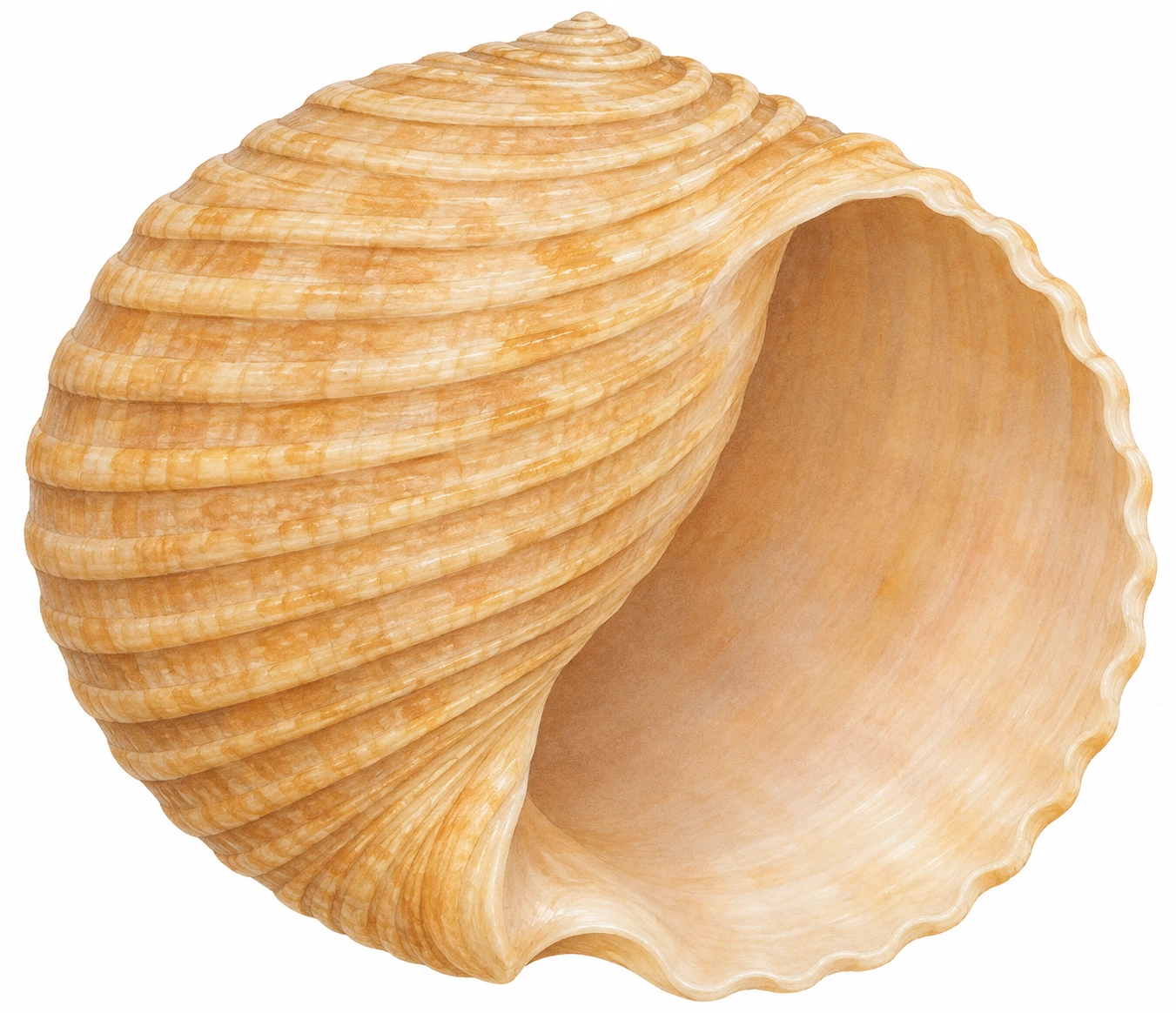
This broad, round snail has a thin shell with wide flattened ribs. A short spire and large mouth give it a barrel-like outline.
One fun thing to know
The shell ribs remain visible on the inside of the large opening.
I saw this and want to share
To share this guide with a dive buddy, copy the page link.
How to identify it
- Bulbous shell with low apex
- About 20 broad, flattened spiral ridges in the shell museum account
- Large opening exposes thin shell and inner rib pattern
Where to look
Florida collections record it from the Lake Worth area; a small shell has been photographed in Islamorada.
Size
The shell can reach about 15 cm (5.9 in).
What it eats
Predatory tun snails eat echinoderms, including sea cucumbers; do not infer prey from an empty shell.
Behavior
Searches soft bottom; the expanded shell is relatively thin, not solid and heavy like many other large snails.
Reproduction
Captive observations document egg masses and development inside capsules before larvae hatch.
Look-alikes
Atlantic partridge tun is usually more elongated with a higher spire and pale alternating marks along its ribs.
Can you collect or eat it?
Observation profile, not a harvest or edibility recommendation. Leave living animals and occupied shells in place; follow site rules.
Check current species and site rules before collecting. This guide does not establish permission to collect.
Make your next dive happen
Dive with Stuart Scuba · Train with us · Travel with us · Shop with us



