


Giant Grouper
Epinephelus lanceolatus
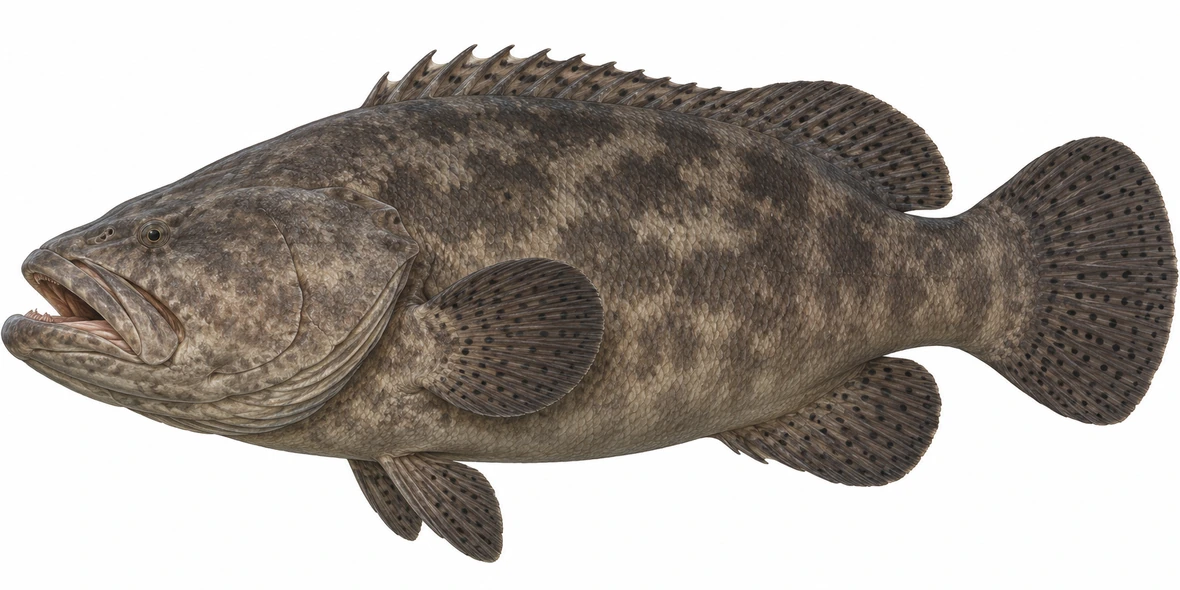
Two details worth remembering
- The bright yellow-and-black “bumblebee” juvenile grows into a huge, comparatively muted adult. Colour alone can hide the connection.
- This is not the Atlantic goliath grouper. The giant Indo-Pacific species is a distinct fish, even though both impress divers with their size.
How to identify it
A massively built grouper with a broad head and rounded tail. Large adults are grey-brown with subdued mottling; small juveniles are dramatically different, bright yellow with irregular broad black areas.
Where to look
A solitary fish of reefs, caves, wrecks, lagoons and sheltered inshore areas. Large animals may hover above the bottom or remain almost motionless. Give them room rather than interpreting stillness as an invitation to approach.
Natural history
Lobsters, crabs and fishes; documented prey also include small sharks, rays and young sea turtles.
May form spawning aggregations; the cited museum account does not establish local Raja timing.
Look-alikes
Compare with potato grouper, whose large dark potato-like blotches remain conspicuous. Do not identify by size alone.
What to watch for underwater
Estimate size only against an object already in the scene, and document the juvenile or adult colour phase.
Recorded in Raja Ampat
This species has a published Raja Ampat record. A regional record does not guarantee a sighting on a particular dive.
Sources: fishesofaustralia.net.au species reference · Regional survey record
I saw this and want to share
Back to Raja Ampat Fish ID · Dive Raja Ampat with Stuart Scuba




