


Fish identification archive / Raja Ampat
Giant Frogfish
Antennarius commerson
Raja Ampat field guide
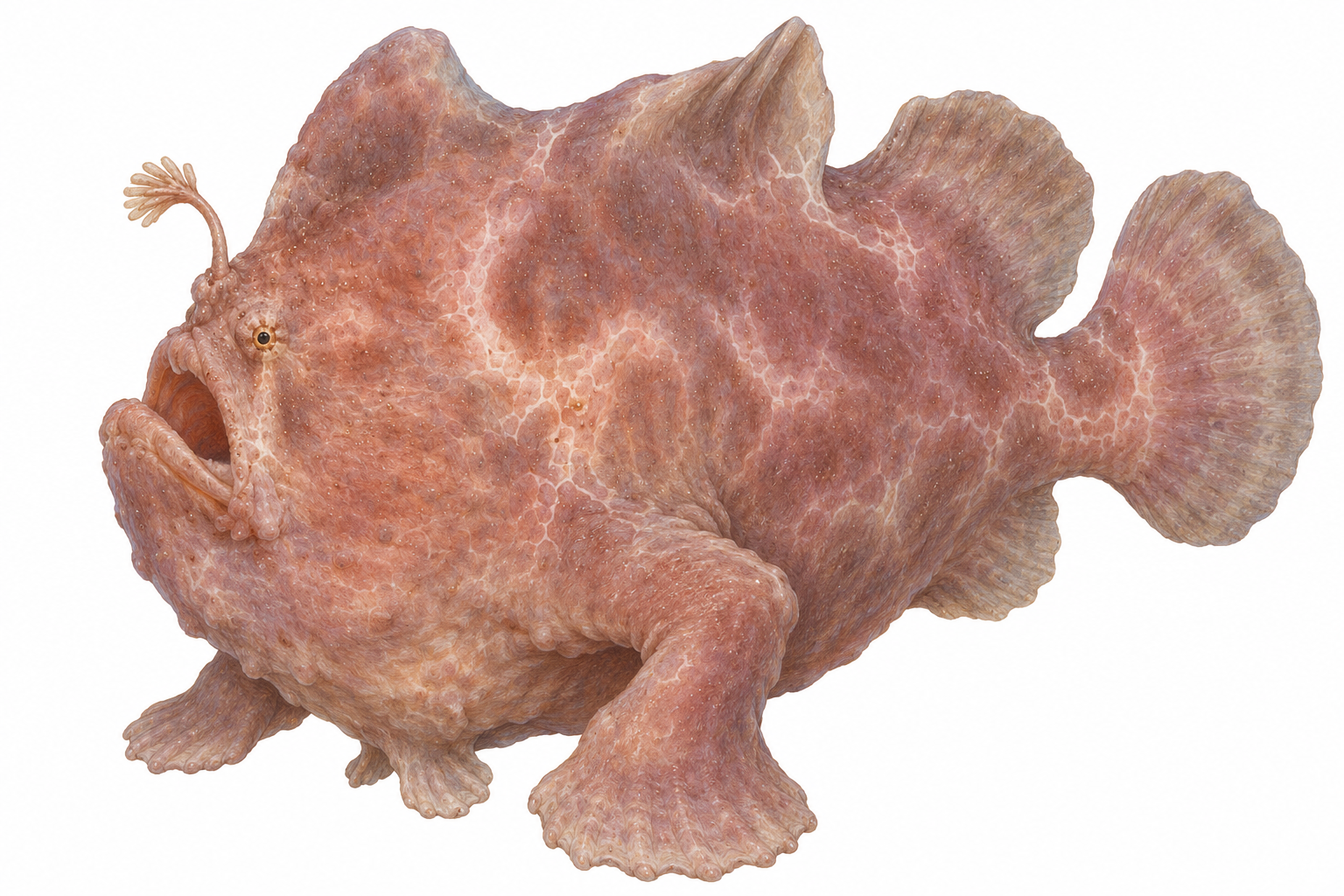
Two things to tell your dive buddy
- Its fishing rod is a modified dorsal-fin spine, complete with a lure at the tip.
- Eggs leave the reef in a floating gelatinous raft, rather than staying beside the parent.
How to identify it
Large sponge-like body; second dorsal spine thickens toward its tip. Colour alone is unreliable.
Habitat and where to look
Shallow reefs and seagrass, often associated with sponges.
Daily habits and behavior
Waits in camouflage and uses its lure to draw prey close.
What is on the menu?
Fishes taken by rapid suction.
Mating and the next generation
Eggs develop in a floating gelatinous raft.
Look-alikes and identification traps
Painted frogfish has a relatively longer lure stalk; colour is unreliable.
Try this observation
Look for the lure without touching the fish or the sponge beneath it.
Raja Ampat occurrence
Recorded in Raja Ampat; regional occurrence does not guarantee a sighting. This guide does not imply that every site, itinerary or season offers the same chance of an encounter.
Observe, do not disturb
Keep a respectful distance, leave the animal an unobstructed route and follow your dive guide. Do not touch, feed, chase or collect wildlife. Identification does not establish permission to harvest or food safety; Florida harvest labels do not apply to this Indonesian guide.
Find the frogfish’s outline before its color
Look for the broad upturned mouth and pectoral fins braced on the reef. If the lure is visible, it is a small tuft above the mouth. The body can blend in so well that a side view tells you more than the color does.
SDI Underwater Videographer course: Practice filming a motionless subject without trying to make it walk or show its lure.
Sources and review
Reviewed November 18, 2026.
Make your next dive happen
Dive With UsTrain With UsExplore the Raja Ampat tripShop With Us
Questions? (772) 600-8288 or info@stuartscuba.com.




