


Giant Damselfish
Microspathodon dorsalis · Pomacentridae · Damselfish · Galápagos Islands Fish ID
How to identify it
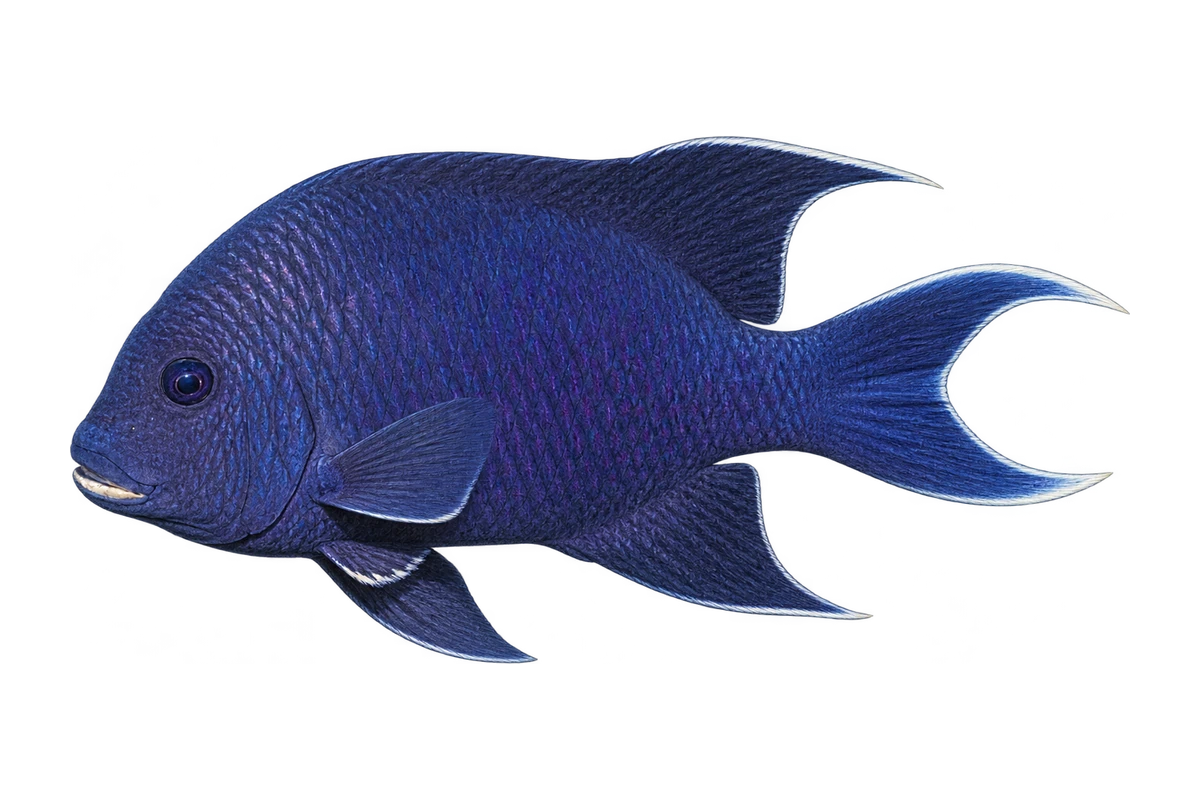
Giant Damselfish can be almost as big as Bumphead Damselfish, but don’t let the size fool you. Look at the smoother forehead and the pointed fins.
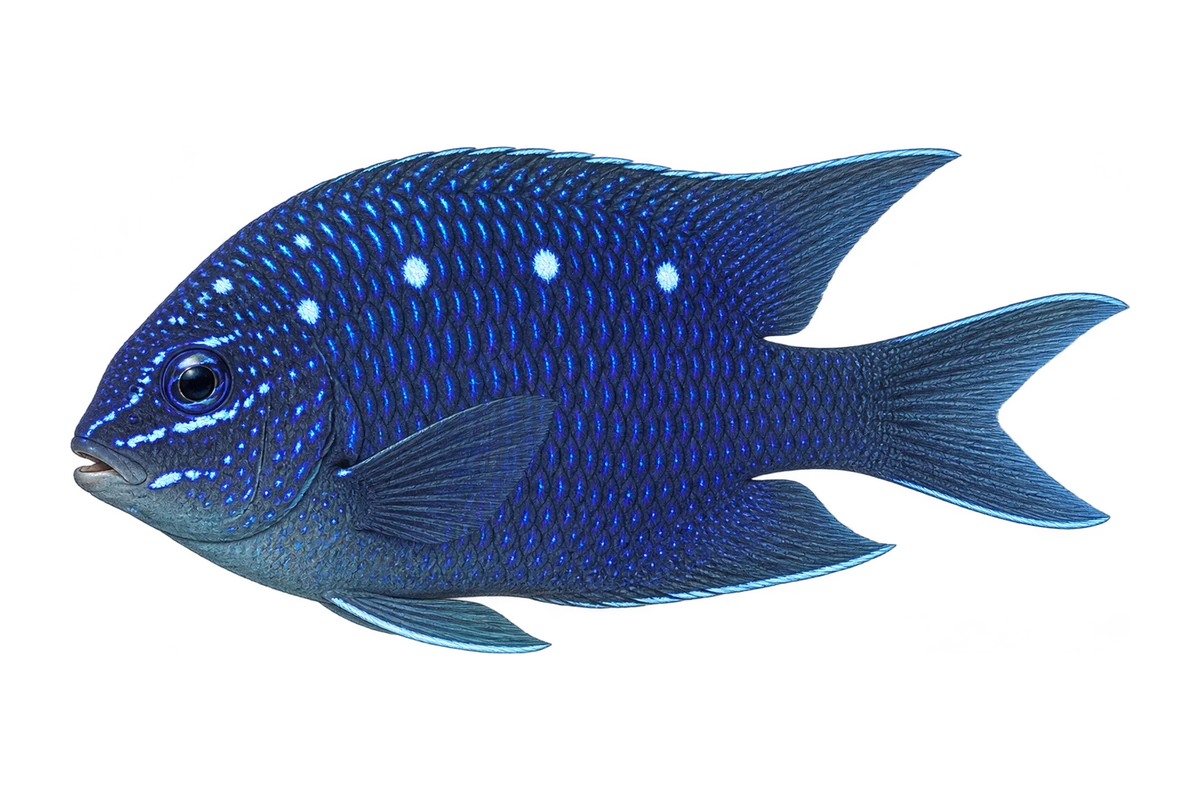
The Bumphead has a forward forehead hump and blunter angles to the fins. Blue juvenile spots aren’t an adult ID mark and shouldn’t be used to label every dot-patterned damselfish.
Galápagos Islands records
Dive surveys recorded this fish at Cape Marshall, Isabela. The record tells us it occurs there, not that you will see one.
Fun facts
- The adult forehead lacks the dramatic bump seen on a mature Bumphead Damselfish.
- The ends of the dorsal, anal and tail fins often taper to points, with narrow pale edging.
- A breeding male can develop a surprisingly pale front half, so color alone can fool you.
- Typical juveniles show neon-blue lines on the face and four blue spots along the upper side.
- Some Panamanian juveniles have a greenish color form. That is not evidence of that form at Galápagos.
- A big adult can reach about 38 cm, and the species is associated with rocky reefs.
Explore and learn
Watch quietly from where you can hold position without touching the reef. A clear side view usually tells you more than following the fish.
Practice identifying reef fish with Stuart Scuba · Explore Stuart Scuba’s group dive trips




