


Gardiner’s Coral
Gardineroseris planulata · Agariciidae · Colonial coral · Galápagos Islands Fish ID
How to identify it
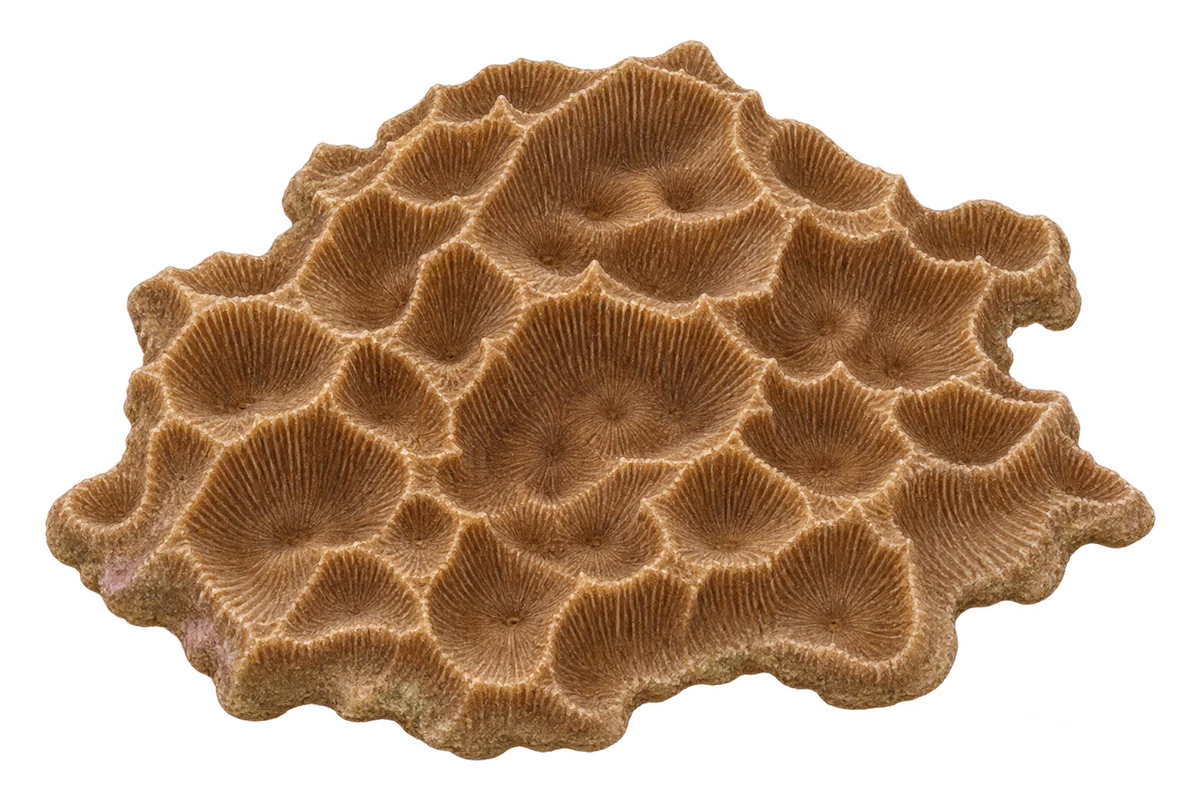
Up close, Gardiner’s coral looks like a patch of tiny bowls carved into the reef. Sharp ridges separate the depressions, and the fine lines inside each one are easier to see in a close photo than through a mask.
Learn to observe reefs without touching
SDI Coral Conservation is the place to start if you want to learn about coral habitats and how to observe them responsibly.
Start with the colony’s outline and the pattern of its coral cups. Look from a position where you can keep your fins and camera clear of the colony.
- Keep your fins and camera clear: Advanced Buoyancy Control focuses on trim, weighting and hovering.
- Build a broader skill set: Advanced Adventure introduces several specialties, including deep diving and navigation, with opportunities to refine buoyancy.
- For deeper recreational dives already in your plans: Deep Diver focuses on planning depth and managing breathing gas. It’s not needed to identify coral on a shallow dive.
- Record the details: Underwater Photography covers lighting and still-image composition. Underwater Video covers framing and steady footage. Use either without resting gear on the reef.
Galápagos Islands records
Documented Galápagos record: Wellington Reef, Darwin Island. A record does not guarantee a sighting.
Fun facts
- Colonies can grow as a mound or spread as a crust.
- The raised ridges are sharper than the walls around individual cups.
- Some pits hold several coral cups, not just one.
- The fine ridges that radiate around the cups are fairly even.
- A single species can look brown, yellowish or green.
- Tentacles are rarely visible and tend to extend at night.
Explore and learn
Take a close side-lit photograph of several adjacent pits. Wide shots alone can make this coral look like variable Pavona.




