


Galápagos Ringtail Damselfish
Stegastes beebei · Pomacentridae · Damselfish · Galápagos Islands Fish ID
How to identify it
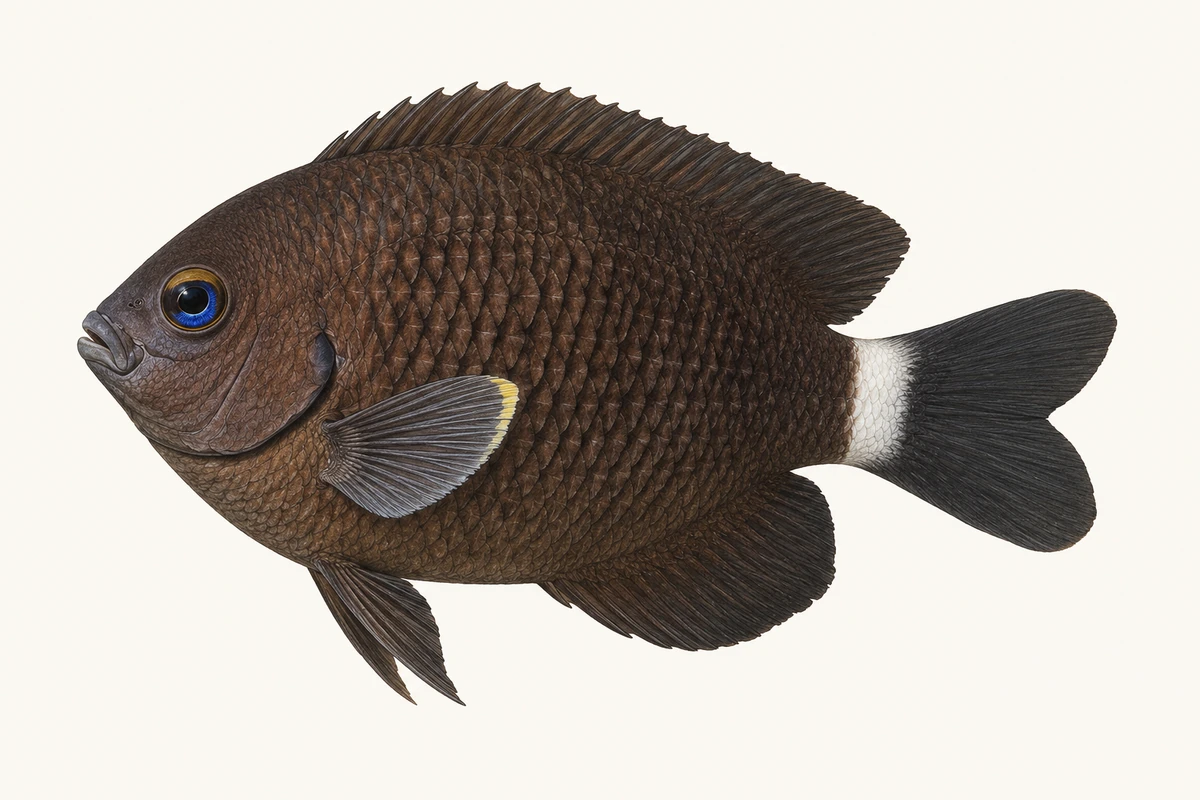
The ringtail’s white band sits right at the base of the tail, not across the whole fin. On the dark adult, the blue eye and a pale edge on the pectoral fin are good backup clues.
The nearby yellowtail damselfish, Stegastes arcifrons, is a separate species; look for the ring around the tail base instead of judging by a flash of yellow alone.
Galápagos Islands records
An underwater survey recorded this species at Post Office Bay, Floreana in the Galápagos Islands. That’s a documented observation, not a guaranteed sighting.
Fun facts
- On a close look the adult’s dark brown scales have even darker edges.
- The pale band can vary in strength. A blue iris and light pectoral-fin edge help if it’s hard to see.
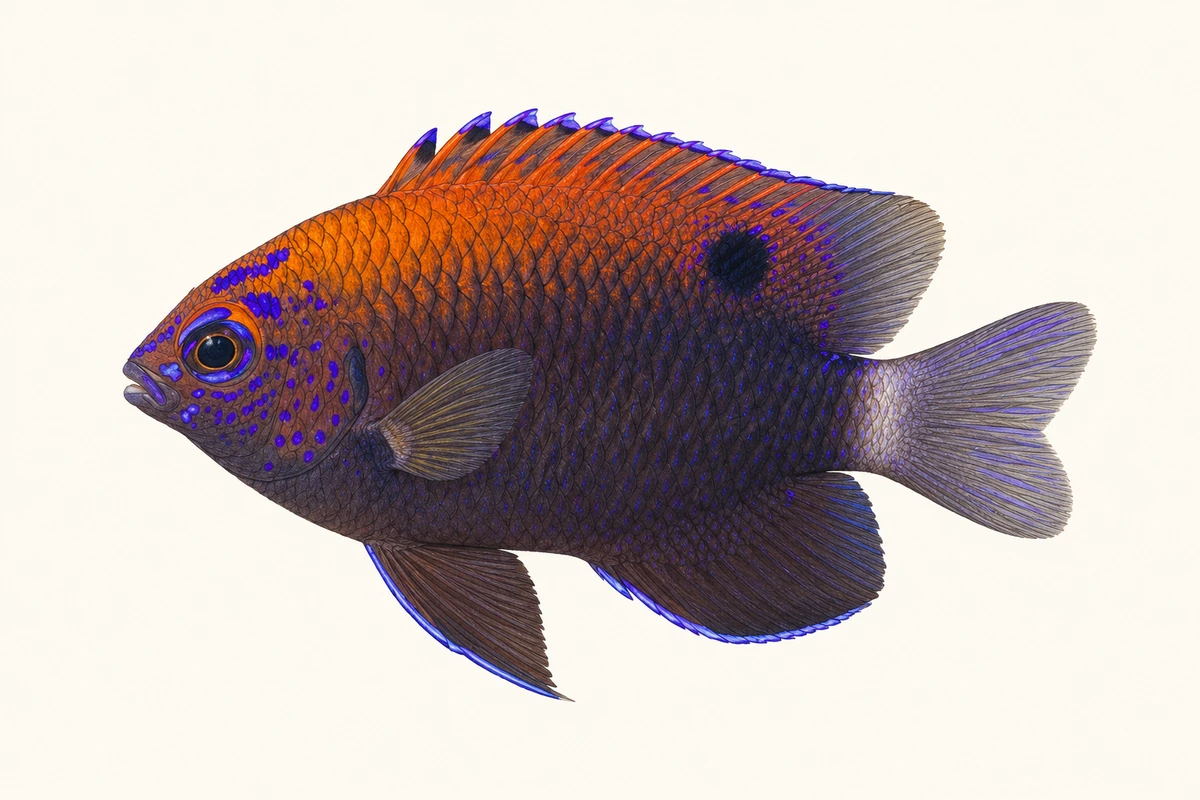
- Juveniles are dark, with red across the nape and front part of the dorsal fin and a dark spot farther back.
- The tail is only shallowly forked, with relatively blunt lobes.
- Shallow rocky shores are the usual habitat for this damselfish.
- Despite the name, resident populations also occur at Cocos and Malpelo.
Explore and learn
Look low along the rock for a side view. If the pale tail band is faint, use the eye and the pectoral edge too. Don’t try to flush a little fish out for a better look.
Practice making close reef-fish photographs without crowding your subject · Explore Stuart Scuba’s worldwide group dive trips




