


Galápagos Grunt
Orthopristis forbesi · Haemulidae · Grunt · Galápagos Islands Fish ID
How to identify it
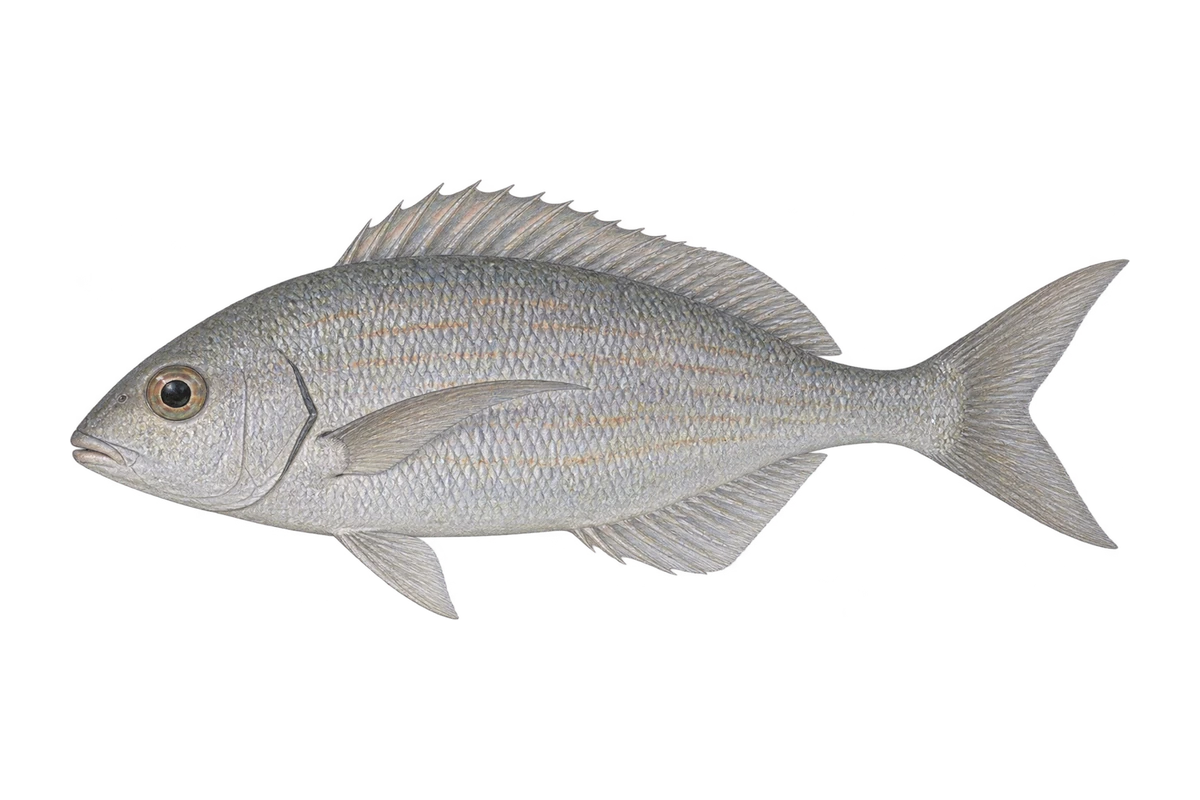
A slender gray grunt can hide in plain sight above sand. Look for its thin lips and the dark edge of the gill cover before assuming it is one of the deeper-bodied reef grunts.
The Galápagos Sheephead Grunt is a different species. On this one, check the slender body, the small mouth that ends before the eye and the dark gill-cover membrane together.
Galápagos Islands records
Dive surveys recorded this fish at Cousin’s Rock. The record tells us it occurs there, not that you will see one.
Fun facts
- It is endemic to Galápagos: the known natural range is the archipelago, not the adjacent mainland.
- The mouth is short and the lips are thinner than you might expect on a grunt.
- A dark membrane outlining the gill cover stands out on some views.
- Fine orange lines may follow rows of scales, but the fish can look plain silver-gray.
- It has a curved, pointed pectoral fin and a forked tail.
- Around Cousin’s Rock and other island sites, look for schools over sand near rocky reef rather than relying on the reef face alone.
Explore and learn
Watch quietly from where you can hold position without touching the reef. A clear side view usually tells you more than following the fish.
Practice identifying reef fish with Stuart Scuba · Explore Stuart Scuba’s group dive trips




