


Common Mushroom Coral
Fungia fungites · Fungiidae · Solitary coral · Palau Fish ID
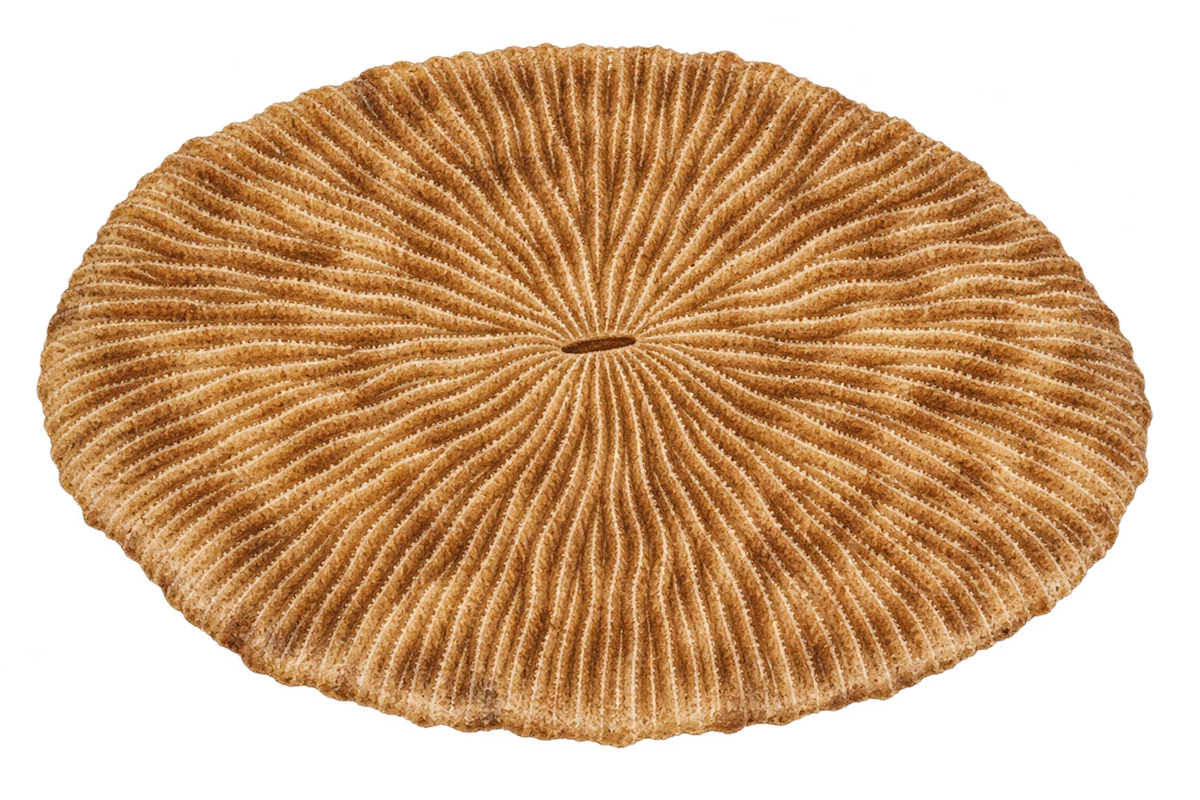
A coral doesn’t have to stand up like a tree. This one can look like a brown disk quietly resting on reef rubble, with a narrow mouth right in the middle.
How to recognize it
Look for a flat to slightly arched disk and fine, closely spaced ribs that radiate from a single, narrow mouth. Its outline can be round or a bit oval. If the disk is partly covered, don’t move it to finish your identification.
Where to look in Palau
Scientists have collected this species in Palau. On a guided dive, slow down in suitable lagoon habitat or along rubble on a reef slope, where these small shapes can be easy to pass.
Look-alikes
Several mushroom corals form disks. Very long tentacles suggest another species; a long, narrow coral or one with multiple mouths is also worth a second look. A good photograph can help, but it may not settle the species.
Try this on your next dive
Look down from your normal position in the water and follow the ribs toward the mouth. One overhead photograph often shows the useful details without touching the coral. For more practice observing reef habitats without touching the coral, start with SDI Coral Conservation.
Good skills for reef observation
Advanced Buoyancy Control helps you keep your fins clear. Underwater Photography and Underwater Video help record the details. Advanced Adventure lets you try several dive specialties. Deep Diver is for already-planned deeper recreational dives, not a requirement for observing coral.
Six things to notice
- A grown individual rests loose on the seabed rather than staying fixed like many reef corals.
- It is ordinarily a single polyp, not a colony of hundreds of cups.
- The central mouth is a slit rather than a broad hole.
- The ridges run out like spokes, and their edges may have minute teeth.
- A Taiwanese taxonomic reference documented disks up to about 11 inches across.
- Researchers have found different reproductive modes among populations, so don’t assume they all spawn the same way.
Keep looking through Palau Fish ID or explore our international group dive trips.




