


Necklace Sea Star
Fromia monilis · Goniasteridae · Sea star · Palau Fish ID
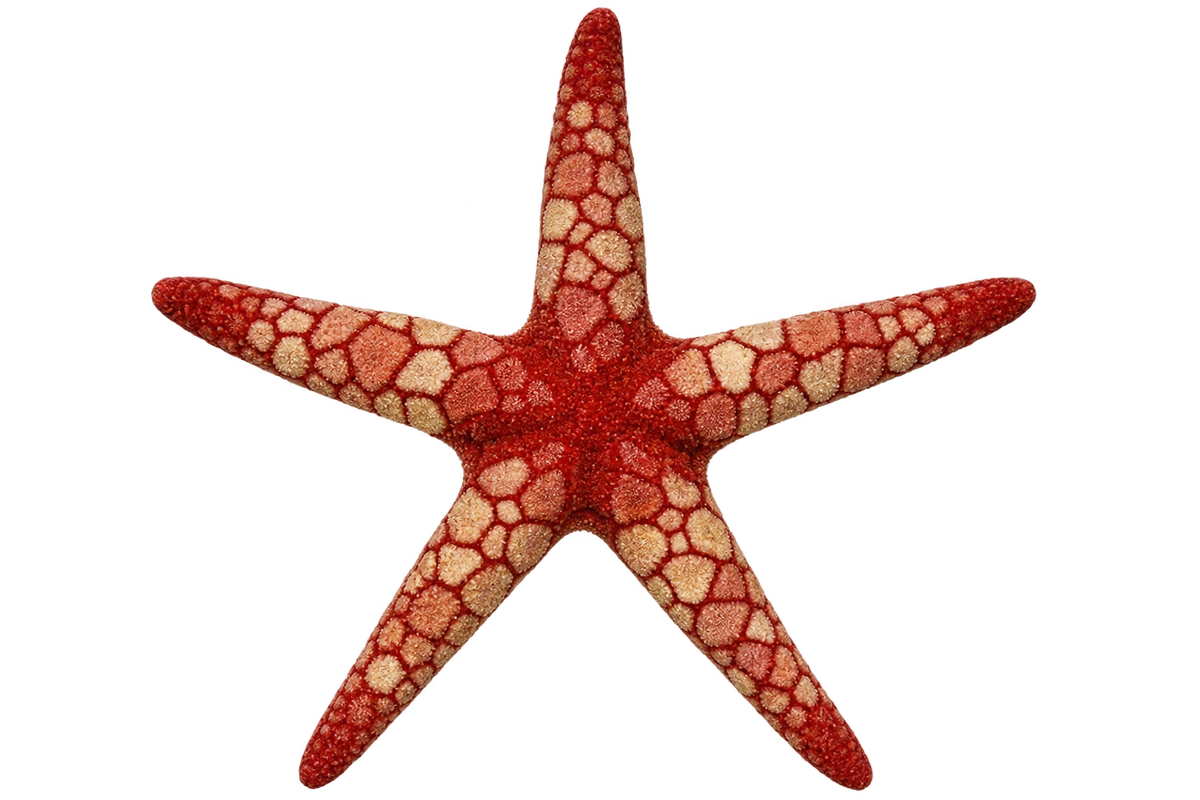
Notice how the pale plates can break up the red on this sea star’s arms. That is a clue worth photographing, not enough on its own to name it.
How to recognize it
Look for slender, gently tapering rays and a fine mosaic of raised plates. In one familiar form, pale plates toward the inner arms contrast with warmer red toward the tips and center. These colors are not universal.
Where to look in Palau
Historical Palau collections include Eang, Ngadarak Reef, Malakal, and other sites. Marsh also examined 22 specimens collected at low tide on one visit to Ngargol Island.
Size and life stages
The Palau sample stretched from roughly half an inch to 2¼ inches center-to-tip. In the larger specimens, the researchers counted more rows of top plates at the arm bases.
Look-alikes
Heffernan’s sea star can look much the same from above. Specialists compare the underside furrows: this species has two rows of blunt flattened spines in the published Palau comparison. Never flip a sea star for a name.
Try this on your next dive
Hold position for a side-lit picture that shows both full outline and plate relief. Use Fromia if the useful differences aren’t visible. If hovering steadily for a closer look is your next skill, try SDI Advanced Buoyancy Control.
Six things to notice
- The 1977 study examined 52 Palau specimens.
- Specimens came from both very shallow reef and deeper scuba collections.
- Bigger specimens in that series carried five rows of upper plates near the arm bases, compared with three in smaller ones.
- The smallest specimens had no alternating little plates between the larger upper edge plates.
- Dry specimens in the survey ranged from warm beige to apricot on some upper plates, with variable reds elsewhere.
- The Australian Museum field guide documents a living individual at night, a useful observation but not proof that the species is exclusively nocturnal.
Keep looking through Palau Fish ID or explore our international group dive trips.




