


Flag Cabrilla
Epinephelus labriformis · Epinephelidae · Grouper · Galápagos Islands Fish ID
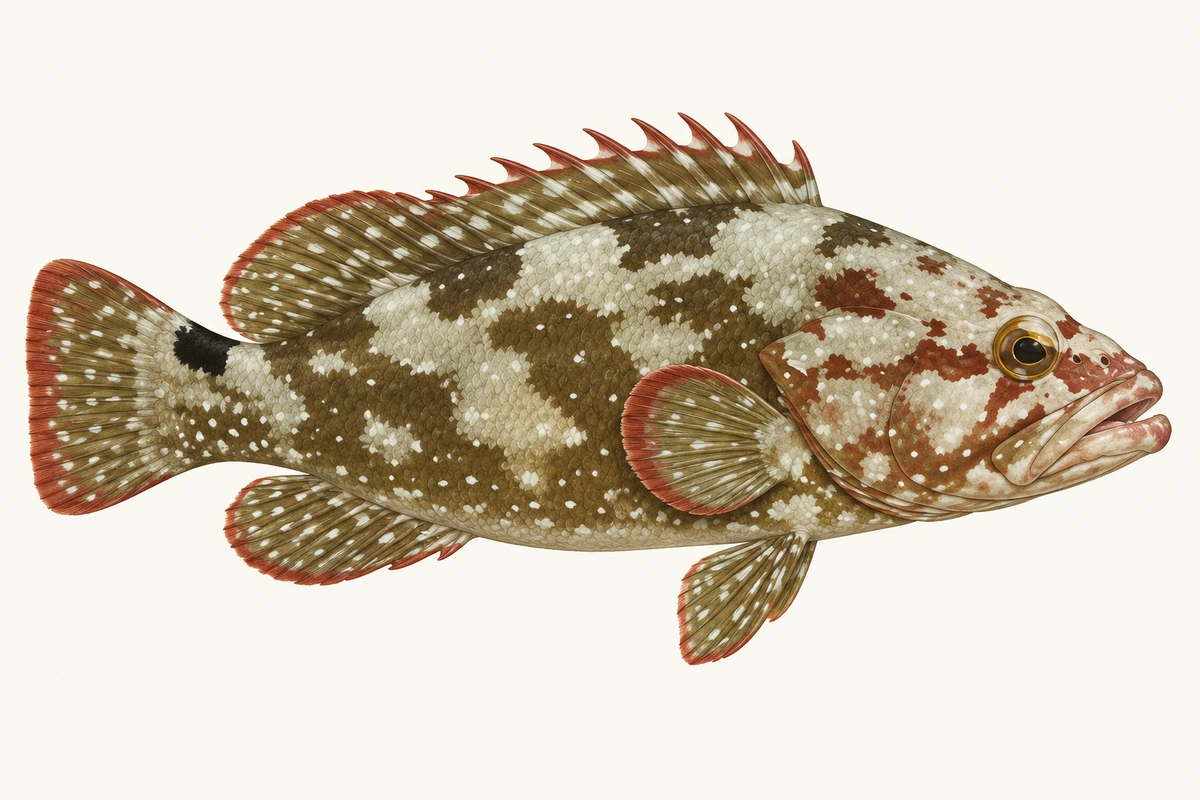
How to identify it
The white specks make it the starry grouper, but don’t stop there. Check for irregular pale blotches, reddish fin edges and a dark saddle at the top of the tail base.
Unlike the more streamlined Pacific creolefish, this bottom-associated grouper is stockier, with scattered pale markings rather than a neat row of pale back spots.
Galápagos Islands records
An underwater survey recorded this species at Bahía Tijeretas, San Cristóbal in the Galápagos Islands. That’s a documented observation, not a guaranteed sighting.
Fun facts
- White marks vary from tiny spots to irregular pale blotches.
- The head and front of the body can have reddish-brown patches against an olive base.
- A dark saddle sits on the upper tail base, where it can disappear when the fish turns.
- Brick-red can show along the dorsal, anal and tail margins and across the outer pectoral fin.
- Look near the bottom on rocky or coral reefs, not just for schooling fish overhead.
- This grouper’s recorded prey includes smaller fish, mobile crustaceans and members of the octopus and squid group.
Explore and learn
Scan along the rock line. A broadside view with the tail base in frame is more useful than a picture of the head alone.
Practice comparing grouper shape, spots and tail markings · Explore Stuart Scuba’s worldwide group dive trips




