


Golfball Coral
Favia fragum · Faviidae · Stony coral · Cayman Islands Fish ID
How to identify it
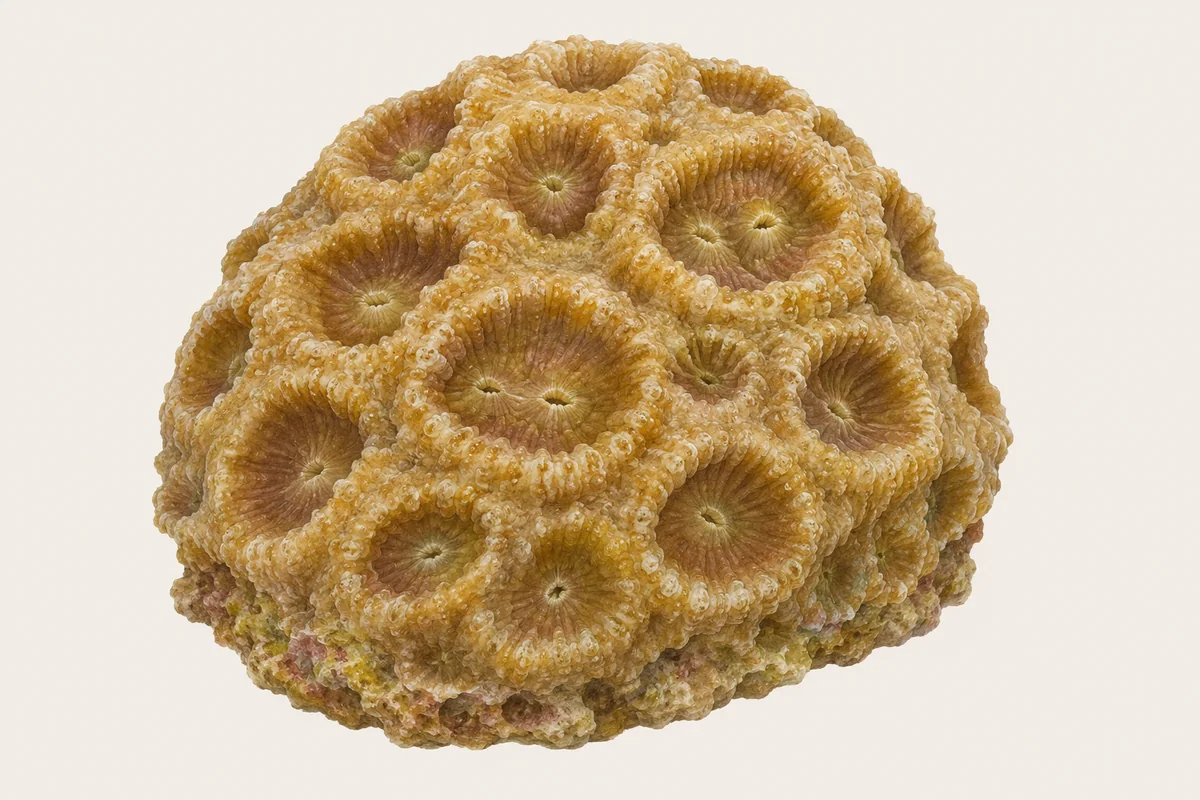
Golfball coral usually forms a small rounded mound, but it can spread flat along the reef. Look for separate sunken cups, not the winding channels of a little brain coral. The cups may have more than one mouth as they divide.
Small brain corals show joined serpentine valleys; golfball coral usually has separately outlined skeletal cups.
Learn to observe reefs without touching
SDI Coral Conservation is the place to start if you want to learn about coral habitats and how to observe them responsibly.
Start with the colony’s outline and the pattern of its coral cups. Look from a position where you can keep your fins and camera clear of the colony.
- Keep your fins and camera clear: Advanced Buoyancy Control focuses on trim, weighting and hovering.
- Build a broader skill set: Advanced Adventure introduces several specialties, including deep diving and navigation, with opportunities to refine buoyancy.
- For deeper recreational dives already in your plans: Deep Diver focuses on planning depth and managing breathing gas. It’s not needed to identify coral on a shallow dive.
- Record the details: Underwater Photography covers lighting and still-image composition. Underwater Video covers framing and steady footage. Use either without resting gear on the reef.
Cayman Islands records
Cayman reef surveys recorded this species at the archipelago level. No specific island or dive site is implied.
Fun facts
- Some colonies are roughly golf-ball shaped, but not every colony forms a ball.
- Its skeleton is built by many individual polyps.
- A cup can contain more than one mouth while dividing.
- Stony ridges radiate inward inside each cup.
- Tan, yellow and orange are all documented, so color is not a reliable shortcut.
See more on your next dive
Photograph from above with a slight tilt so the cup walls and the colony’s outline both show.




