


← Back to South Florida Fish ID
Dwarf Goatfish
Upeneus parvus · Mullidae
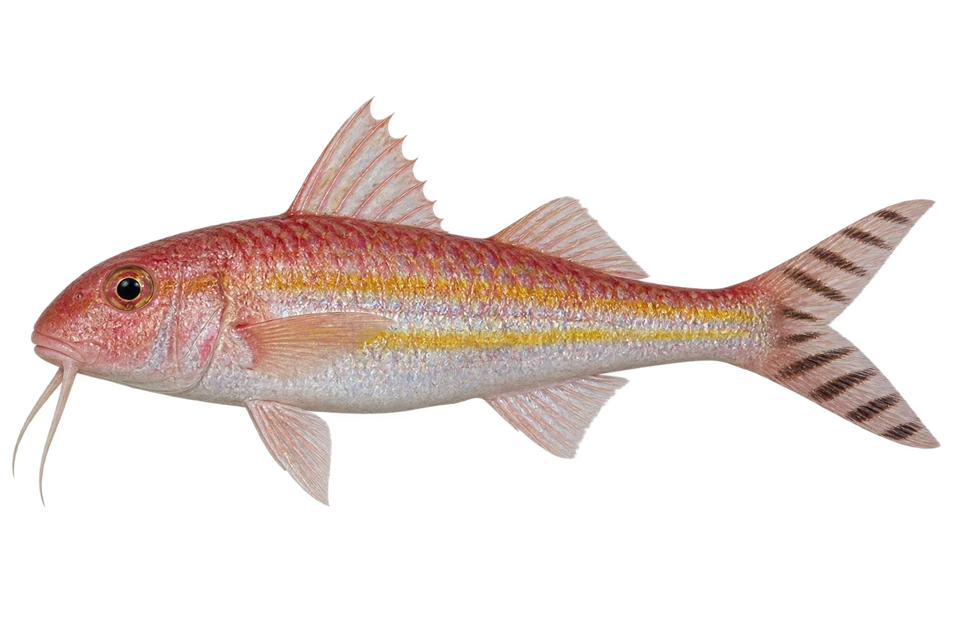
The key detail is out back: count the dark slashes on both lobes of the tail.
One fun thing to know
The long chin barbels fold into a groove beneath the throat.
How to identify it
- Paired long chin barbels and blunt, rounded forehead
- Red-pink above and silver-white below; fine yellow flank lines often visible
- Several oblique dark bars on each tail lobe, strongest on the lower lobe
Where to look
Mud and silty sand in coastal waters, often deeper than the shallowest reef flats. REEF survey records include occasional observations at Blue Heron Bridge.
Size
7.9 in (20 cm). reported maximum; measurement convention not specified.
What it eats
Small crustaceans and fish are reported prey.
Behavior
Watch close to soft bottom and check whether its paired feelers touch the sediment.
Reproduction
Eggs and early larvae are pelagic.
Look-alikes
Red Goatfish also has chin barbels, but its tail crossbars are much less distinct. Check both lobes on Dwarf Goatfish.
Can you collect or eat it?
Enjoy watching it and leave it in the water. This guide does not verify species-specific harvest or food-safety rules. Check the current rules for the exact location, species and method before taking anything, and never collect where prohibited.
Check Florida’s current saltwater rules
Field references
I saw this and want to share
Make your next dive happen
Dive with Stuart Scuba · Train with us · Travel with us · Shop with us



