


Fish identification archive / Diamond Blenny
Diamond Blenny
Malacoctenus boehlkei
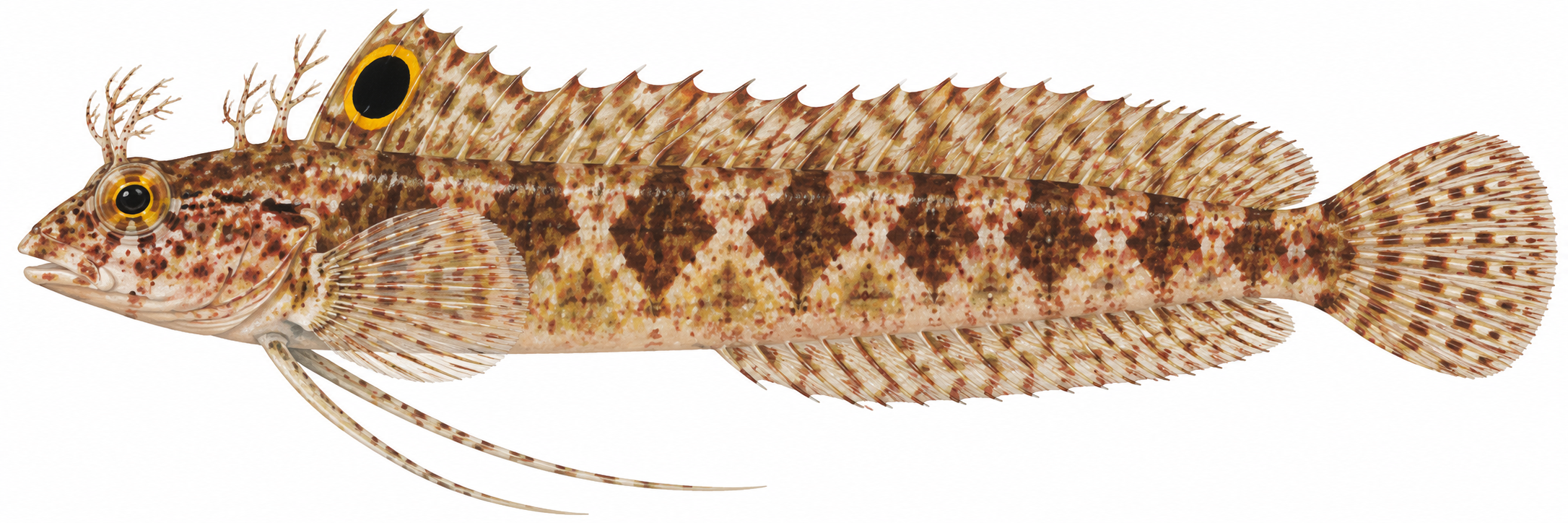
Fun facts for your next surface interval
- The pelvic fins extend unusually far backward, beyond the beginning of the anal fin.
- At a maximum reported 6.4 cm, its most dramatic ornament is a false eye in the dorsal fin, not a large body size.
How to recognize it
A slender, pointed-headed blenny with branched eyebrow and nape cirri. Dark bars overlay diamond-shaped flank blotches; the forward dorsal fin carries a large yellow-ringed dark eyespot.
West Palm Beach occurrence
Reported in REEF Blue Heron Bridge survey results; very infrequently recorded. This is a survey report, not a promise of a sighting.
Habitat
Rocky and coral reef habitats, including anemone-associated habitat, at 2–30 m.
Behavior: watch what it does
Observe without moving animals or their shelter. The local survey record does not establish how often this species is present today.
What it eats
Small crustaceans, mollusks and worms.
Reproduction
Bottom-laid eggs develop into larvae that enter the water column.
Similar animals and identification limits
Separate from other small blennies using the fin eyespot together with the flank pattern and cirri.
A better underwater observation
Photograph the raised front dorsal fin without provoking or touching the fish.
Observe responsibly
Documented local presence is not a promise of a sighting or a statement of abundance. Do not chase, handle, feed or disturb wildlife. This identification guide is not permission to collect or harvest, and it does not establish food safety. Check current rules and protected-area boundaries for your exact location.
I saw this
Share the guide with your dive buddies. Review your caption before posting.
Nothing posts automatically. Sharing does not record a verified sighting.




