


Diagonal Shrimpgoby
Amblyeleotris diagonalis
Two details worth remembering
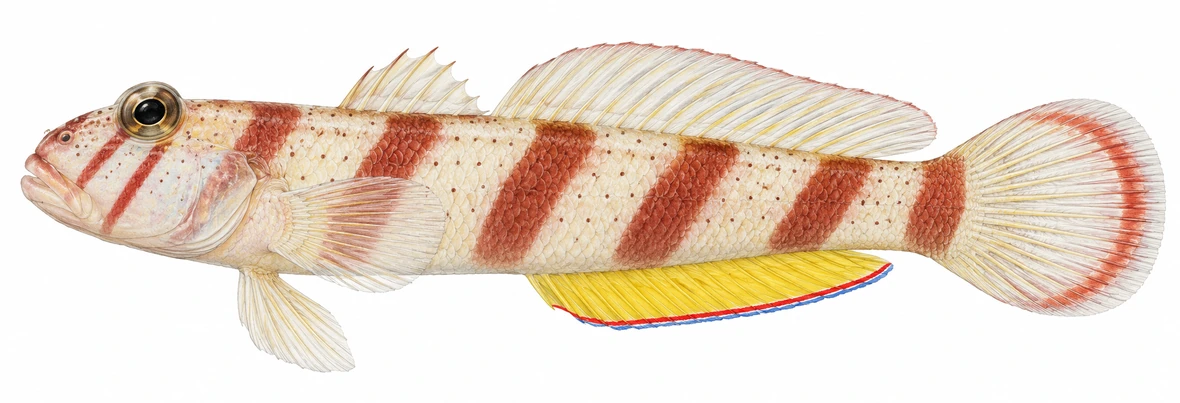
- The name diagonalis refers to the oblique bands.
- The burrow is built by the shrimp, not evidence that the fish excavated it.
How to identify it
A pale goby with two narrow slanting facial bands followed by five broader reddish-brown body bands. Small brown spots occupy the pale spaces; the anal fin is yellow with contrasting red and blue edging.
Where to look
Sand and coral rubble beside reefs; the museum account reports 6–46 m, not a recommended dive depth.
Natural history
The goby shares a burrow excavated by an alpheid shrimp and serves as the lookout. The partnership is a more useful observation than a quick headshot: watch who moves sand and who remains alert.
Picks small bottom-dwelling invertebrates or separates them from mouthfuls of sediment.
Look-alikes
Other barred shrimpgobies can look similar. Compare facial bands, body spotting and fin colors together; five bars alone are insufficient.
What to watch for underwater
Can you see the shrimp maintaining contact with the goby? Hold position away from the entrance rather than drawing either animal out.
Recorded in Raja Ampat
This species has a published Raja Ampat record. A regional record does not guarantee a sighting on a particular dive.
Sources: birdsheadseascape.com species reference · fishesofaustralia.net.au species reference · Regional survey record
I saw this and want to share
Back to Raja Ampat Fish ID · Dive Raja Ampat with Stuart Scuba




