


Pillar Coral
Dendrogyra cylindrus · Meandrinidae · Stony coral · Cayman Islands Fish ID
How to identify it
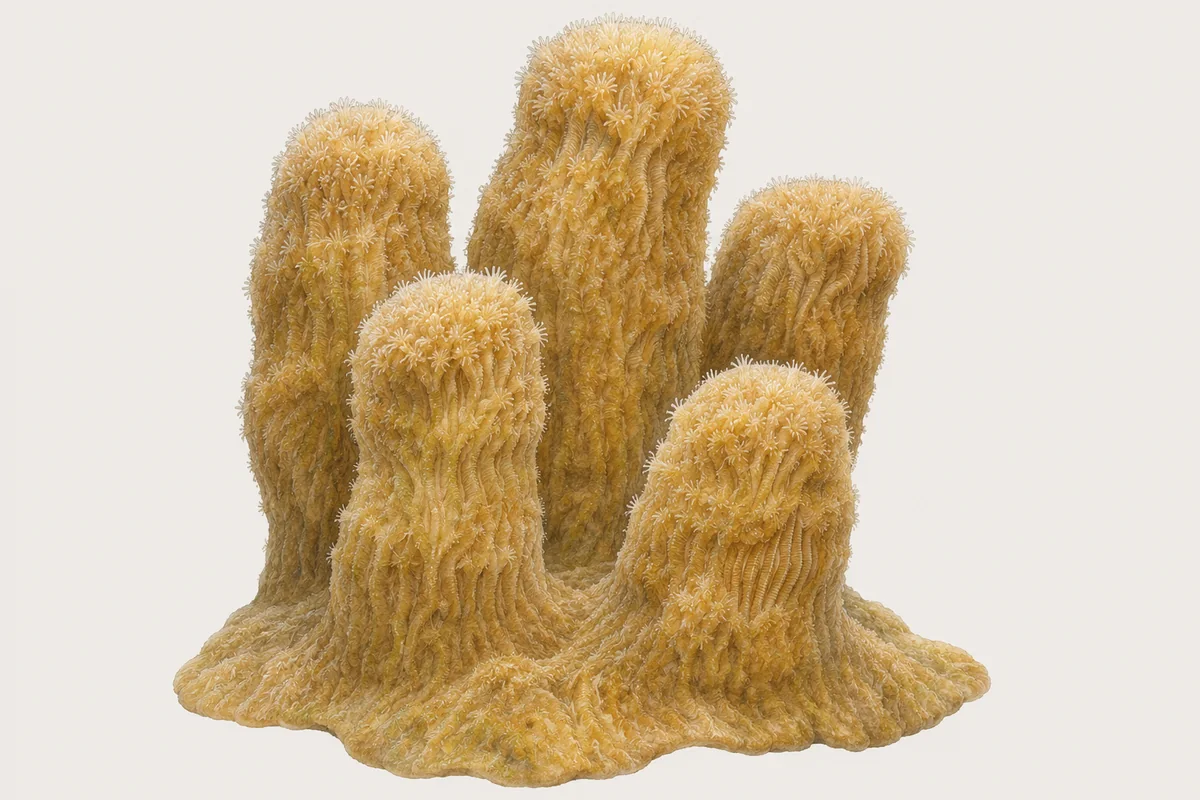
Pillar coral grows thick upright columns from a broad common base. Its polyps often extend during the day, giving living columns a soft, fuzzy outline. Look for tall rounded pillars rather than short lobes clustered at the top of a mound.
Lobed star coral may have columnlike lobes, but typically lacks the combination of tall rounded pillars and a daytime shaggy outline.
Learn to observe reefs without touching
SDI Coral Conservation is the place to start if you want to learn about coral habitats and how to observe them responsibly.
Start with the colony’s outline and the pattern of its coral cups. Look from a position where you can keep your fins and camera clear of the colony.
- Keep your fins and camera clear: Advanced Buoyancy Control focuses on trim, weighting and hovering.
- Build a broader skill set: Advanced Adventure introduces several specialties, including deep diving and navigation, with opportunities to refine buoyancy.
- For deeper recreational dives already in your plans: Deep Diver focuses on planning depth and managing breathing gas. It’s not needed to identify coral on a shallow dive.
- Record the details: Underwater Photography covers lighting and still-image composition. Underwater Video covers framing and steady footage. Use either without resting gear on the reef.
Cayman Islands records
Cayman reef surveys recorded it historically. A reef name or an old record is not evidence that any living colony is still there.
Fun facts
- Its common name describes upright skeleton columns, not separate animals.
- The thick pillars grow from one encrusting base.
- Unlike many reef corals, its polyps often extend during daylight.
- Retracted areas can reveal narrow valleys in the skeleton.
- The upright columns can become much taller than the broad base is thick.
- Its survey record is historical; a place name such as Pillar Coral Reef cannot verify a current living colony.
See more on your next dive
A whole-colony photo from a comfortable distance shows the shared base and avoids close fin passes.




