


Black Cyerce Sea Slug
Cyerce nigra · Caliphyllidae · Palau Fish ID
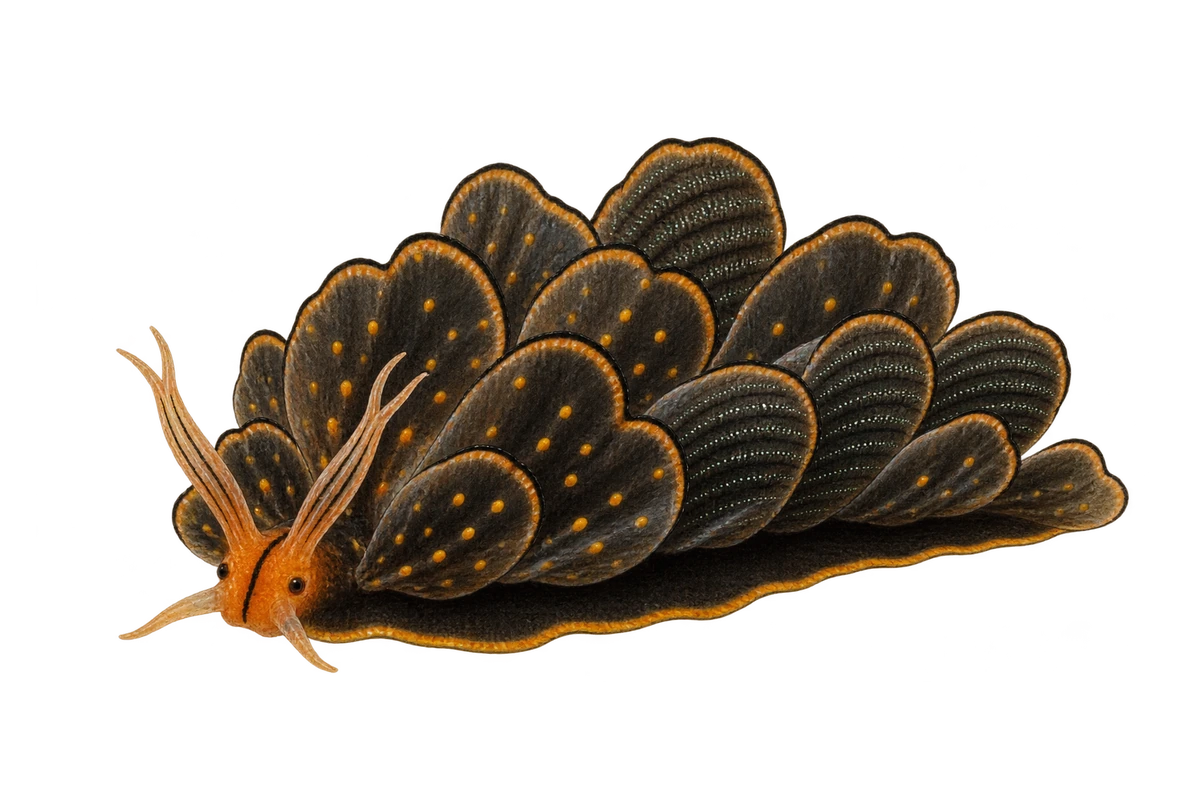
You might see a handful of black fans edged in orange before you see the slug beneath them. Look at the very edge of each fan: that narrow line can make a big difference when you compare your photos later.
How to recognize it
The back carries overlapping, rounded fans called cerata. Look for a narrow orange band just inside a black outer edge. The head is orange with a lengthwise black line between the eyes, and the long sensory horns have dark striping.
Palau connection
The specimen used to name the species was collected in Palau. That is a documented historical record, not a promise of seeing it at a named dive site.
Feeding and size
Despite its bright edging, this is a tiny shell-less grazer. It has been documented feeding on the green alga Udotea geppiorum.
Look-alikes
Cyerce nigricans can also be black and orange, but look for a pale outer border on its fans and an orange central head line. For a useful photo, capture the complete fan margin and the head in one shot if you can.
Six things to notice
- It belongs to the sacoglossan sea slugs, not the nudibranchs.
- The original Palau specimen was illustrated while alive in the nineteenth century.
- One face of a fan can carry raised yellow-orange spots while the opposite face shows dark stripes and fine specks.
- The orange band sits inboard of the black edge; the two stripes are easy to mistake for a single rim at a glance.
- A small orange-yellow rim follows the otherwise dark foot.
- The fans do not contain the branching digestive tubes that are familiar in some other sea slugs.
Bring back a better ID photo
Get a steady side view and leave the animal where it is. If you want to practice getting a small subject sharp without crowding it, SDI Underwater Photography is a good next step.
Keep exploring Palau Fish ID or see our international group dive travel.




