


Elegant Cyerce Sea Slug
Cyerce elegans · Caliphyllidae · Palau Fish ID
It looks like a few pale petals have decided to crawl across the reef. Take a closer look at the rim and the base of a petal before you put a name on it.
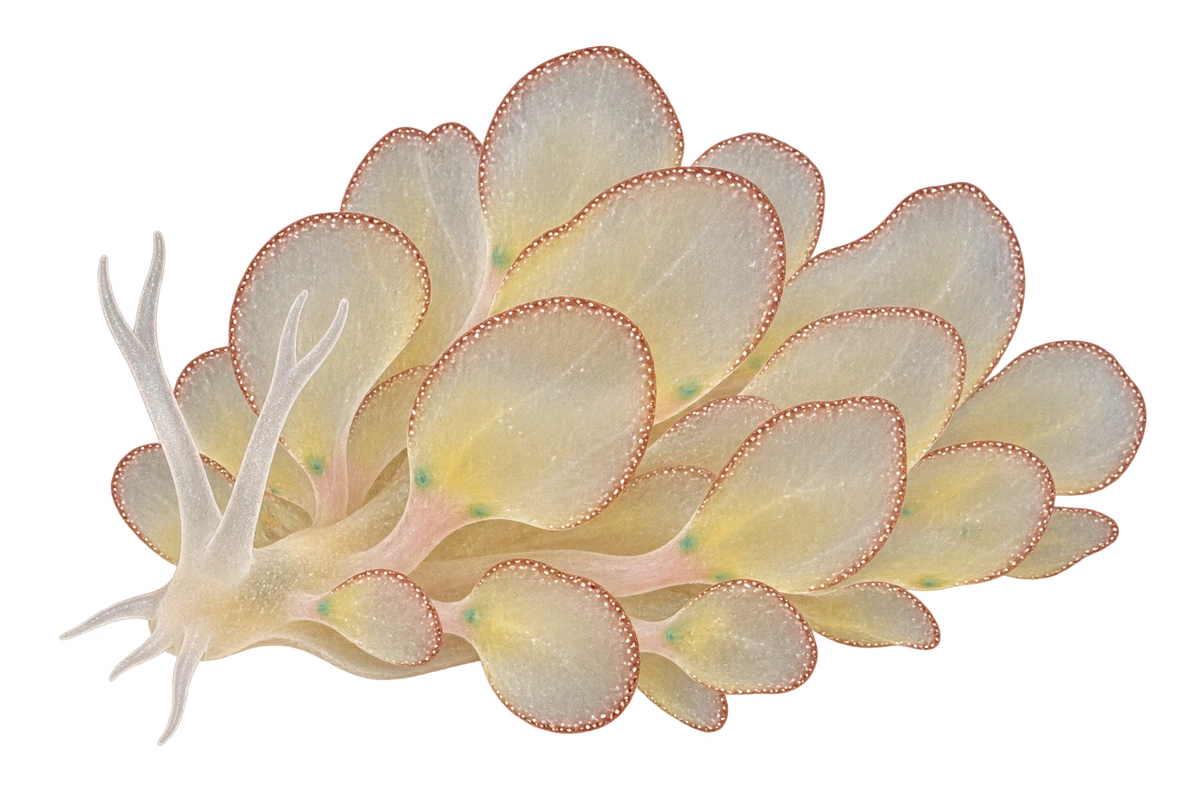
How to recognize it
Look for a cream-colored slug with whitish translucent, rounded lobes called cerata. The rim of each lobe is reddish brown. Small bright green or blue dots sit low on the lobes, not scattered over the whole back.
Palau connection
Ten specimens from Palau formed the basis of the original description. Later comparative research identified this species in specimens from Papua New Guinea and the Philippines, too. A historic record is not a promise of a sighting at a particular Palau dive site.
Look-alikes
The rust-brown rim is more useful than the petal shape by itself. Some close relatives have pale vein-like markings rather than that rim. Try to photograph one outer lobe both at the rim and near the point where it joins the body.
Watch without touching
If you find one, hover back and let it crawl. A steady close-up can sometimes show the tiny markings better than a brighter light or a closer approach.
Six things to notice
- It is a sacoglossan sea slug, not a nudibranch.
- It is the species that anchors the scientific genus name Cyerce.
- Small triangular clusters of white specks sit along the edges of its translucent fans.
- Look for one or two blue-green spots near the base of a lobe, rather than a big spot in the middle.
- Later research recognized several closely related species among animals once identified broadly as elegant Cyerce.
- Its particular diet remains unconfirmed; the way the lobes look is not evidence of what it eats.
Bring back a better ID photo
Get a steady side view and leave the animal where it is. If you want to practice getting a small subject sharp without crowding it, SDI Underwater Photography is a good next step.
Keep exploring Palau Fish ID or see our international group dive travel.




