


Crosshatch Goby
Amblygobius decussatus
Two details worth remembering
- Sand is not an empty habitat: the fish is extracting food from its particles.
- Its orange-striped and crosshatch common names emphasize different parts of the same pattern.
How to identify it
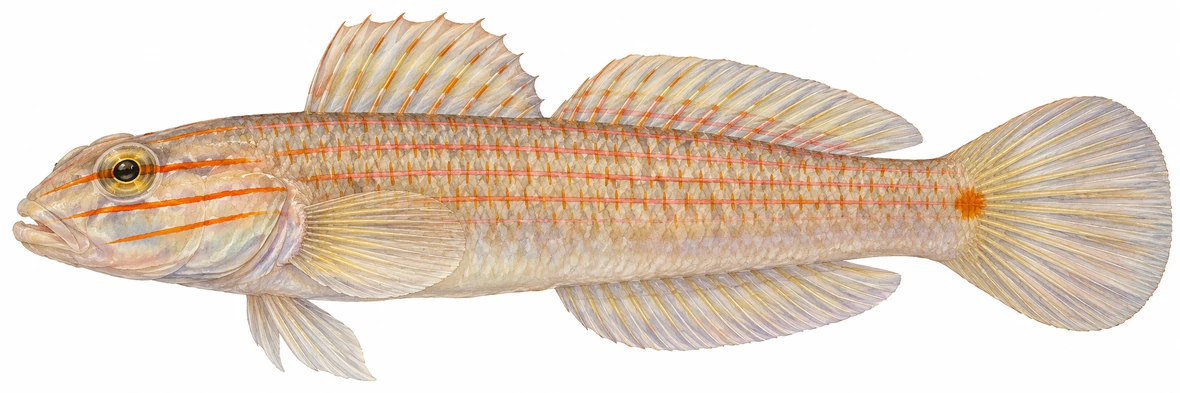
A pale goby with orange-pink lines and a fine crosshatched pattern on the upper body. The museum’s illustrated individual shows stronger orange facial stripes and an orange spot at the tail base.
Where to look
Sandy or silty flats with rubble on coastal and inner reefs, recorded at 3–25 m; maximum reported total length is 8 cm.
Natural history
Takes mouthfuls of sediment and separates food from the sand. Watch the sequence, not just the cloud of displaced grains.
Small invertebrates and detrital material sifted from sand.
Look-alikes
Other pale sand gobies can have colored facial lines. Compare the fine body crosshatching, facial stripes and tail-base marking together.
What to watch for underwater
Keep your fins above the bottom and watch one feeding sequence without stirring sediment.
Recorded in Raja Ampat
This species has a published Raja Ampat record. A regional record does not guarantee a sighting on a particular dive.
Sources: birdsheadseascape.com species reference · fishesofaustralia.net.au species reference · Regional survey record
I saw this and want to share
Back to Raja Ampat Fish ID · Dive Raja Ampat with Stuart Scuba




