


Sand-Canyon Goby
Coryphopterus venezuelae · Gobiidae · Reef fish · Cayman Islands Fish ID
How to identify it
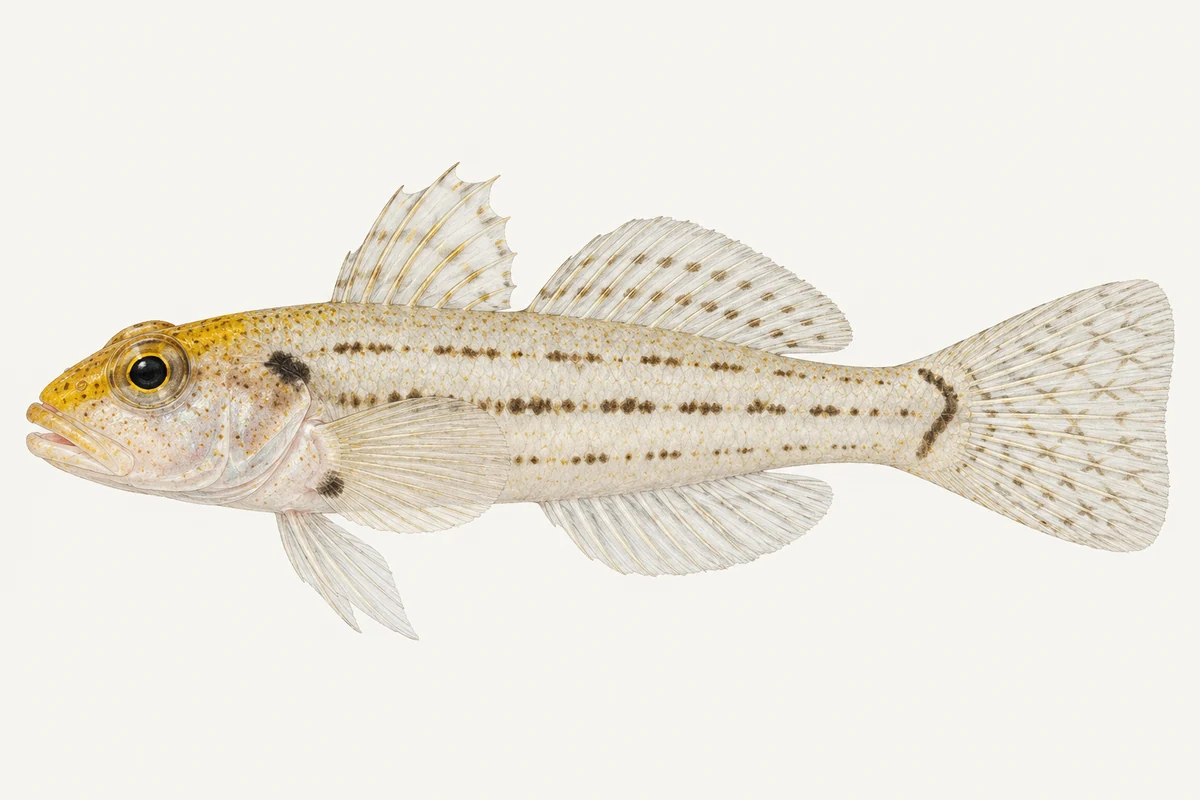
Check sandy lanes and reef channels for a small goby that perches on the bottom. A careful photo may show a dark spot low at the base of the pectoral fin and a dark mark at the top of the gill cover.
It overlaps bridled goby very closely; Xs on the flank and a pectoral spot do not always separate those two. Patch-reef goby usually lacks the lower pectoral spot and heavy Xs. When in doubt, leave the two close forms unresolved.
Cayman Islands records
Cayman researchers barcoded this species under the former name Coryphopterus bol. The record establishes regional occurrence, not a particular dive site or current count.
A documented record does not guarantee an encounter on your dive.
Fun facts
- It perches on sand instead of spending all its time suspended above the reef.
- Heavier pigmentation may turn its flank marks into Xs; paler fish can have small dots instead.
- A large dark mark sits near the top of the gill cover.
- The tail base may carry two spots or a split or curved dark bar.
- The pelvic fins join into a small disc under the body.
- A taxonomic revision placed the former name Coryphopterus bol under this species.
See more on your next dive
A side close-up that shows the head, flank and tail base offers more than a distant color match.
Build your reef fish ID skills in SDI Reef Fish Identification · Explore Stuart Scuba group dive trips




