


Patch-Reef Goby
Coryphopterus tortugae · Gobiidae · Reef fish · Cayman Islands Fish ID
How to identify it
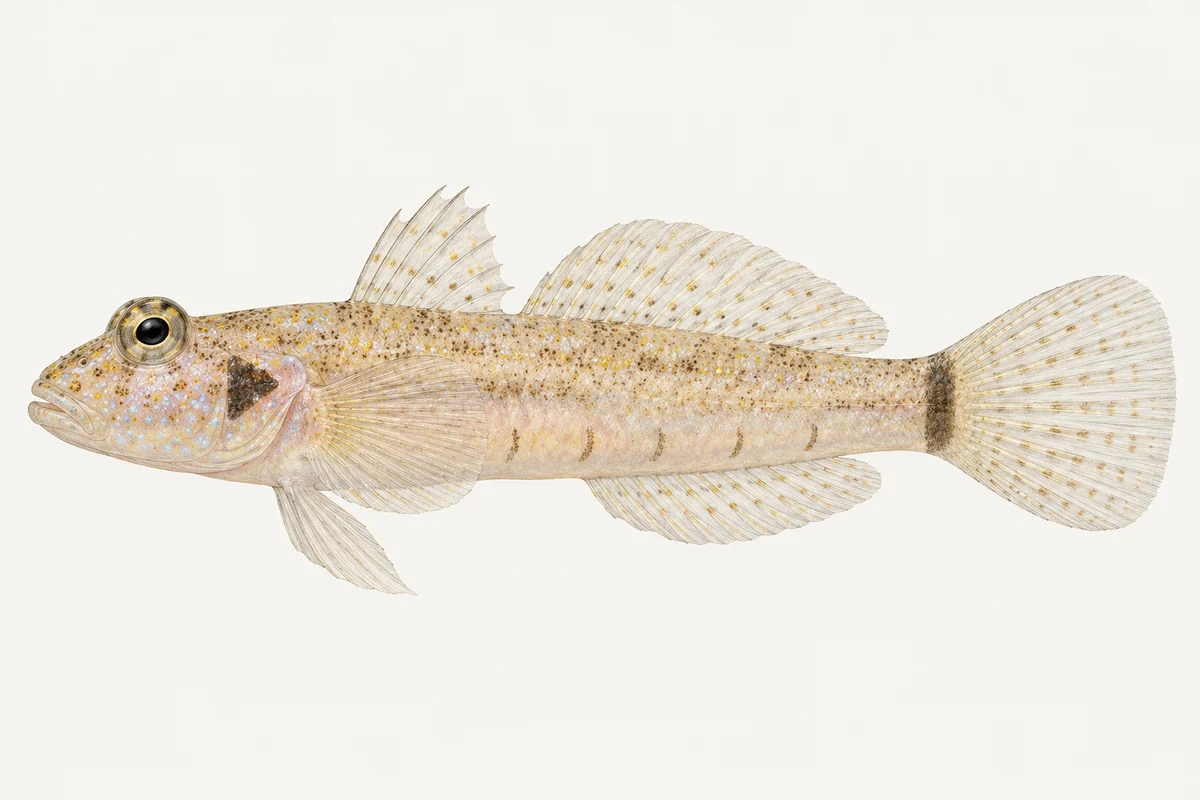
Look for a pale little goby perched on sand near coral patches. The useful clues are a dark patch high over the gill cover and upright crescentlike marks low on the side.
In bridled and sand-canyon gobies, the larger X-shaped markings or a dark spot at the lower pectoral-fin base are more useful than color. If the chest and tail base aren’t visible, log a member of the sand-goby group.
Cayman Islands records
Cayman material was documented and DNA-barcoded; Grand Cayman appears in the species record. That provides a confirmed regional ID, not a claim for any particular dive.
A documented record does not guarantee an encounter on your dive.
Fun facts
- It lives on sand and around clear-water patch reefs.
- A dark triangle or blotch can sit just above the gill cover.
- Lower flank marks often look like little upright crescents.
- The lower pectoral-fin base typically lacks the dark spot found in close relatives.
- The tail base often has a single dark central bar rather than two separate spots.
- DNA has helped separate it from sand gobies that were historically counted together.
See more on your next dive
Wait for it to settle and shoot a clean side view with its pectoral base visible.
Build your reef fish ID skills in SDI Reef Fish Identification · Explore Stuart Scuba group dive trips




