


Fish identification archive / Raja Ampat
Coral Trout
Plectropomus leopardus
Raja Ampat field guide
Two things to tell your dive buddy
- Despite the name, coral trout are groupers rather than freshwater trout.
- Individuals may wait motionless on the reef or move slowly beside schools of smaller fish.
How to identify it
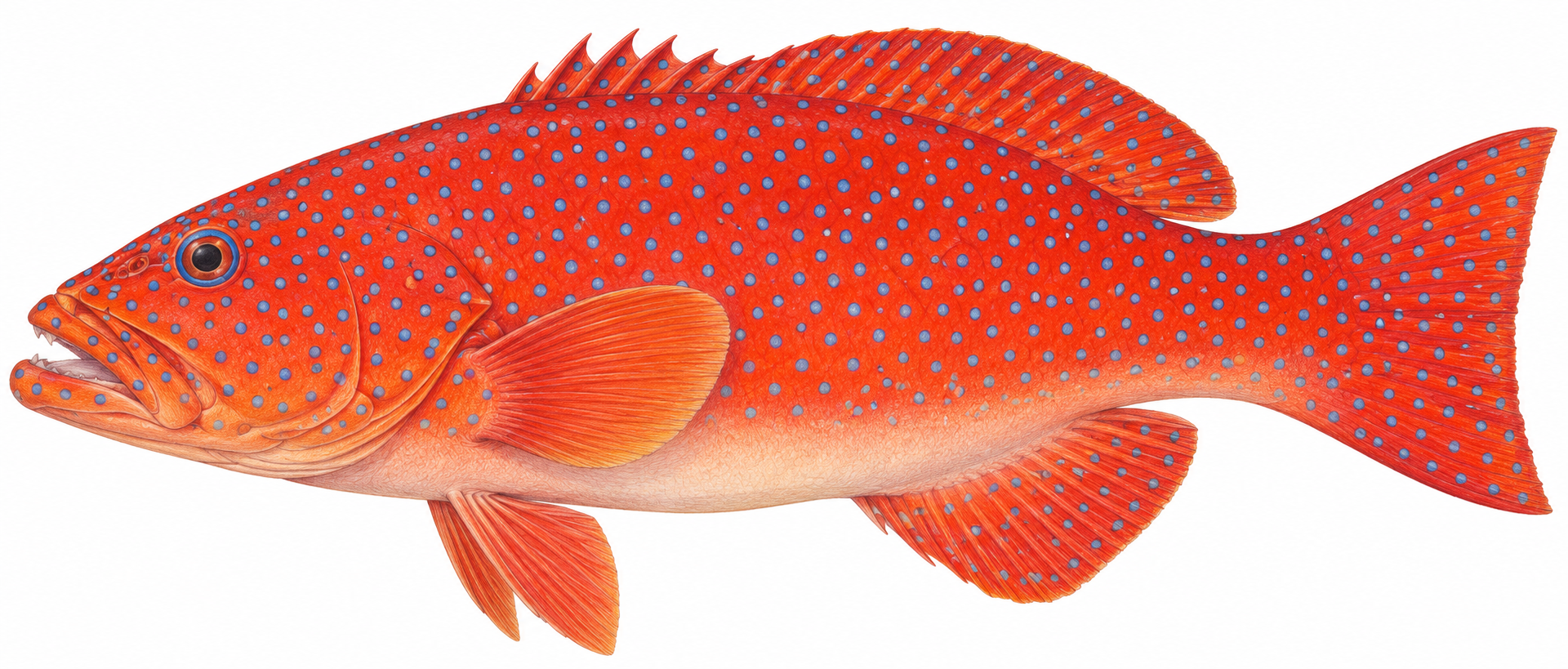
Elongate grouper with small blue spots; compare the head and tail carefully with other coral trout.
Habitat and where to look
Coral reefs, with resting places on the bottom or coral outcrops.
Daily habits and behavior
Moves slowly near small-fish schools and can rapidly change colour.
What is on the menu?
Fish prey.
Mating and the next generation
Some females become males; spawning releases buoyant eggs.
Look-alikes and identification traps
Barcheek coral trout has elongated head spots rather than small rounded dots.
Try this observation
Notice whether it is resting or tracking a nearby school without disturbing either.
Raja Ampat occurrence
Recorded in Raja Ampat; regional occurrence does not guarantee a sighting. This guide does not imply that every site, itinerary or season offers the same chance of an encounter.
Observe, do not disturb
Keep a respectful distance, leave the animal an unobstructed route and follow your dive guide. Do not touch, feed, chase or collect wildlife. Identification does not establish permission to harvest or food safety; Florida harvest labels do not apply to this Indonesian guide.
Sources and review
Reviewed November 18, 2026.
Look for the blue edging around the eye
The coral trout can range from olive to red, and may turn mottled while hunting. Look instead for evenly spaced blue body spots and a blue rim around the eye; the rim may be broken into segments.
Build the habit of checking markings that are more dependable than overall color in SDI Reef Fish Identification.
Make your next dive happen
Dive With UsTrain With UsExplore the Raja Ampat tripShop With Us
Questions? (772) 600-8288 or info@stuartscuba.com.




