


Fish identification archive / Raja Ampat
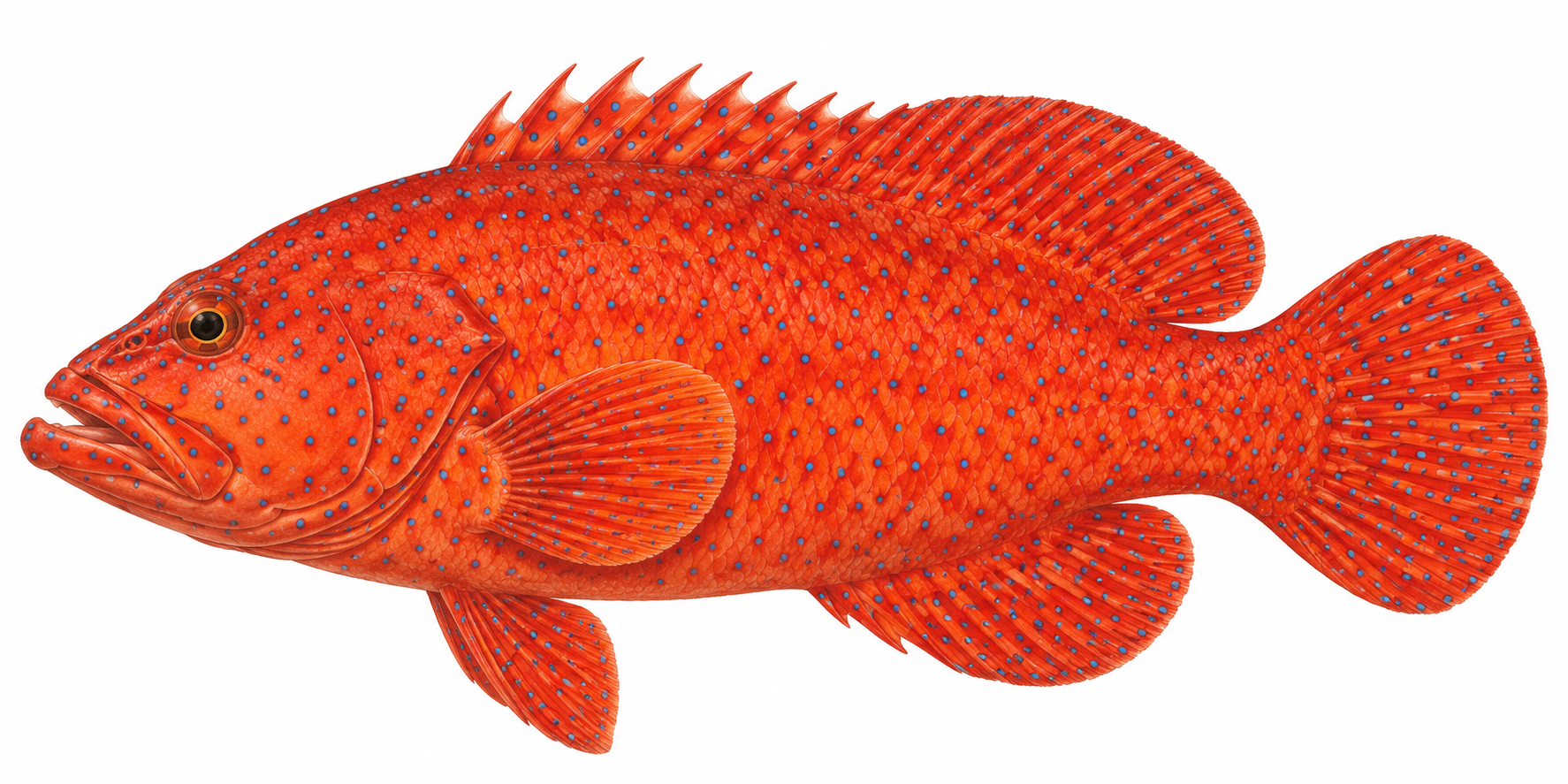
Coral Hind
Cephalopholis miniata
Raja Ampat field guide
Two things to tell your dive buddy
- Some females later become males, a reproductive pattern called protogyny.
- The red Latin name miniata describes its colour; the little blue spots are smaller than the pupil.
How to identify it
Orange-red to brownish body densely dotted with small blue spots.
Habitat and where to look
Clear coastal and offshore reefs, often in exposed locations.
Daily habits and behavior
A predatory reef resident; males may associate with several females.
What is on the menu?
Mostly fishes, also crustaceans.
Mating and the next generation
Some females change sex to become males.
Look-alikes and identification traps
Peacock grouper has a browner background and may show pale bars across the rear body.
Try this observation
Compare spot size with the pupil from a photograph, not by crowding the fish.
Raja Ampat occurrence
Recorded in Raja Ampat; regional occurrence does not guarantee a sighting. This guide does not imply that every site, itinerary or season offers the same chance of an encounter.
Observe, do not disturb
Keep a respectful distance, leave the animal an unobstructed route and follow your dive guide. Do not touch, feed, chase or collect wildlife. Identification does not establish permission to harvest or food safety; Florida harvest labels do not apply to this Indonesian guide.
Sources and review
Reviewed November 18, 2026.
Look for tiny blue spots on a warm-colored body
Orange-red and reddish-brown coral hinds carry bright blue spots smaller than the pupil. Younger fish may be more orange or yellow with fainter spots, so watch for the spot size rather than matching the shade exactly.
SDI Underwater Photographer can help you keep the head and flank in one sharp frame without crowding the fish.
Make your next dive happen
Dive With UsTrain With UsExplore the Raja Ampat tripShop With Us
Questions? (772) 600-8288 or info@stuartscuba.com.




