


Cockatoo Waspfish
Ablabys taenianotus · Tetrarogidae
Two details worth remembering
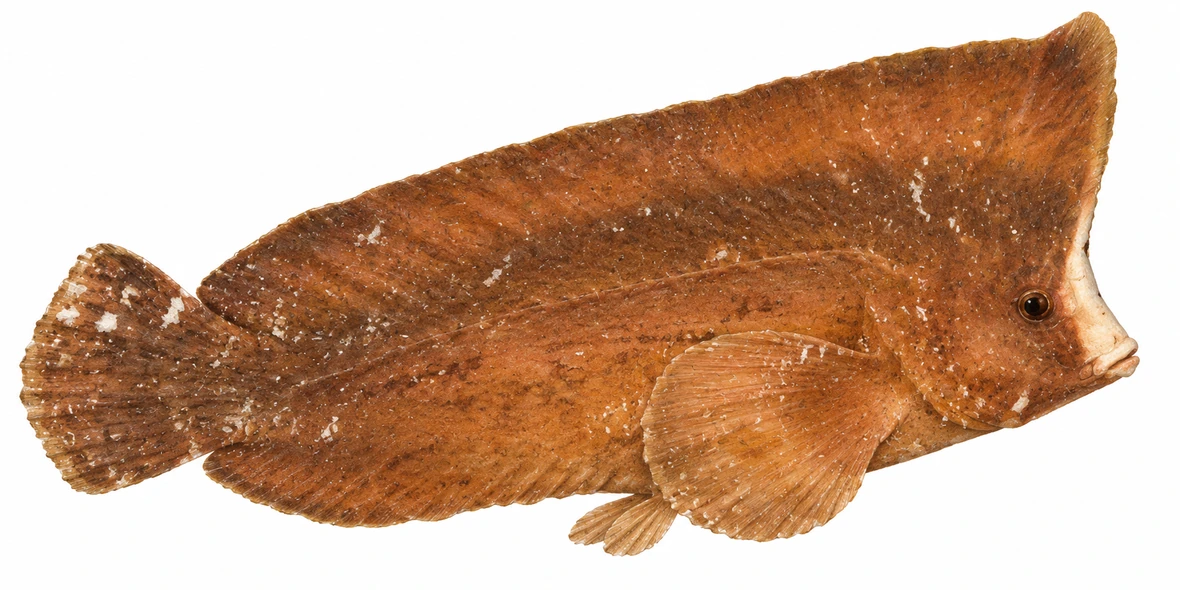
- A thin, tall body creates a different outline every time the animal turns.
- Although it looks like harmless drifting debris, the dorsal spines are venomous.
How to identify it
The dorsal sail starts above the head and rises into a crest; a pale forehead can stand out against the rusty or brown body. It is so thin from side to side that the silhouette almost disappears when viewed head-on.
Where to look
Look among sand, fine rubble and vegetation in sheltered habitats. Instead of moving steadily away, a resting fish may rock with the flow, especially around dusk or at night.
Natural history
It lives on the bottom and relies on camouflage. A spawning study at Miyake-jima, Japan examined its social behavior; that locality is not evidence of a Raja Ampat spawning calendar.
Look-alikes
The lesser-scaled cockatoo waspfish has deep notches between dorsal spines. This one's crest has a smoother contour; a leaf scorpionfish can also rock but lacks this exaggerated cockatoo-like crest.
What to watch for underwater
Stay clear of the bottom, do not touch, and enjoy the rocking motion without drawing the fish out of cover.
Recorded in Raja Ampat
This species has a published Raja Ampat record. A regional record does not guarantee a sighting on a particular dive.
- Family
- Tetrarogidae
- Field-guide group
- Waspfish
- Reported maximum length
- Up to 15 cm
- Also listed as
- Cockatoo Leaf Fish, Cockatoo Fish
Sources: fishesofaustralia.net.au species reference · jstage.jst.go.jp species reference · Regional survey record
I saw this and want to share
Back to Raja Ampat Fish ID · Dive Raja Ampat with Stuart Scuba




