


Fish identification archive / Raja Ampat
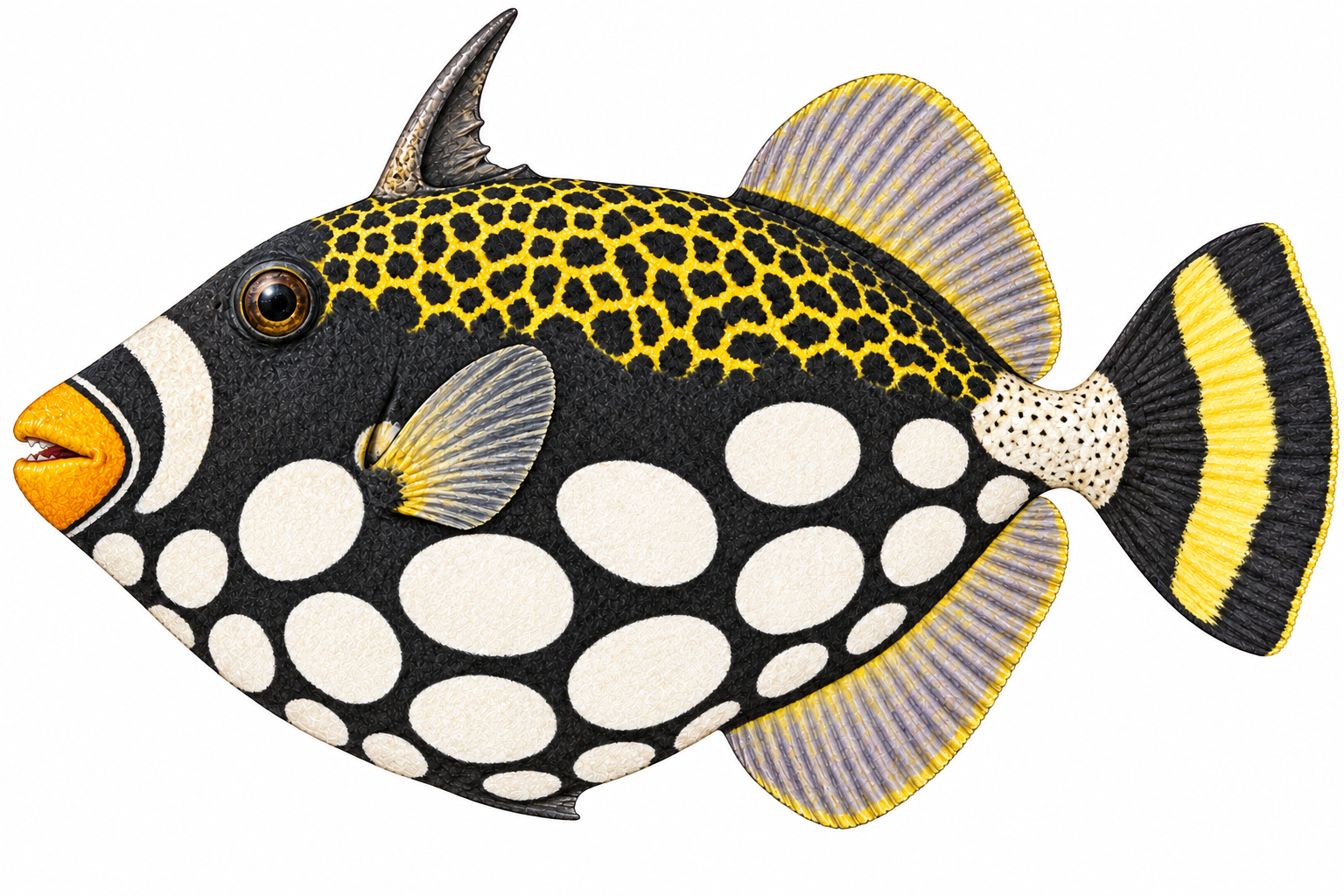
Clown Triggerfish
Balistoides conspicillum
Raja Ampat field guide
Two things to tell your dive buddy
- The adult combines spots below with a network-like pattern above.
- Its colourful appearance belongs to an invertebrate predator, not an algae grazer.
How to identify it
Dark body with large white lower-body spots, a yellowish network on the back, orange-yellow lips and a pale band before the eyes.
Habitat and where to look
Clear coastal and outer reefs near drop-offs.
Daily habits and behavior
Juveniles are secretive and shelter in small caves.
What is on the menu?
Bottom-dwelling invertebrates, including urchins, crustaceans, molluscs and tunicates.
Mating and the next generation
Egg-laying; females place eggs on the bottom and guard them.
Look-alikes and identification traps
Juveniles have a yellow snout and yellow back patch; compare life stages before assuming a different triggerfish.
Try this observation
Compare the two body patterns; keep away from any guarded nest.
Raja Ampat occurrence
Recorded in Raja Ampat; sightings depend on site, conditions and careful observation. This guide does not imply that every site, itinerary or season offers the same chance of an encounter.
Observe, do not disturb
Keep a respectful distance, leave the animal an unobstructed route and follow your dive guide. Do not touch, feed, chase or collect wildlife. Identification does not establish permission to harvest or food safety; Florida harvest labels do not apply to this Indonesian guide.
Look for the spots low on the body
On a grown clown triggerfish, the biggest white spots sit low on the dark body while a yellowish net pattern marks the back. A young one can instead show a stronger yellow patch midway along its back. Check how the marks are arranged, not just whether you see spots.
SDI Reef Fish Identification course: Practice matching the same fish through changes in color and pattern.
Sources and review
Reviewed November 18, 2026.
Make your next dive happen
Dive With UsTrain With UsExplore the Raja Ampat tripShop With Us
Questions? (772) 600-8288 or info@stuartscuba.com.




