


Granular Sea Star
Choriaster granulatus · Oreasteridae · Sea star · Palau Fish ID
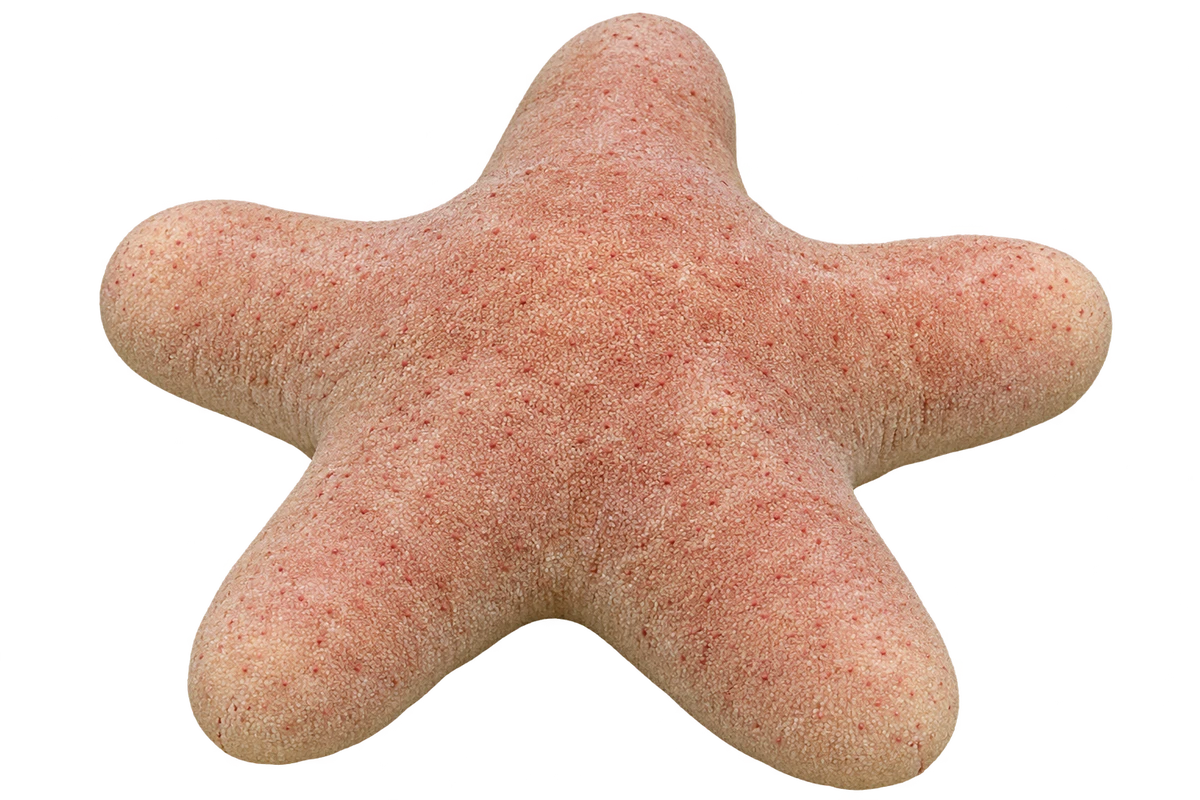
The granular sea star looks padded all the way across, not just at the center. Check those five fat, rounded arms before you trust the color.
How to recognize it
The center is broad and merges into five thick arms with very rounded tips. The top has an even, finely grainy surface, not big chocolate-chip knobs.
Where to look in Palau
Marsh collected a specimen on a sandy reef slope at Ngerameayus in 2–3 m of water. Several were also seen on a sand-and-coral flat behind Kwannon Island, south of Koror, at low tide. Those are historical records, not a promise for your dive.
Size and life stages
The Ngerameayus specimen measured about 4 inches from center to tip. A live Australian Museum example was about 9½ inches across; the measurements use different axes.
Look-alikes
Compare the compact center and narrow arms of a blue Linckia, or the much rounder, nearly armless shape of an adult cushion sea star. A partial view can hide the useful differences.
Try this on your next dive
Take a top-down photo without shifting the star, then a low side view that shows the volume of the arms. If you want practice bringing home the details in a photo, try the SDI Underwater Photographer.
Six things to notice
- The Palau voucher in the published survey had a center-to-tip radius of 100 mm.
- The center of that same specimen was broad relative to its overall size.
- Marsh described Palau animals as dusty pink with darker tiny surface structures.
- The published Koror observation includes several individuals briefly exposed at low tide.
- The reef-slope specimen lay on sand in shallow water.
- A museum field photo documents a living individual at the base of a reef slope on Australia’s Lizard Island.
Keep looking through Palau Fish ID or explore our international group dive trips.




