


Chocolate Hind
Cephalopholis boenak
Two details worth remembering
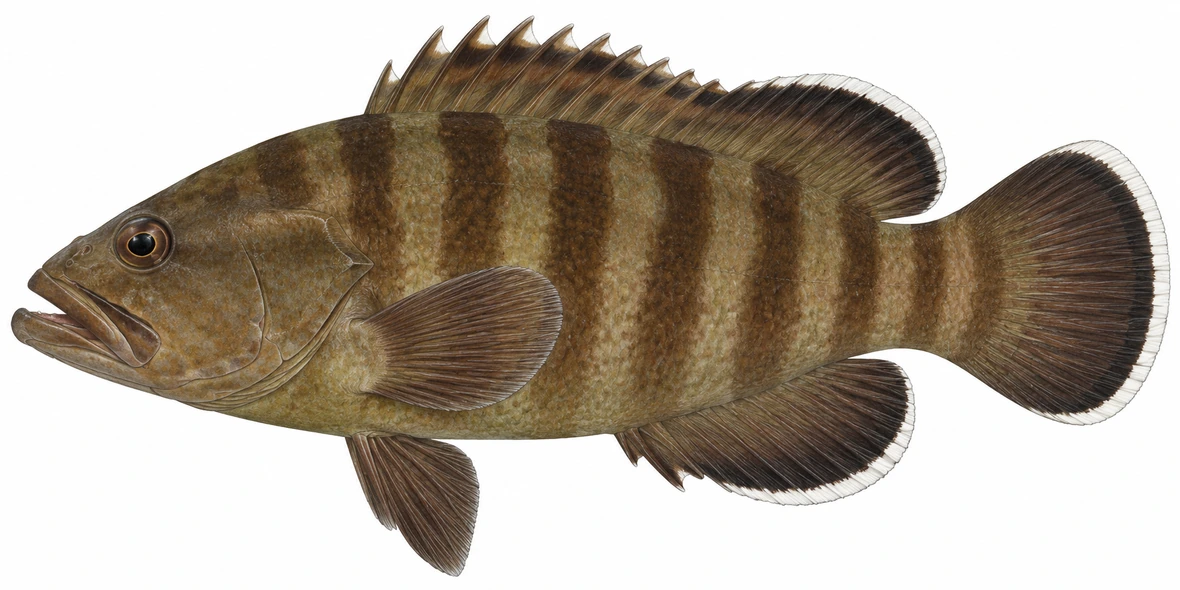
- The pale outline and dark inner band form a two-tone frame around the fins, a much more dependable clue than a quick glimpse of brown bars.
- Juveniles are not simply miniature adults: the pale head stripe and yellowish rear body can make the same species look surprisingly different.
How to identify it
Brown to greenish-grey with seven or eight darker bars. The median fins have a dark band just inside a narrow pale rim. Young fish may have a yellowish rear body and a white line along the head.
Where to look
A relatively small coastal-reef grouper, reaching about 26 cm. Examine the edges of its dorsal, anal and tail fins rather than treating a brown colour as the diagnosis.
Natural history
Primarily fishes and crustaceans.
Capable of changing sex; no Raja-specific spawning calendar is established here.
Look-alikes
Other barred groupers share its basic colours. Use the seven-to-eight-bar pattern plus pale fin rims and dark submarginal bands as a combination.
What to watch for underwater
Try a three-part identification: count the broad bars, inspect the pale fin rims, then estimate body size without approaching.
Recorded in Raja Ampat
This species has a published Raja Ampat record. A regional record does not guarantee a sighting on a particular dive.
Sources: fishesofaustralia.net.au species reference · Regional survey record
I saw this and want to share
Back to Raja Ampat Fish ID · Dive Raja Ampat with Stuart Scuba




