


Cuban Aglaja
Chelidonura cubana · Aglajidae · Headshield sea slug · Cayman Islands Fish ID
How to identify it
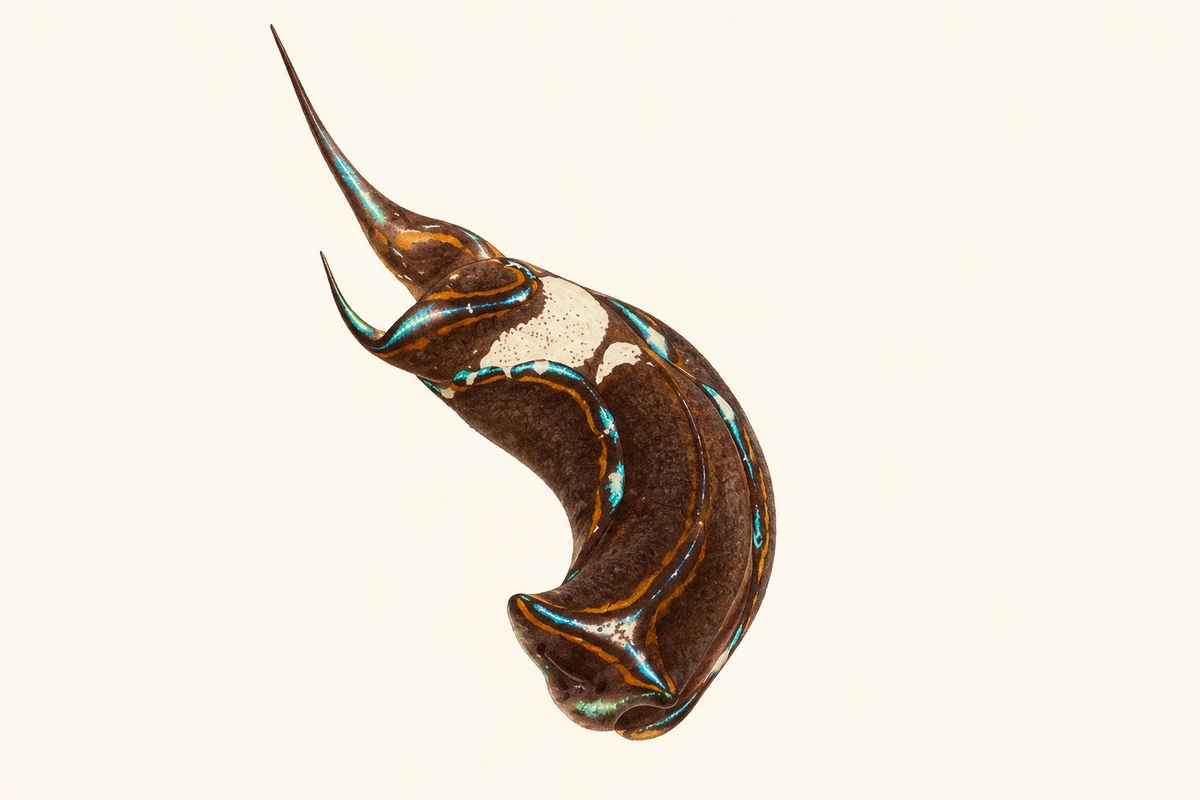
A tiny, dark shape on the sand can turn out to be a headshield slug. Look for a flattened front shield, a small pale patch behind it and fine flashes of blue-violet or orange along the edges. Those colors are clues, not a positive ID.
Other Caribbean headshield slugs can look very similar. Compare where the white marks sit on the front and rear of the shield and photograph the two rear lobes. Don’t identify it from an orange edge alone.
Cayman Islands records
Photographed on sand around the Kittiwake wreck off Grand Cayman, in an account published in 2015.
A documented record does not guarantee an encounter on your dive.
Fun facts
- The species was first described from Cuba.
- The original description was based on three slugs around three millimeters long, roughly the width of a pencil tip.
- The broad front shield is part of the animal, not a shell on its back.
- A Grand Cayman photographer spotted the slugs on sand around the wreck.
- The placement of pale marks near the ends of the shield matters more than the overall darkness of the body.
- This is a headshield slug, not a nudibranch. The broad shield is the easiest clue to that distinction in a photo.
See more on your next dive
A sharp overhead photo showing the whole animal is more useful than a close-up of one colored spot.
Explore Stuart Scuba Underwater Photography · Explore Stuart Scuba group dive trips




