


Chameleon Wrasse
Halichoeres dispilus · Labridae · Wrasse · Galápagos Islands Fish ID
How to identify it
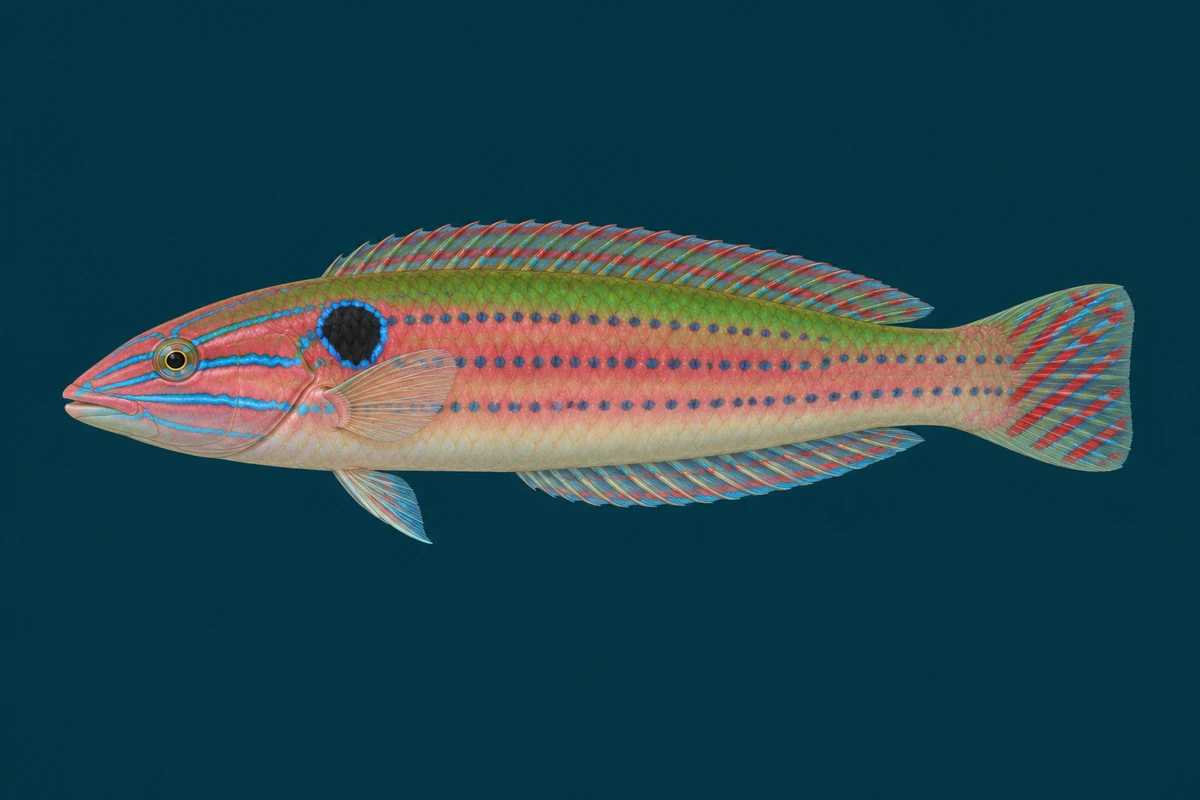
Look for the shoulder spot first. A chameleon wrasse can wear a fairly quiet pink-green outfit or a much brighter set of blue markings, but the spot just above the pectoral fin is a good place to start.
Compared with the chameleon wrasse, the Malpelo wrasse has a different shoulder and head pattern. Don’t use blue head lines alone; check for the shoulder blotch and flank markings together.
Galápagos Islands records
Galápagos survey records include Bahía Tijeretas, San Cristóbal. That is a documented record, not a promise of what you’ll see on a dive.
Fun facts
- Early adult coloration is often pinkish or greenish above and pale below.
- The dark shoulder blotch often has a blue rim.
- Terminal-phase fish add blue lines on the head and rows of blue spots or lines along the side.
- Young fish often carry a pale stripe down the side and a small dark mark at the tail base.
- It looks for small prey, including worms, crustaceans and mollusks, along the bottom.
- It favors sand and rubble near rocky reefs, and larger fish can reach roughly hand length.
Explore and learn
Practice spotting the field marks that hold up when a reef fish changes color. · Explore International Group Dive Travel




