


Bullseye Puffer
Sphoeroides annulatus · Tetraodontidae · Pufferfish · Galápagos Islands Fish ID
How to identify it
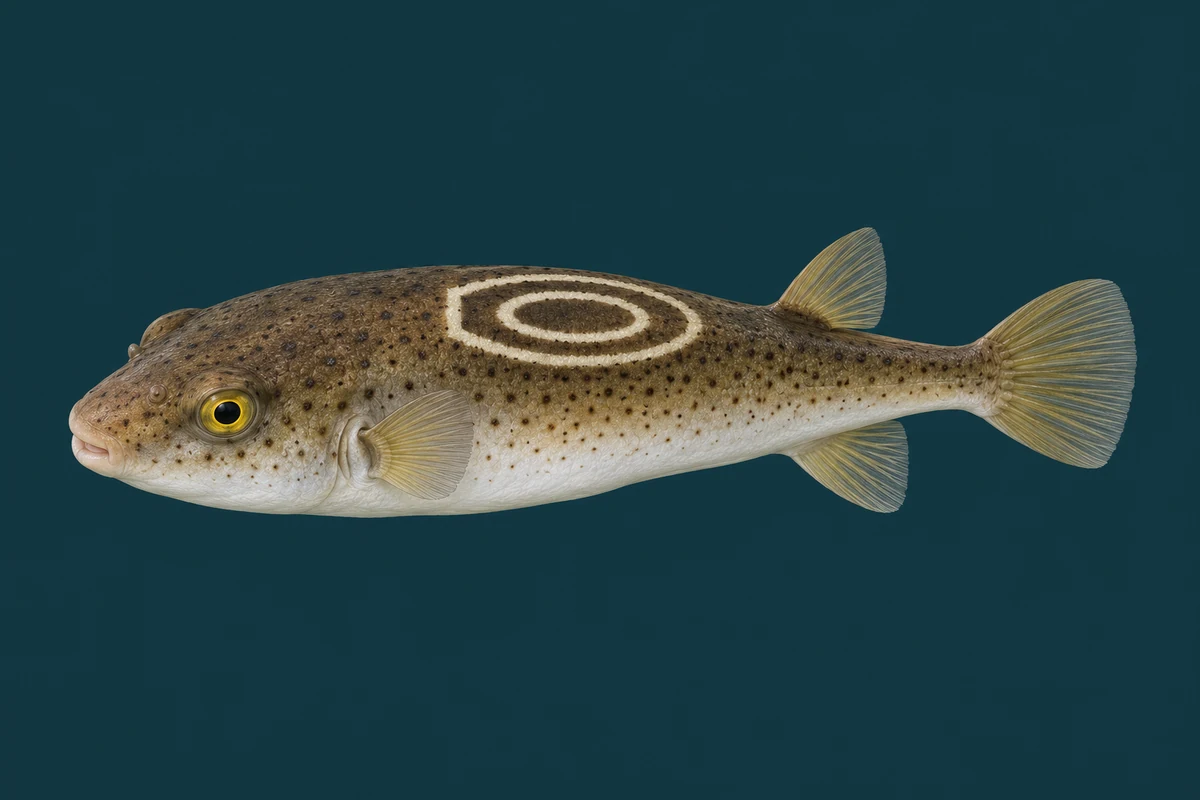
Check the top of the back, not just the spotted sides. Two pale loops form the bullseye, and the front edge of the outer loop looks almost drawn with a ruler.
Small dark spots alone won’t separate it from other puffers. A clear view of the back and both pale ovals gives you a much better clue.
Galápagos Islands records
Galápagos survey records include Punta Cormorant, Floreana. That is a documented record, not a promise of what you’ll see on a dive.
Fun facts
- Two pale ovals on the back make the namesake bullseye.
- A pale crossbar flattens the front of the outer oval.
- The back can look olive-brown to almost black, with white underneath.
- The beak is built from four fused teeth.
- Adults can approach a foot and a half in length.
- It may swim well above the bottom, even near the surface, as well as over reef and sand.
Explore and learn
Practice photographing a puffer as it swims normally, without touching or crowding it. · Explore International Group Dive Travel




