


Fish identification archive / Raja Ampat
Bohar Snapper
Lutjanus bohar
Raja Ampat field guide
Two things to tell your dive buddy
- Young fish resemble Chromis damselfishes, a disguise that can help them approach prey.
- Age studies at Rowley Shoals found individuals at least 79 years old; this is a documented population result, not the age of every adult.
How to identify it
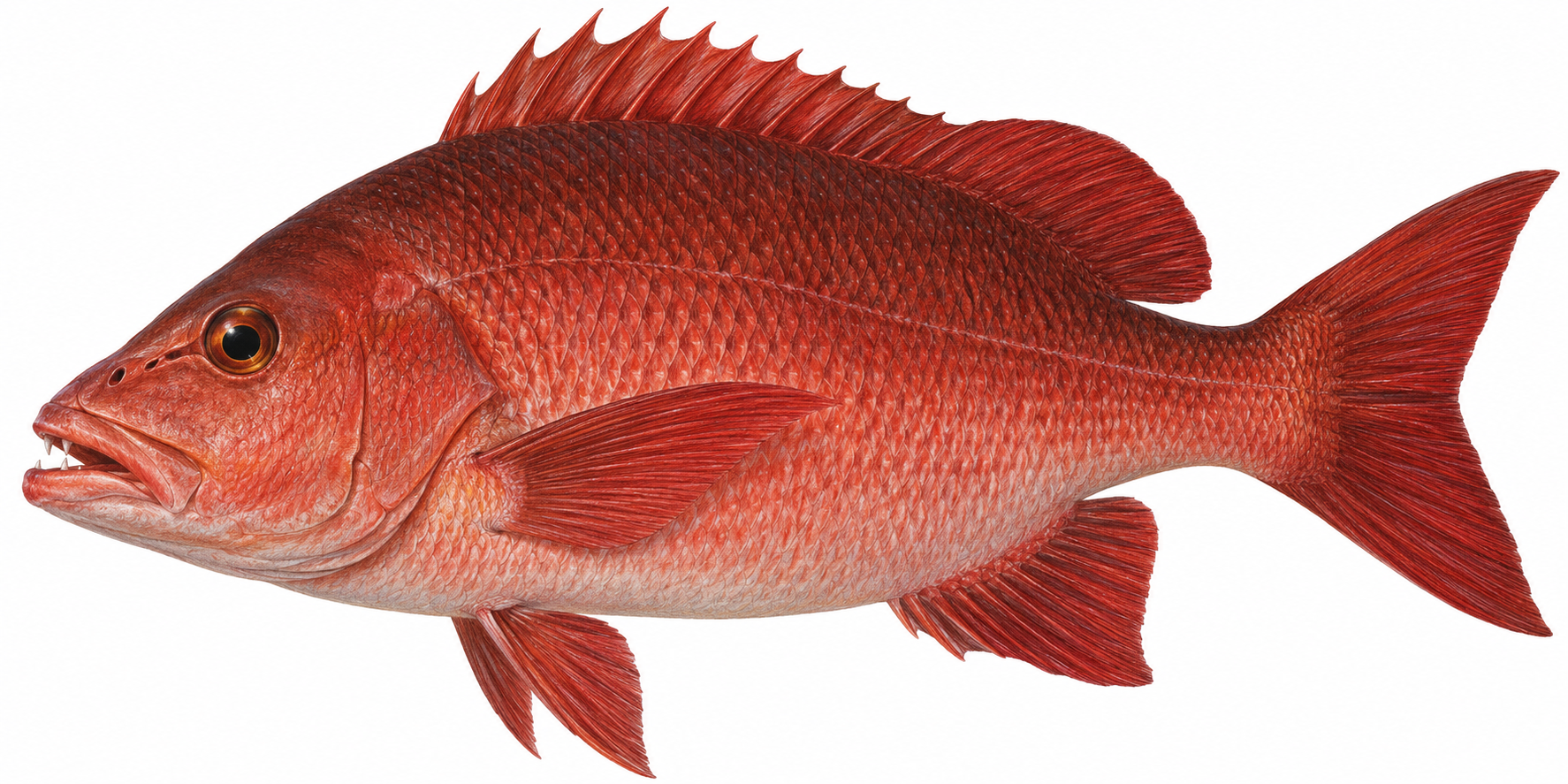
Large reddish snapper with darker fins and a deep groove between each nostril and the front of the eye. Small juveniles have two pale upper-body spots.
Habitat and where to look
Coral-reef lagoons and outer slopes, including steep reef edges.
Daily habits and behavior
Adults are often solitary but also gather in groups.
What is on the menu?
Mostly fishes, with crustaceans and cephalopods also taken.
Mating and the next generation
Forms large spawning aggregations; this is a slow-growing, late-maturing snapper.
Look-alikes and identification traps
Mangrove jack is similar; the deep nostril-to-eye groove is a useful bohar feature.
Try this observation
Look for the eye-to-nostril groove from a comfortable distance as the fish passes.
Raja Ampat occurrence
Recorded in Raja Ampat; regional occurrence does not promise a sighting on a particular dive. This guide does not imply that every site, itinerary or season offers the same chance of an encounter.
Observe, do not disturb
Keep a respectful distance, leave the animal an unobstructed route and follow your dive guide. Do not touch, feed, chase or collect wildlife. Identification does not establish permission to harvest or food safety; Florida harvest labels do not apply to this Indonesian guide.
Sources and review
Reviewed November 18, 2026.
Look for the groove between the nose and eye
On a bohar snapper, the area ahead of the eye has a deep groove running forward toward the nostrils. Young fish can look quite different, with two light spots high on the back, so do not expect every age to have the same markings.
See how juvenile and adult clues work together in SDI Reef Fish Identification.
Make your next dive happen
Dive With UsTrain With UsExplore the Raja Ampat tripShop With Us
Questions? (772) 600-8288 or info@stuartscuba.com.




