


Fish identification archive / Raja Ampat
Bluestripe Snapper
Lutjanus kasmira
Raja Ampat field guide
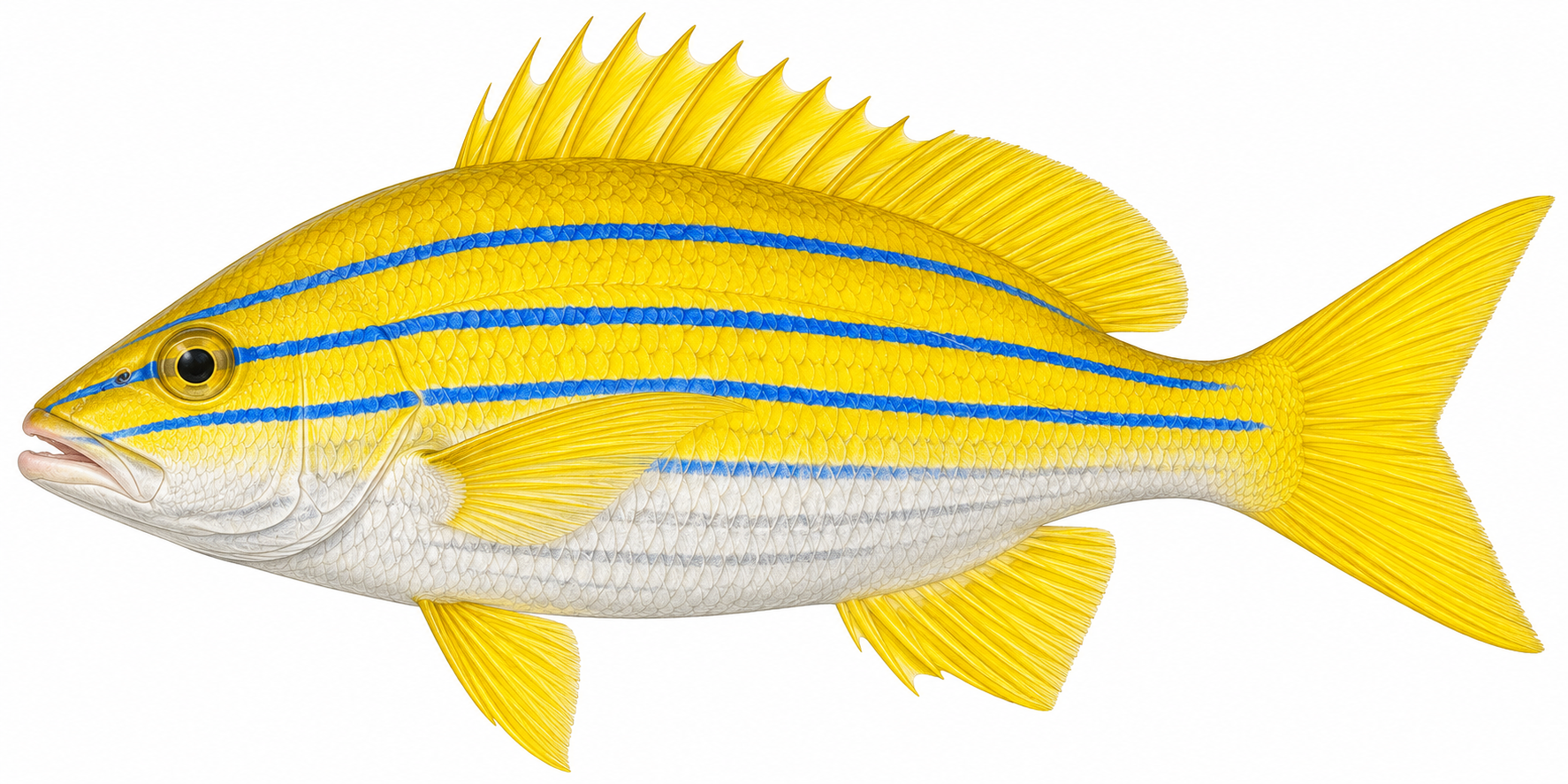
Two things to tell your dive buddy
- The fifth stripe is absent: counting carefully separates it from five-lined snapper.
- Juveniles can use seagrass and mangroves, linking nursery habitats with adult reef communities.
How to identify it
Bright yellow snapper with four narrow blue side stripes and a pale belly marked by faint grey lines.
Habitat and where to look
Reef lagoons and outer slopes; young fish also use seagrass and mangroves.
Daily habits and behavior
Daytime schools gather around coral heads and caves.
What is on the menu?
Mostly fishes and a variety of crustaceans.
Look-alikes and identification traps
Five-lined snapper has five blue stripes; Bengal snapper has a plain white belly rather than faint grey belly lines.
Try this observation
Pick one side-on fish and count its blue stripes before studying the belly.
Raja Ampat occurrence
Recorded in Raja Ampat; regional occurrence does not promise a sighting on a particular dive. This guide does not imply that every site, itinerary or season offers the same chance of an encounter.
Observe, do not disturb
Keep a respectful distance, leave the animal an unobstructed route and follow your dive guide. Do not touch, feed, chase or collect wildlife. Identification does not establish permission to harvest or food safety; Florida harvest labels do not apply to this Indonesian guide.
Sources and review
Reviewed November 18, 2026.
Count four blue stripes across the yellow flank
A yellow school is easy to spot, but a single fish in profile gives the better clue: four slender blue lines on its side above a paler belly. The similar five-lined snapper usually shows a dark mark high toward the tail.
Practice comparing stripe counts and secondary marks in SDI Reef Fish Identification.
Make your next dive happen
Dive With UsTrain With UsExplore the Raja Ampat tripShop With Us
Questions? (772) 600-8288 or info@stuartscuba.com.




