


Fish identification archive / Raja Ampat
Bluefin Trevally
Caranx melampygus
Raja Ampat field guide
Two things to tell your dive buddy
- Waigeo is among the localities associated with the original scientific description, a direct Raja Ampat connection.
- Observations include hunting alongside other predatory fishes rather than always travelling alone.
How to identify it
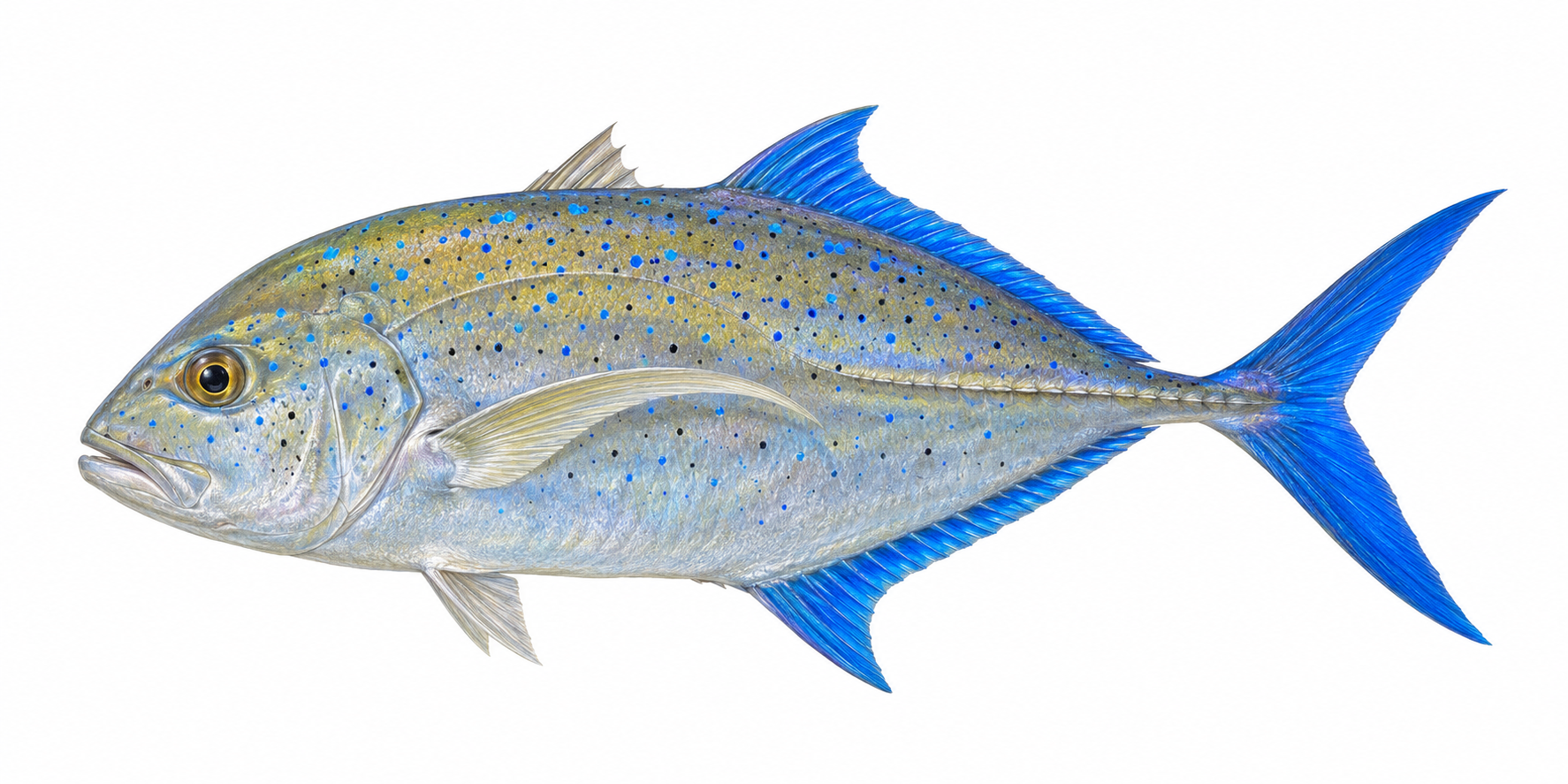
Electric-blue second dorsal, anal and tail fins; blue and black body spots.
Habitat and where to look
Lagoon and outer reefs, channels and coastal waters.
Daily habits and behavior
May hunt alongside other predatory fishes.
What is on the menu?
Fishes and crustaceans.
Mating and the next generation
Species-specific spawning details are not established in the sources used for this guide.
Look-alikes and identification traps
Giant trevally lacks the combination of electric-blue fins and blue-black spots.
Try this observation
Watch whether its movement matches nearby predators without following the group.
Raja Ampat occurrence
Recorded in Raja Ampat; regional occurrence does not guarantee a sighting. This guide does not imply that every site, itinerary or season offers the same chance of an encounter.
Observe, do not disturb
Keep a respectful distance, leave the animal an unobstructed route and follow your dive guide. Do not touch, feed, chase or collect wildlife. Identification does not establish permission to harvest or food safety; Florida harvest labels do not apply to this Indonesian guide.
Check the blue fins and spotted sides together
Look for electric-blue color across the second dorsal, anal and tail fins alongside the blue and dark spots on the body. A quick flash from a tail is less useful than a full side-on pass.
SDI Underwater Videographer course: Practice keeping the fish in frame rather than trying to swim after it.
Sources and review
Reviewed November 18, 2026.
Make your next dive happen
Dive With UsTrain With UsExplore the Raja Ampat tripShop With Us
Questions? (772) 600-8288 or info@stuartscuba.com.




