


Fish identification archive / Raja Ampat
Blue-spotted Ribbontail Ray
Taeniura lymma
Raja Ampat field guide
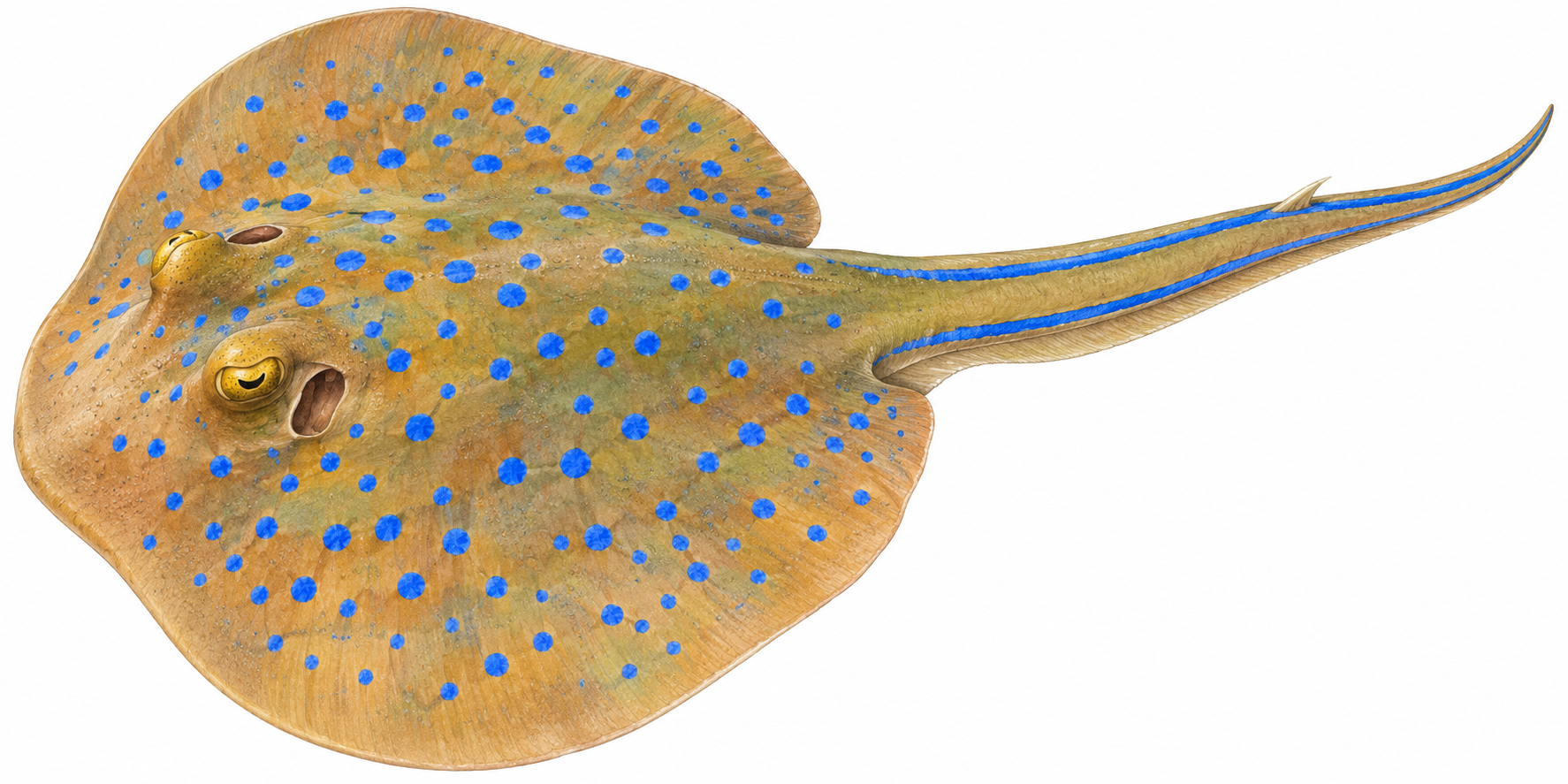
Two things to tell your dive buddy
- Pups are born with blue spots already present.
- Its tail carries venomous defensive spines.
How to identify it
Bright blue disc spots, protruding eyes and two blue stripes along a stout tail.
Habitat and where to look
Shallow reef-associated sand, rubble and seagrass feeding grounds.
Daily habits and behavior
Groups may forage in shallows as the tide rises.
What is on the menu?
Molluscs, worms, crabs and shrimps.
Mating and the next generation
Live-bearing; developing embryos receive yolk and later maternal uterine nourishment.
Look-alikes and identification traps
Blue-spotted maskrays also have blue spots: check the paired blue tail stripes rather than colour alone.
Try this observation
Observe from the side and leave both tail and escape route clear.
Raja Ampat occurrence
Recorded in Raja Ampat; sightings depend on site, conditions and careful observation. This guide does not imply that every site, itinerary or season offers the same chance of an encounter.
Observe, do not disturb
Keep a respectful distance, leave the animal an unobstructed route and follow your dive guide. Do not touch, feed, chase or collect wildlife. Identification does not establish permission to harvest or food safety; Florida harvest labels do not apply to this Indonesian guide.
Sources and review
Reviewed November 18, 2026.
Make your next dive happen
Dive With UsTrain With UsExplore the Raja Ampat tripShop With Us
Questions? (772) 600-8288 or info@stuartscuba.com.




