


Blotched Fantail Ray
Taeniurops meyeni · Dasyatidae · Ray · Galápagos Islands Fish ID
How to identify it
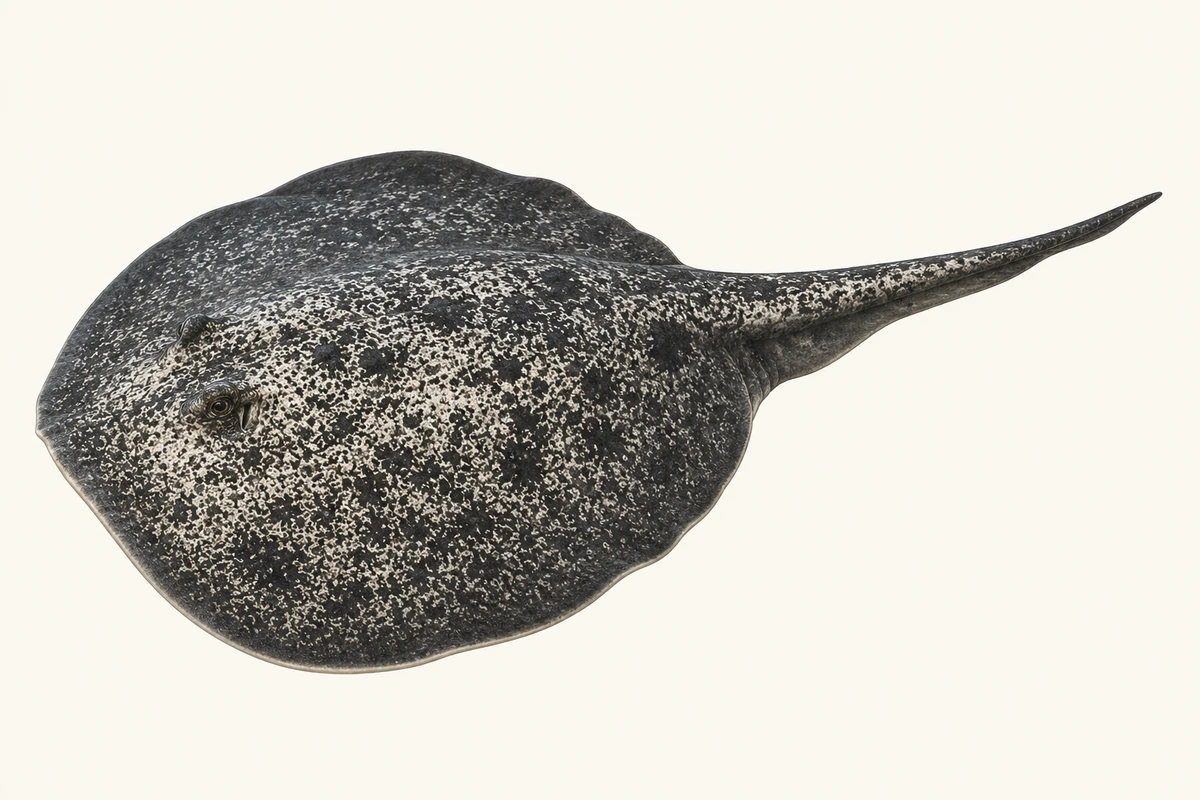
This ray looks almost round from above. Look for the scattered dark blotches and, if it turns past you, the deep ribbon of fin under its thick tail.
The tail is much thicker and carries a deeper lower fin fold than a whip-like stingray tail. Don’t mistake an Indo-Pacific bluespotted ribbontail ray or an Atlantic fantail ray for this animal.
Galápagos Islands records
Divers recorded it at Enderby off Floreana in the Galápagos. That is a documented sighting, not a promise of an encounter.
Fun facts
- The broad pectoral fins form an almost circular disc, just a little wider than it is long.
- Dark irregular blotches break up a gray to blue-gray back; the underside is much paler.
- The ribbon below the tail is a deep fold of fin tissue, not a separate paddle.
- Like other stingrays, it has defensive tail spines. You don’t need a close view of them to make a useful identification.
- It uses sandy habitat around rocky and coral reefs.
- It gives birth to live young and feeds on animals such as crustaceans, mollusks and fish.
Explore and learn
Watch from the side or from well clear above. Let a resting ray stay put; never prod it, corner it or swim over it closely for a better look.
Explore shark and ray awareness with Stuart Scuba · Explore Stuart Scuba’s worldwide group dive trips




